The Fury That Sat Down
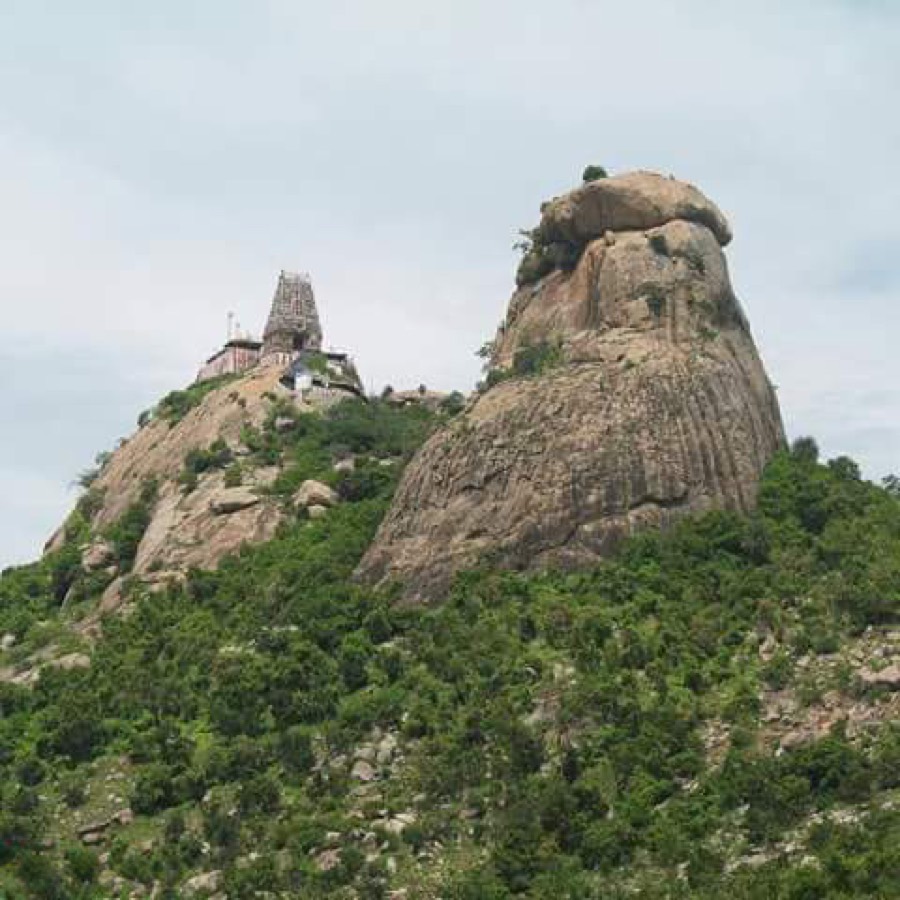
After tearing open Hiranyakashipu, Narasimha carried his fury to two hills above Sholingur — and there, seated in yoga, he cooled into a teacher.
After the Pillar
When Narasimha tore open Hiranyakashipu to protect Prahlada, the fury did not end with the act — this was a rage that had unwound the knots of Brahma's own boons. Tradition says the Lord carried that heat south, up the great hill above Sholingur, and sat down. With Lakshmi beside him he folded into yogic posture: the man-lion who does not dance, does not rend, does not roar — Yoga Narasimha, eyes half-closed, breath slow, fury held inside like a banked fire.
The Kadigai
The hill's ancient name is Kadikachalam, the hill of the kadigai. A kadigai is a span of forty-eight minutes — and the promise of the place is exact: those who climb to the seated Lord find their knots loosened within one. Sages came for that reason; pilgrims still count their steps by it. Everything on the mountain moves slowly, and that is precisely why liberation there is said to be fast.
The Watchman on the Small Hill
Below, on a smaller hill facing the great one, another yogi sits: Yoga Anjaneya — Hanuman with four arms holding conch, discus, mace and pot, yet deep in meditation. Tradition says he chose the post himself, directly opposite his Lord, near enough to see and be seen, so that no harm could reach anyone climbing between them. Devotees greet him first after the long ascent, then climb higher to stand before the half-opened eyes that once split a pillar — and now simply watch.
இதனுடன் அமருங்கள்
Even unbounded power becomes blessing only when it sits down.
What in you is still standing when it should be sitting?
இந்தக் கதையின் பாத்திரங்கள்
- Yoga Narasimha
- Lakshmi as Amritavalli
- Hanuman (Yoga Anjaneya)
- the sages of Kadikachalam
இந்தக் கதை வாழும் இடம்
இந்தக் கதையின் மூலம்
Sholingur Kadikachalam sthala purana; Brahmanda Purana references to the hill