Vishnu in Shiva's Dance Hall
Inside the greatest temple of Shiva's cosmic dance stands a reclining Vishnu — Govindaraja, the God who came to watch, and whose presence survived exile.
The Front Row
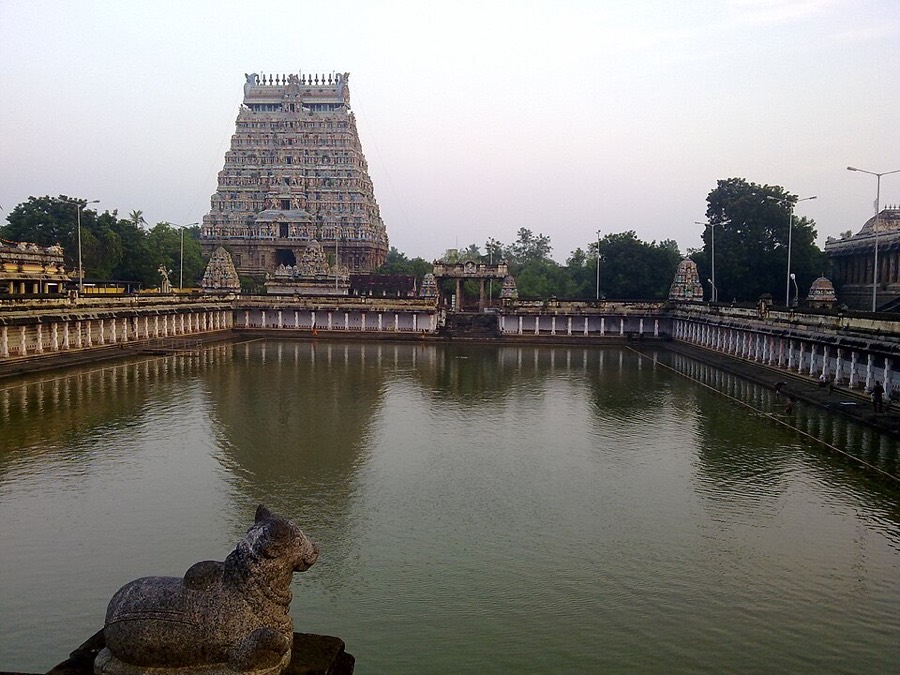
In Chidambaram, Nataraja performs the dance that keeps the universe in rhythm. But tradition remembers a second Lord present at those performances: Govindaraja. Vishnu, the story goes, chose to lie down right there — I will watch your dance — reclining in the same great hall, one hand pillowing his head, his gaze fixed on the dancer. Not rival, not guest-of-state: an audience of one, made eternal.
Exile and Return
History tested even that friendship. In centuries of sectarian strife the image of Govindaraja was removed from the temple altogether — carried away toward the coast near Tirupati. Generations later, through the intervention associated with Ramanuja's tradition, he was reinstalled, and today he reclines again in the very hall he was cast out of. Tamil religious memory holds few episodes like it: an idol with a documented exile, and a return.
Thiruchitrakoodam
The Alvars sang this shrine as Thiruchitrakoodam — the place of the good hill-hall — and counted it among the 108 Divya Desams. That is its quiet revolution: a Vaishnava canon-site standing inside the most celebrated Shaiva temple on earth. The disputes that kept setting gods against each other in history books are contradicted here in stone — dancer and spectator, Shiva and Vishnu, sharing one roof, one lamps, one courtyard's silence between songs.
இதனுடன் அமருங்கள்
Devotion to another's glory is not competition — it is front-row attendance.
Whose excellence can you applaud with your whole being?
இந்தக் கதையின் பாத்திரங்கள்
- Govindaraja (Vishnu)
- Nataraja (Shiva)
- Ramanuja
- the Dikshitars
இந்தக் கதை வாழும் இடம்
இந்தக் கதையின் மூலம்
Chidambaram sthala purana; Divya Prabandham hymns of Thirumangai Alvar to Thiruchitrakoodam