The Copper Plates of Joseph Rabban — A Kingdom's Promise to Its Jews
A thousand years ago, a Kerala king engraved privileges for the Jewish leader Joseph Rabban on copper plates — tax rights, honours, and protection. The plates survive at the Paradesi Synagogue: India's oldest charter of pluralism.
Long before the Paradesi Synagogue rose in Mattancherry, the Jews of the Malabar coast held something rarer than a building: a promise, engraved in copper.
Around 1000 CE, a Chera king (tradition names Bhaskara Ravi Varma) granted the Jewish leader Joseph Rabban the rights of Anjuvannam — a merchant guild's privileges: exemption from certain dues, the right to employ armed retainers, ceremonial honours like the palanquin and parasol, seventy-two proprietary rights in all. The grant was cut into copper plates in Old Malayalam script, witnessed and sealed — the medieval Kerala equivalent of a constitutional charter.
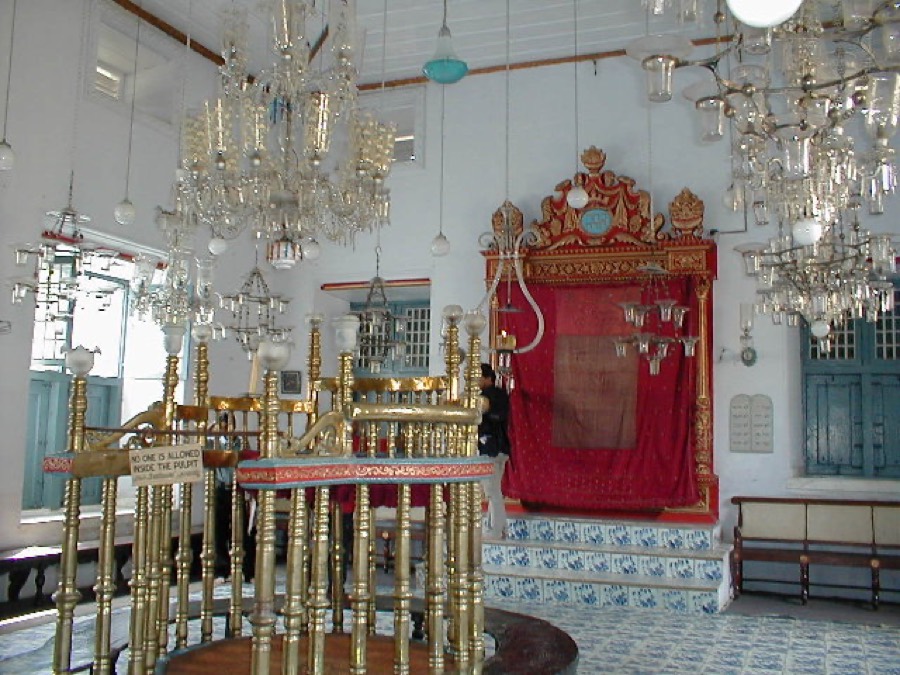
The plates survived wars, the Portuguese burning of Cranganore, and the community's move to Kochi. Today they rest in the Paradesi Synagogue, shown to visitors as the community's founding document — hard, hammered proof that Jews lived under Hindu kings not by tolerance alone but by law.
Read them alongside the synagogue's other witnesses: the 1344 Kochangadi stone from a drowned congregation, the Canton tiles, the four-script clock tower. Together they say what no chronicle quite captures — that on this coast, pluralism was not an idea. It was administration.
Sit with this
Protection engraved in copper outlasts protection promised in words.
Ask the synagogue custodian to show the plate cabinet — then read the four scripts on the 1761 clock tower outside.
Characters in this kathā
- Joseph Rabban
- the Chera king (Bhaskara Ravi Varma tradition)
- the Paradesi custodians
Where this kathā lives
Source of this telling
Copper plates preserved at the Paradesi Synagogue; Kerala Tourism; World Monuments Fund documentation