📷 Dirk Beyer · [CC BY-SA 3.0](https://creativecommons.org/licenses/by-sa/3.0)
Religions
Ayyavazhi
Ayyavazhi
Ayyavazhi
No primary scriptures are catalogued for this entry yet. If you know of scriptural references we have missed, please contribute them.
⚠️ CONTENT VERIFICATION STATUS: This draft is . All citations require validation.
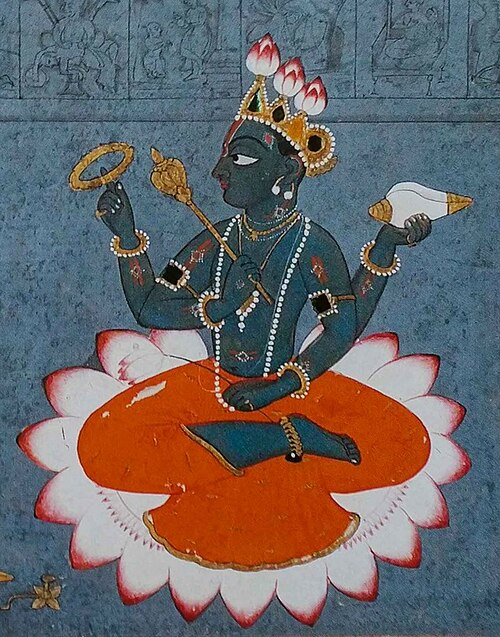
Ayyavazhi is a monotheistic religious movement that arose in the 19th century in South India (present-day Tamil Nadu and Kerala), centred on the life and teachings of Ayya Vaikundar (c. 1809–1851). Its followers regard Vaikundar as an incarnation of Narayana (Vishnu) who came to establish righteousness, end the age of Kali, and unite humanity in love.
The name "Ayyavazhi" means "the path of the father" — ayya (father/lord) + vazhi (path). Though rooted in Hindu tradition — especially Vaishnavism — Ayyavazhi developed its own distinct theology, scripture, ritual, and sacred geography, and is today studied as an independent new religious movement that emerged from Hinduism.
Key beliefs:
Ayya Vaikundar (c. 1809–1851): Born Mudisoodum Perumal in Poovandanthope, Travancore (present-day Kanyakumari district, Tamil Nadu), Vaikundar emerged as a religious leader in the 1830s and 1840s. His teaching blended the Vaishnava devotion of the region with radical social reform: he preached against caste, welcomed people of all communities — including those considered "untouchable" — into his movement, and performed healings and acts of compassion that drew large followings among the poor and marginalized of the Travancore kingdom.
The scripture — Akilattirattu Ammanai: The tradition's sacred text, the Akilattirattu Ammanai ("the account of what happened in the Akilam"), is held to have been dictated by God to the devotee Hari Gopalan in 1841. Written in Tamil, it presents the cosmic history: the creation, the ages (yugas), the incarnations of Vishnu, and the descent of Vaikundar as the avatar of this age, culminating in the judgment of the world and the establishment of the Dharma Yuga (the age of righteousness).
The theological vision:
Relations with Hinduism: Ayyavazhi is often classed as a Hindu sect because of its Vaishnava roots, its reverence for Vishnu's avatars, and its ritual forms. Many scholars, however, note its strong independent features — its own scripture, its own pilgrimage centre, its monotheistic exclusivism, and its founder-focused worship — and treat it as a distinct movement that emerged from the Hindu tradition, comparable in some ways to Sikhism's relation to its historical context.
Swamithope — officially Swamithoppu Pathi, the primary centre of the movement — is the most sacred site of Ayyavazhi, located in Kanyakumari district, Tamil Nadu. Here Vaikundar is held to have undergone his "incarnation" in the temple ritual (the Thiruvadi vazhipadu), and here the faithful gather daily.
The seven Pathis (sacred centres) of Ayyavazhi:
Worship practices:
Ayyavazhi remains a living movement, with its strongest presence in Kanyakumari district (Tamil Nadu) and southern Kerala, and with communities and shrines across Tamil Nadu, in South India's cities, and among the diaspora.
Contemporary significance:
Ayyavazhi's historical importance lies in its demonstration that the Vaishnava bhakti stream of Hinduism could, in the modern era, generate a new and distinctive religious path — monotheistic, egalitarian, and shaped by the social ferment of 19th-century South India.
Recommended reviewers: An Ayyavazhi religious authority, a scholar of South Indian new religious movements, a historian of Tamil society.