Tied With a Rope of Butter
The Almighty, bound by a housewife to a mortar — every Damodara temple keeps that scandal, and Tirukannangudi sings it loudest.
The Butter Thief's Account
In Gokul, Yashoda's baby stole butter so reliably that the whole village arrived with complaints. One day she decided: this child must be tied to the grinding mortar. She took a rope — and it fell short. She knotted more rope — short again. Ten knots, twenty, every cloth in the house braided in — still the cord could not circle that small body.
Permission
Because he was infinite; no rope could reach around him. And then, finally, the rope held — because he allowed it. Seeing his mother's exhausted eyes, he made himself small enough to be caught, and sat bound to the mortar: Damodara, bound at the waist. That same mortar later dragged between two colossal trees and set them free — bondage distributing liberation, which is how such stories like to end.
Tirukannangudi
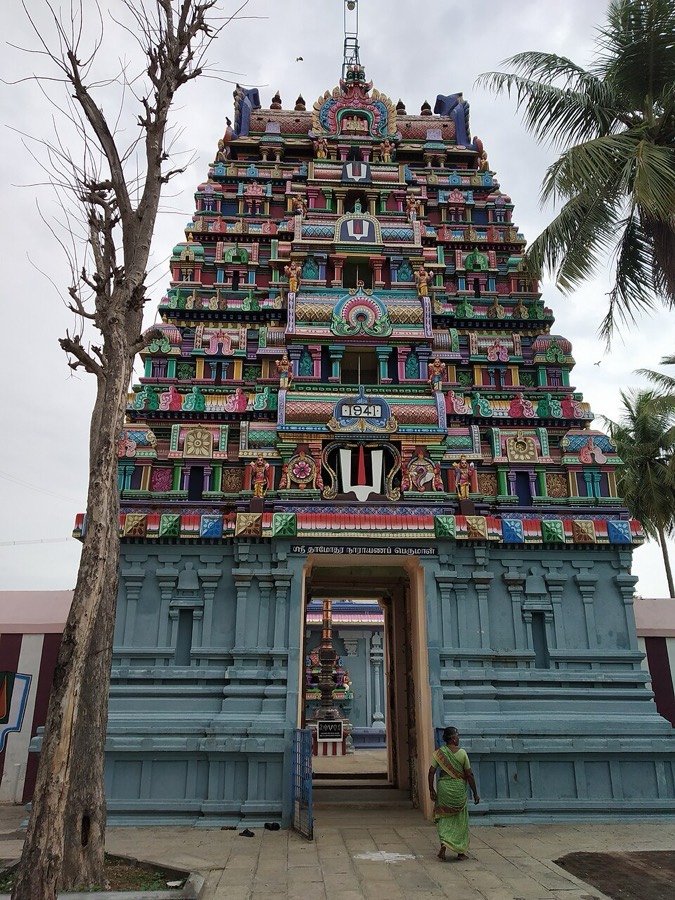
At Tirukannangudi the presiding Lord is worshipped in precisely this Damodara form, and the Alvars sang the scene the way one hums something half-laughing, half-crying — astonished that the Almighty's greatest recorded victory was losing to a housewife's kitchen string.
The temple's whole teaching hangs there, small enough for a child and deep enough for a philosopher: no sword binds God, no mantra binds God. Love does — provided he chooses to bend.
இதனுடன் அமருங்கள்
What binds God is not force. It is permission given out of love.
What would you allow yourself to be bound by?
இந்தக் கதையின் பாத்திரங்கள்
- Damodara (Krishna)
- Yashoda
- Loganatha Perumal
இந்தக் கதை வாழும் இடம்
இந்தக் கதையின் மூலம்
Srimad Bhagavatam Canto 10 (Damodara-lila); Tirukannangudi sthala purana