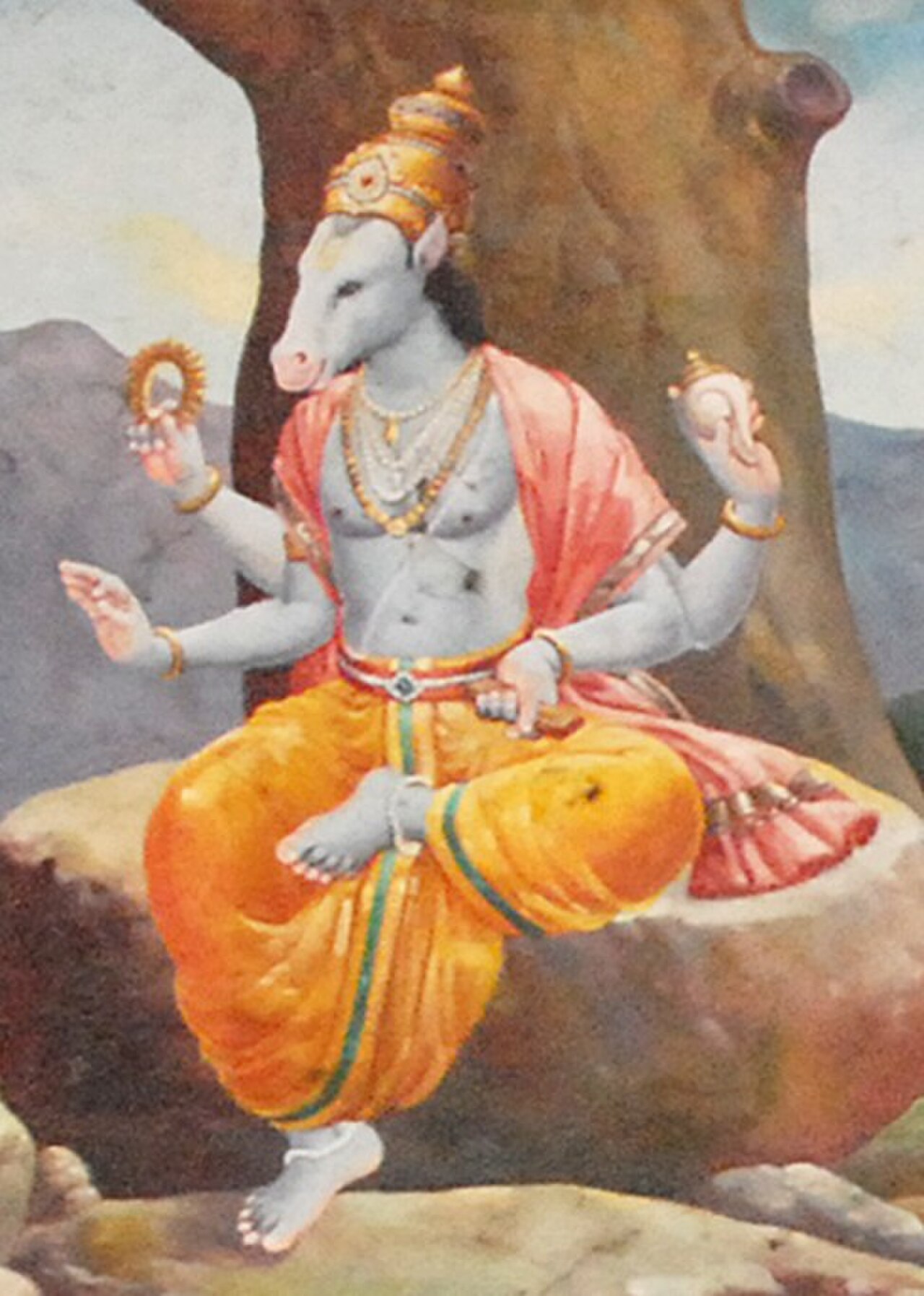





Sacred Facts · At a Glance
- Gender
- male
- Sacred Colours
- tradition-specific
- Sacred Offerings
- tradition-specific
Primary Scriptures
0 sourcesNo primary scriptures are catalogued for this entry yet. If you know of scriptural references we have missed, please contribute them.
Hayagrīva Mādhava at Hājo
A place two communities argue over politely
Hājo in Kamrup district, Assam, is a hill settlement whose principal shrine, Hayagrīva Mādhava, is claimed — and this is the unusual thing about it — by two communities that do not otherwise share a god. For the Vaiṣṇava community of the region the deity is a form of Viṣṇu, and the shrine is one of the Hājo group of Vaishnava temples. For the Buddhist community of Assam the site is one of the places where the Buddha is held to have entered mahāparinirvāṇa — a claim that is genuinely held in the region and that sits alongside the better-known Kushinagar tradition rather than replacing it. Both communities visit; the shared ground has not produced a shared theology.
The three temples of Hājo
Hājo's sacred geography is a set, and the set is what matters. The three principal shrines are Mahāmāyā, Hayagrīva Mādhava and Ananta Basudeva, and the local tradition attributes all three to Śrīmānta Śāṅkaradeva, the sixteenth-century poet- saint who founded the Assamese bhakta tradition. Mahāmāyā in particular is where Śāṅkaradeva is said to have entered mahāsamādhi, and it holds his funerary shrine. The grouping of the three under one author is itself a tradition claim rather than an inscriptional fact, and it should be presented as one.
On the date. This entry previously gave the temple as "13th century". We have not been able to support that, and it sits awkwardly beside the Sankardeva attribution, which is sixteenth century. We record the traditional attribution and flag the earlier date as unverified; a guardian should check whether any earlier structure or inscription is claimed locally.
The Buddhist claim, and the Bhutan connection
The claim that Hājo is a parinirvāṇa site is not fringe, and it belongs in an entry of this kind. We have also retained, from the previous version of this entry, a claim that a Bhutanese monarch maintains a shrine here. That claim circulates and may well be true — Assam-Bhutan Buddhist links are old and the region has close royal ties to Bhutan — but we have not located a source for it and it is not repeated as fact. A guardian with Bhutanese or Assamese monastic sources should settle it, because a maintained royal shrine is a different kind of fact from a folk claim.
Practice
The observances are the annual temple festival, the Nāgoñ and Rākhā Pūjā days common to Assam's Hindu households, and — in the Buddhist reading — visits made as pilgrimage rather than as puja. The two calendars overlap in the same physical space, which is the point of the place.
Sources and what a guardian should check
The Śāṅkaradeva attribution should be checked against a study of the Assamese bhakta tradition rather than a tourism page. The Buddhist parinirvāṇa claim requires Buddhist sources from Assam, which this entry does not have. The Bhutanese royal connection and the thirteenth-century date are the two specific unresolved questions.
Wisdom Graph: Divine Associations
- Vāhana
- Garuḍa
- Offerings
- tradition-specific
- Sacred colours
- tradition-specific
🪔 Worship Procedures
- Daily rites
- • tradition-specific
🛕 Principal Temples
- Main shrine of Hayagrīva Mādhava of HājoVaries📍 Hajo, Kamrup, Assam, IndiaFestivals: Annual festivalHayagrīva — one of the last Buddhist-Hindu co-worship shrines
🎊 Festivals
- Annual Hayagrīva Mādhava of Hājo festivalSeasonally · 1–10 days
Sources & provenance
- 📖Supporting referenceOtherSrimanta Sankardeva and the Assamese Bhakta tradition — scholarly studies (to be named by a guardian)
- 📖Supporting referenceOtherKamrup District Gazetteer, Assam