




Sacred Facts · At a Glance
- Gender
- female
- Sacred Colours
- redsaffronyellow (turmeric)
- Sacred Offerings
- red hibiscus · coconut · kumkum-turmeric abhisheka · oil lamp · tradition-specific: goat (in Tantric/non-Brahmin shrines), pumpkin (substitute)
Primary Scriptures
2 sources- Devi Mahatmya (Chandi / Durga Saptashati)sanskrit hymnComposed 6th–7th c. CE
- Sthala-puranamlocal temple narrative
Bahucharā Mātā at Bahucharaji
A child-granting goddess of Gujarat, and a contested place in the lists
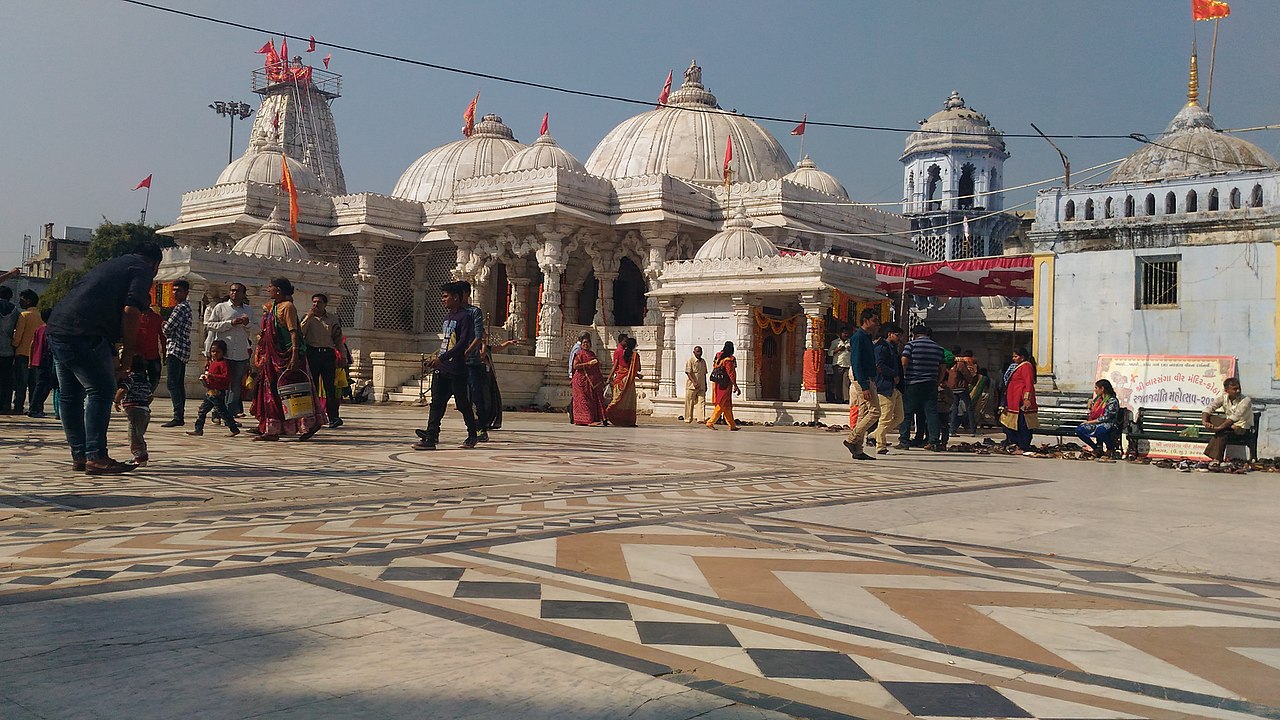
The Bahucharaji temple, in Mehsana district of Gujarat, is the principal shrine of Bahucharā Mātā (Bahucharā-devī, Bācharā), a goddess of fertility and of children who is worshipped over a wide area of Gujarat and Rajasthan. She is venerated in two distinct forms, and the difference is not a detail: as Bahucharā-devī she is the goddess who gives children and is approached by women who want them; as the Gorakhnāth or Bābā form she is a bhakta of Gorakhnāth of the Nāth sampradāya, described as without hair and without blood, who neither eats nor drinks. The temple complex carries both, and devotees who come for a child and devotees who come for the Bābā form are making different requests.
The most discussed public feature of this shrine is its long-standing relationship with transgender and hijra communities, who have claimed the deity as their patron and participate in the shrine's public observances. This is best described from the scholarship on Gujarati bhakti and the Nāth traditions rather than from press headlines about a "gender festival": it is a devotional institution with a ritual calendar of its own. The corollary must also be stated — the shrine does not hold that the deity "was" a transgender person, and a reading of the modern Bahucharā cult in those terms should be marked as modern interpretation.
Where the entry needs a guardian is in the lists. Bahucharā is named among the ten Mahāvidyās in some regional enumerations, but she does not appear in the standard ten as enumerated in the Śākta corpus; the slug's "Śakti Pīṭha" framing has the same problem, since Bahucharaji is not in the standard śakti-pīṭha enumerations either. Both attributions should be either sourced from the tradition that actually makes them or struck. The frontmatter's "11th c." foundation and "18th c. restoration by the Gaekwads" also fail on inspection — the Gaekwads ruled at Baroda, not Mehsana — and should be checked against the district gazetteer rather than repeated.
Sources and what is still unverified
- Braj Bhāṣā and Saurashtra devotional literature, including the Nāth material — work level.
- A study of Gujarati bhakti traditions and the Bahucharā cult — required; not on file in this corpus.
- Mehsana District Gazetteer (Government of India gazetteer series).
- Unverified: the foundation date, the alleged Gaekwad restoration, the Mahāvidyā and Śakti Pīṭha listings, and every festival date in the frontmatter.
Wisdom Graph: Divine Associations
- Offerings
- red hibiscuscoconutkumkum-turmeric abhishekaoil lamptradition-specific: goat (in Tantric/non-Brahmin shrines), pumpkin (substitute)
- Sacred colours
- redsaffronyellow (turmeric)
🪔 Worship Procedures
- Daily rites
- • aarati (dawn + dusk)• abhisheka• naivedya• evening lamp
- Puja sequence
- water abhisheka
- turmeric
- kumkum
- red hibiscus
- prasadam
- Vratas (vows / fasts)
- • Friday special puja• Navratri 9-day fast
- Pilgrimages
- • annual jatra (community gathering)• Shakti Pitha circuit
🛕 Principal Temples
Sources & provenance
- 📜Primary sourceBraj Bhasha and Saurashtra devotional literature, including Nath sampradaya material - work level
- 🎓Scholarly source