Deities
Neelakanta Pillai
Lazarus the Martyr — India's First Lay Saint
Lazarus the Martyr — India's First Lay Saint
No primary scriptures are catalogued for this entry yet. If you know of scriptural references we have missed, please contribute them.
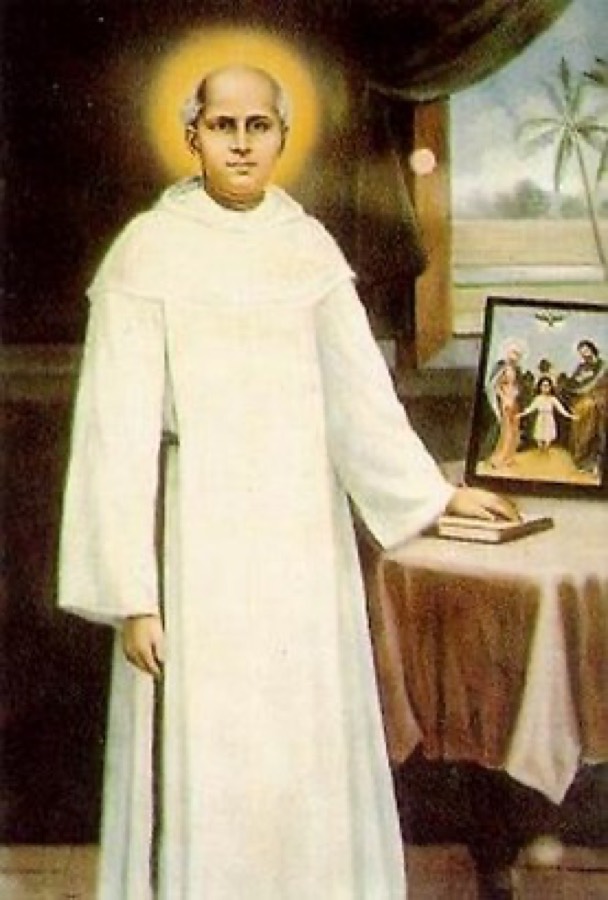
Neelakanta Pillai (23 April 1712 – 14 January 1752) was a palace official and soldier in the service of Marthanda Varma of Travancore, and is the first Indian layperson to be canonised. Born at Nattalam in present-day Tamil Nadu, he is traditionally recorded as a Hindu of the Nadar community and as having held the rank of subedar — a revenue and military post — at the court. He is described as Sanskrit-literate, and it is part of the hagiographic tradition that he composed poetry; whether he wrote, or whether the poems later attributed to him were composed in the devotional context around his memory, is a question a guardian should hold open.
The Dutch commander to whom he was introduced, and the Jesuit priest who instructed him, are the two decisive encounters of his life. He was baptised at Vadakkankulam on 17 May 1745 as Lazarus — Devasahayam, "God has helped" — in a marriage that included a substantial dowry, and he became a preacher rather than quietly remaining in the household. The content of his preaching was the equality of all people irrespective of caste, which in the context of eighteenth-century Travancore was a claim with consequences.
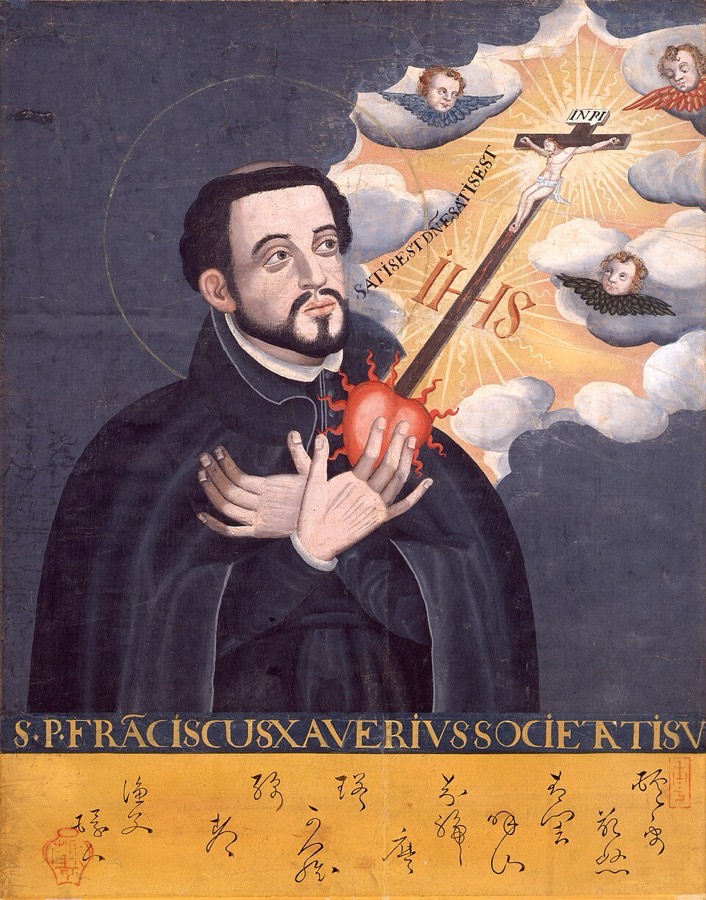
The consequences came. He was arrested in 1749, subjected to long captivity and torture, and was eventually executed by firing squad at Aralvaimozhy (Kattadimalai) on 14 January 1752. His remains were brought to Kottar (present-day Nagercoil), where he was buried adjacent to the tomb of St Francis Xavier. The body was re-enshrined and his tomb re-laid at the time of canonisation, and the church at Kottar — St Francis Xavier's Cathedral — remains his shrine.
Devasahayam was beatified on 2 December 2012 at Kottar, and canonised on 15 May 2022 by Pope Francis. A miracle was formally recognised in February 2020, clearing the way for the canonisation; its content should be cited from the Vatican's own statement rather than from secondary retellings.
The cause has been contested, and the contest should be recorded rather than smoothed away. Some Hindu organisations have argued that Devasahayam was executed as a political rebel and a threat to the Travancore state rather than for his religious profession, and that his martyrdom was a matter of internal court politics. The Catholic position, on the basis of the diocesan and Roman processes, is that he was a martyr for the faith. Both positions are held by identified communities. The historical record — that a court servant of high standing was arrested, publicly degraded and executed within a few years of conversion in a kingdom where conversion by court officials was a matter of state concern — is more complex than either summary. The institutional finding of martyrdom stands; the presence of the disputing tradition should be visible in the entry.
His feast is 14 January. He is held as a patron of India and, in Catholic countries, of persecuted Christians.
The shrine complex is administered by the Roman Catholic Diocese of Trivandrum, and the ecclesiastical record — the diocesan files, the Acta of the canonisation, and the Vatican's own announcements — is the reliable source for the dates above.
Still to be checked by a named guardian: the Nadar-community affiliation, which is stated differently in different retellings; the details of the torture and the proceedings, which come largely from the hagiographic record; and the exact identification of the miracle recognised in 2020, which should be cited from the Vatican statement and not from press paraphrase. A previous version of this file carried invented travel notes attributed to unnamed travellers; the block has been deleted.