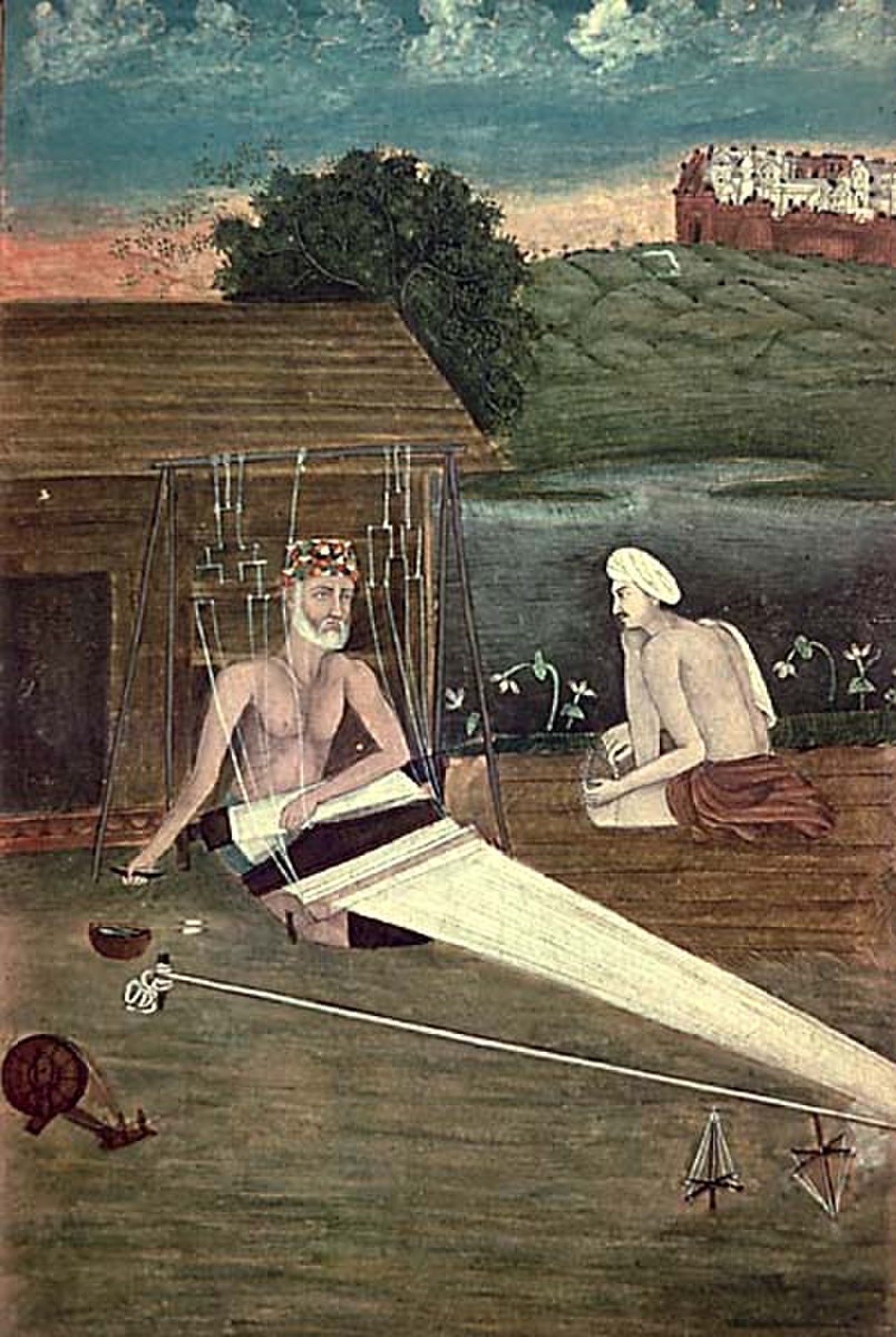




Sacred Facts · At a Glance
- Gender
- male
- Sacred Colours
- white (weaver)saffron
- Sacred Offerings
- tulasi / flowers / tradition-specific
Primary Scriptures
1 source- Primary texts of Hinduscriptural / devotional
Kabir of Lahartara
A birthplace, and a claim that should be treated carefully
This entry and kabir-varanasi concern the same saint. The corpus holds two entries for Kabir, one centred on his Kashi death and memorials and one on a claimed birthplace. A guardian should decide whether they are merged, or whether one is kept as the principal saint entry and this one as a site entry. Until that decision is taken, this entry concentrates on the Lahartara claim and on what the Kashi Kabir tradition actually says, and it does not repeat the biography given in the other entry.
The shrine at Lahartara, on the eastern side of Varanasi across the river, is claimed by the Kashi tradition as Kabir's birthplace. That claim should be treated as a claim, not as an established fact. Kabir's birthplace is not securely known: the traditions give several places, and the weaver families of Kashi, the Maghar tradition, and the Kabir communities each hold a version. What can be said is that a shrine exists at Lahartara, that it is honoured as a Kabir site, and that the Kashi Kabir tradition attaches Kabir to the eastern bank of the Ganga as well as to the cremation ghats on the western side.
The broader point is the one the two memorials of Kashi make: Kabir is deliberately not resolved to one community. The tradition holds that at his death the body was disputed between the Hindus and the Muslims, and that it was resolved by a double claim — a burial and a cremation. The variants of that story differ: in one, the body was halved; in another, the body vanished and only flowers remained, which were then divided between the two communities; in a third, two sites were claimed. All of these are narrative traditions and none is a record. What they collectively establish is that Kabir's shrines in Kashi are administered by more than one community — a math on the Hindu side, a mazar on the Muslim side — and that the maintenance of each is a live, present, and sometimes contested arrangement. The tradition that his poems stand in the Adi Granth, the scripture of the Sikhs, is a further element of the same refusal: a Muslim weaver of Kashi is read in the Sikh scripture alongside Guru Nanak.
Kabir-panthi communities — the Nirguna and Nirankar orders who trace their initiation to Kabir, and among whom the Satguru lineage descends — are a substantial and continuing presence in north India, in Nepal, and in the diaspora. The figure of "about ten million" members in earlier versions of this entry has no cited source and should be removed; any number should be given from a census of the panth or from the orders' own record, and the composition of the panth varies according to whether particular subsects are counted.
Sources and what is still unverified
This entry is grounded in the Kabir Bijak and Kabir Samagri as the primary works, in the Kashi shrine tradition and its community arrangements, and in the Varanasi district gazetteer. A human guardian from a Kabir-panthi or specifically a Kashi Kabir community should supply and check: what the Kashi institutions themselves say about the birthplace and about the two memorials; the current arrangement for the upkeep of the math and the mazar; the Satguru lineage as it is actually transmitted; and the local observance of the mourning day. The claimed dates for Kabir's life in earlier versions of this entry — "ca. 1440–1518" — are traditional and the range across the literature is wide; they should be given as a tradition, not as a date. The audio placeholder in the frontmatter is machine-generated and is not a faithful recitation.
Wisdom Graph: Divine Associations
- Offerings
- tulasi / flowers / tradition-specific
- Sacred colours
- white (weaver)saffron
🪔 Worship Procedures
- Daily rites
- • aarati• abhisheka• naivedya
- Puja sequence
- water/milk abhisheka
- flowers
- prasadam
🛕 Principal Temples
- Main shrine of Kabīr of Lahartaraca. 1440–1518 CE📍 Lahartara (Varanasi), Varanasi, Uttar Pradesh, IndiaFestivals: Kabīr JayantīSant Kabīr Dās — the 15th c. weaver-poet-saint
Sources & provenance
- 📜Primary sourceBookKabir Bijak and Kabir Samagri (the vernacular poems attributed to Kabir)
- 🎓Scholarly sourceBook