




Sacred Facts · At a Glance
- Gender
- transcendent
Primary Scriptures
0 sourcesNo primary scriptures are catalogued for this entry yet. If you know of scriptural references we have missed, please contribute them.
Kabir
The weaver who refused the categories
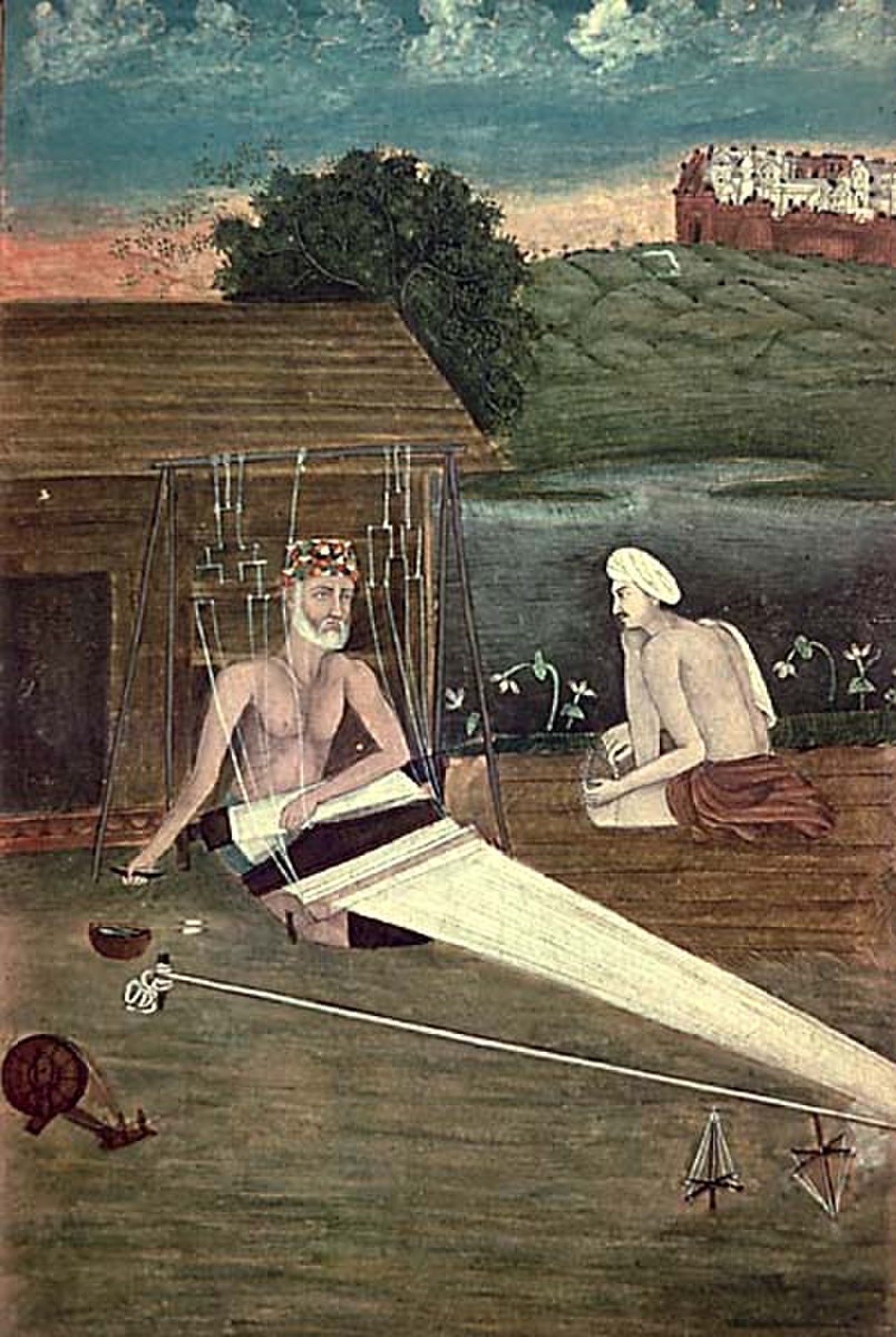
Kabir is among the most difficult figures in Indian religious history to place, and the difficulty is the point. He was a weaver — an occupational caste held in contempt by most religious establishments — who emerged in fifteenth-century north India in the Kashi region and spoke with equal disrespect to the Hindu and the Muslim establishments alike. The tradition holds that he was born into a Muslim family of weavers, that he studied with the Hindu devotional saint Ramananda, and that his verses address both what the pandits are doing and what the ulama are doing. He is claimed by Hindus, by Muslims, by Sikhs, and by the Nirguna and Nirankar sects, and he wrote in a vernacular that was deliberately nobody's classical language, so that neither side could claim it.
His output is a body of short vernacular couplets — doha, pada, sboli — in Awadhi and Braj, and the Kabir Samagri, or collected works, carry a large number attributed to him under varying titles. The corpus is complicated: because Kabir wrote in the common tongue, the attribution of particular poems to him is a matter of tradition and textual criticism, not of signature, and the received numbers differ between editions. The two principal bodies of his writing are the Kabir Bijak and the poems ascribed to him, alongside the earlier attributed collections. No verse-level citation is offered here by design: the works are cited whole, and any particular couplet should be located in a critical edition, because the popular "famous dohas" circulate in variant and often corrupt forms.
The two memorials at Kashi are the reason for his unique standing. The tradition holds that at his death Hindus claimed the body and Muslims claimed it, and that in the end it was resolved by two claims at once — a grave for the Muslims, a fire for the Hindus, so that part of the body was buried and part cremated. Both sites stand in Varanasi. It is a story, not a record, but it is the story that every community has repeated, and it is why the "two graves" are the physical proof of his refusal to be claimed. The Kabir Math, the Kabir Chabutra (the platform from which he is said to have preached), and the mazar in the city are the principal sites.
Kabir's verses are of two kinds: the upADES, the direct teaching, and the devotional lyric in which the longing for the beloved — the ineffable — is expressed without doctrine. The teaching poems attack ritual without knowledge, superstition, greed, and the division between castes and communities; they insist on the naam, the Name or the inner word, as the one thing that cannot be stolen. His radicality is real but should not be romanticised: he was a poet working within the conventions of the bhakti and Sufi idioms of the period, and his images are often deliberately paradoxical rather than systematically iconoclastic.
A note on the older material. An earlier version of this entry carried a block of invented quotations attributed to a European scholar of Kabir. That has been removed. The entry now rests on the Kabir Bijak and the Kabir Samagri as primary works, and on the standard scholarly and critical literature on Kabir.
Sources and what is still unverified
This entry is grounded in the Kabir Bijak and the Kabir Samagri, on the standard critical scholarship on Kabir's text and language, and on the Varanasi district gazetteer. A human guardian from a Kabir or nirguna tradition — and specifically a Hindi or Awadhi literary scholar — should supply and check: the correct provenance and dating of the Bijak and the Samagri collections; which particular poems in a critical edition are securely Kabir's; the two-memorial story in the form the Kashi institutions themselves tell it; and the local festival observance of Kabir Chhatrthi or the Kabir mourning day, which is kept by Hindu and Muslim communities together. A great deal of what circulates about Kabir in English is anecdotal and romanticised; the poetry should be read in a critical edition and the memory should be distinguished from the record.
Wisdom Graph: Divine Associations
🛕 Principal Temples
- Kabir Temple, Varanasi
- Kabir Muth, Varanasi
- Kabir Chabutra, Varanasi
Sources & provenance
- 📜Primary sourceBookKabir Bijak and Kabir Samagri (the vernacular poems attributed to Kabir)
- 🎓Scholarly sourceBook