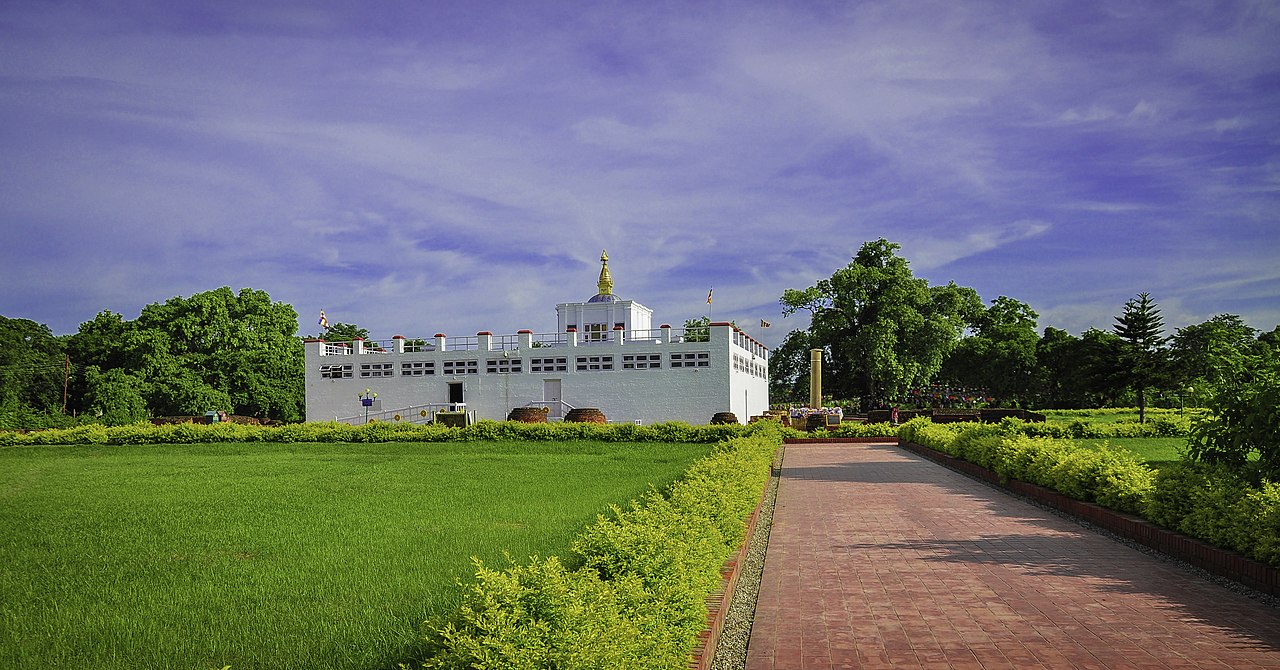
Lumbinī — Birthplace of the Buddha
Deities

Lumbinī — Birthplace of the Buddha

Lumbinī — UNESCO World Heritage birthplace of the Buddha

Status · Anusandhāna
Source · Tier 1
Tradition · Buddhist
Period · c. 563 BCE–present

Lumbinī — Birthplace of the Buddha

Tradition

Buddhist / Theravada / Mahayana — First of the four principal Buddhist pilgrimage sites

Location

  • Lumbini, Rupandehi, Nepal (27.4833°N, 83.2767°E)
  • UNESCO World Heritage Site (inscribed 1997)

Timeline

| Year | Event | Source | |------|-------|--------| | c. 563 BCE | Queen Māyādevī gives birth to Siddhārtha under Sāl tree | Pali Canon; Buddhist tradition | | c. 249 BCE | Ashoka erects pillar and builds temple at Lumbini | Ashoka Pillar inscription | | c. 400-411 CE | Faxian visits; describes sacred garden and temple | Faxian, Fo-Kwo-Ki | | c. 636-637 CE | Xuanzang visits; notes Ashoka pillar and living Sāl tree | Xuanzang, Si-Yu-Ki | | 1896 CE | Anton Führer rediscovers Ashoka Pillar | British survey records | | 1997 CE | UNESCO World Heritage inscription | UNESCO WHC | | 2003 CE | Major restoration by Lumbini Development Trust | LDT records |

Foreign Traveler Quotes

"The garden of Lumbini is still there, with the tree under which the Buddha was born still standing. The temple built by Ashoka is well-maintained, and pilgrims come from many countries to worship at this sacred spot." — Faxian (Fa-Hien), Chinese Buddhist pilgrim, Fo-Kwo-Ki, c. 400-411 CE

"The Buddha's birthplace is marked by a pillar of solid stone erected by Emperor Ashoka. The tree under which the Buddha was born is still alive and flourishing. The temple built by Ashoka at this place is about 20 feet high, and worshippers come daily to offer incense and flowers." — Xuanzang (Hiuen Tsang), Chinese Buddhist pilgrim, Si-Yu-Ki, c. 636-637 CE

Sacred Narrative

Lumbinī — where Queen Māyādevī gave birth to Siddhārtha under the Sāl tree — is the first of the 4 most-holy Buddhist places. UNESCO World Heritage (1997). The Māyādevī Temple houses the marker-stone erected by Emperor Aśoka in 249 BCE to mark the exact birthplace. The Aśoka Pillar (249 BCE) records the site. Pilgrims from all 54 Buddhist nations visit; each nation has built its own temple at Lumbinī — the Thai, Korean, Japanese, Chinese, Vietnamese, Sri Lankan monasteries are spectacular architectural specimens.

Chinese pilgrims Faxian (5th century) and Xuanzang (7th century) both visited Lumbini at times when Buddhism was flourishing. They noted the sacred Sāl tree was still standing, the Ashoka temple was well-maintained, and pilgrims came from many countries to worship. The Ashoka Pillar inscription — still legible today — confirms this as the Buddha's birthplace.

In 1896, German archaeologist Anton Führer rediscovered the Ashoka Pillar during the British survey of Nepal. Today, Lumbini is a UNESCO World Heritage Site and receives millions of Buddhist pilgrims annually.

Wisdom Graph: Divine Associations

📖 Stories

  • The Birth of the Buddha and the Sacred Garden of Lumbini
    **Lumbinī** — where Queen Māyādevī gave birth to Siddhārtha Gautama (who would become the Buddha) under a Sāl tree — is the **first of the four most-holy Buddhist pilgrimage sites**. UNESCO World Heritage Site since 1997. Emperor **Ashoka** visited Lumbini in 249 BCE and erected a pillar (still standing) with an inscription confirming this as the Buddha's birthplace. He also built the original temple at this site. Chinese pilgrims **Faxian** (5th century) and **Xuanzang** (7th century) both visited and described the site — noting the sacred tree was still living and the Ashoka temple was well-maintained. Xuanzang specifically described the Ashoka pillar as "solid stone" with the Buddha's birthplace marked. In **1896**, the Ashoka Pillar was rediscovered by German archaeologist **Anton Führer** during the British survey of Nepal. The pillar bears an inscription confirming the site as the Buddha's birthplace. Today, Lumbini receives pilgrims from all 54 Buddhist nations. Each country has built its own monastery at Lumbini — Thai, Korean, Japanese, Chinese, Vietnamese, Sri Lankan — making it a unique international Buddhist pilgrimage complex.
    Buddhist tradition + Pali Canon + scholarly sources

🛕 Principal Temples

  • Māyādevī TempleModern reconstruction; original Ashoka-era marker stone (249 BCE)
    📍 Lumbini, Rupandehi, Nepal, Nepal
    UNESCO World Heritage Site — marks exact birthplace of Buddha
  • Ashoka Pillar249 BCE
    📍 Lumbini
    Emperor Ashoka erected to mark Buddha's birthplace; oldest Buddhist inscription in Nepal
  • International Buddhist monasteries (Thai, Korean, Japanese, Chinese, Vietnamese, Sri Lankan)20th century
    📍 Lumbini
    54 nations have built monasteries at Lumbini

🎊 Festivals

  • Buddha Jayanti / Vesak
    Vaisakh (April-May) · 1-3 days
    Commemorates Buddha's birth; UNESCO celebration with international participation

📜 Primary Scriptural Sources

  • Lalitavistara SutraMahayana Buddhist text describing Buddha's birth
  • Ashoka Pillar inscriptionOriginal 3rd century BCE inscription
  • Mahavamsa (Sri Lankan chronicle)Historical record of Buddhist sites
