




Sacred Facts · At a Glance
- Gender
- male
Primary Scriptures
1 source- Munram Tiruvandadistotra100 versesComposed 7th c. CEVision of Vishnu's five cosmic forms (pañca-mūrti)
Pey Āḻvār — The Visionary of the Five Forms
The Direct Vision
Pey Āḻvār (Tamil: பேயாழ்வார்) is the third of the 12 Āḻvār saints, traditionally dated to the 7th century CE. His name means "madman" or "possessed one" — a term of endearment indicating his ecstatic, seemingly irrational devotion. Unlike Poigai and Budatt, who composed gentle metaphors, Pey had a violent, direct vision of Vishnu.
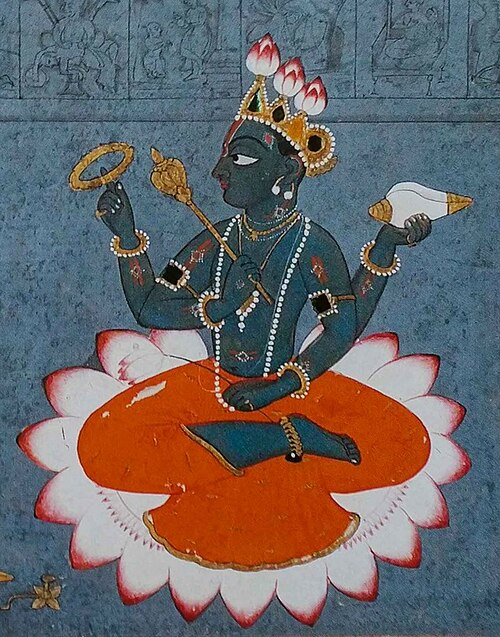
Tradition says Pey wandered into the Varadaraja temple in Kanchipuram and suddenly saw Vishnu's five cosmic forms simultaneously: Para (supreme form in Vaikuntha), Vyūha (emanations for creation), Vibhava (incarnations like Rama and Krishna), Antaryāmin (inner controller of all beings), and Arcā (the temple image devotees worship).
Munram Tiruvandadi — The Third Decad
His sole work, the Munram Tiruvandadi ("Third Sacred Decad"), consists of 100 verses describing this overwhelming vision:
"He is fire, He is water, He is the sky, He is the earth — He is everything and beyond everything. I saw Him with eyes that were not my own."
The verses are more philosophical than the first two Āḻvārs, introducing the pañca-mūrti (five-form) theology that would become central to Sri Vaishnava doctrine.
Connection to Varadaraja Perumal
The Varadaraja Perumal temple in Kanchipuram — one of the 108 Divya Desams and the most important Vaishnava shrine of Tondai Nadu — is Pey's sacred site. The temple's main deity, Varadaraja ("King of Boon-Givers"), stands atop Hastigiri hill, visible for miles. Pilgrims still recount Pey's vision when standing before the deity: "He saw what we only glimpse."
Legacy
The first three Āḻvārs — Poigai, Budatt, and Pey — are called the Mudal Āḻvārs ("First Saints"). Their 300 combined verses form the theological foundation of the Divya Prabandham. Pey's vision of the five forms established the scriptural basis for later Sri Vaishnava temple theology: the Arcā (temple image) is not merely symbolic but a direct manifestation of the Supreme.
Wisdom Graph: Divine Associations
🛕 Principal Temples
📜 Primary Scriptural Sources
- Munram Tiruvandadistotra7th c. CE100 versesVision of Vishnu's five cosmic forms (pañca-mūrti)
Sources & provenance
- 📜Primary sourceBookPey Āḻvār. Munram Tiruvandadi (650)100 verses; third work in Nālāyira Divya Prabandham
- 📜Primary sourceBook