


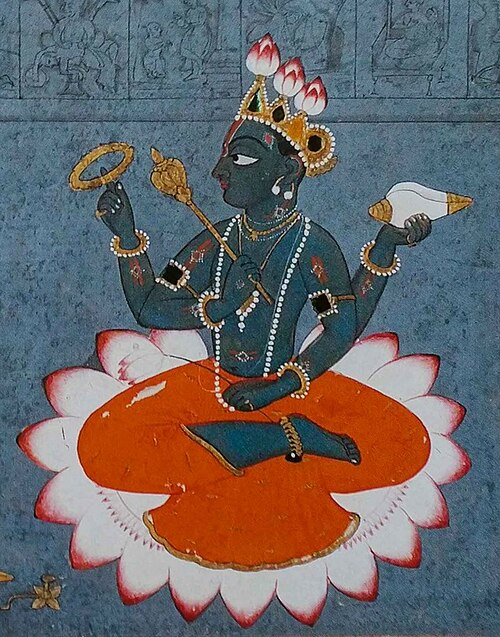


Sacred Facts · At a Glance
- Gender
- male
Primary Scriptures
2 sources- Tiruccanda Viruttamstotra120 versesComposed 8th c. CEDivine grace overrides karma and ritual
- Nanmukan Tiruvandadistotra96 versesComposed 8th c. CEVishnu as the source of all gods
Tirumaḻiśai Āḻvār — The Reformed Bandit
From Banditry to Grace
Tirumaḻiśai Āḻvār (Tamil: திருமழிசை ஆழ்வார்) is the fourth of the 12 Āḻvār saints, traditionally dated to the 8th century CE. His name means "he who resides in beautiful Māḻiśai" (a village near Kanchipuram). Before his conversion, he was a highway robber — a feared bandit who waylaid travelers on the roads of Tondai Nadu.
One night, he attacked a wedding procession. But when he lifted the bride's veil, he saw not a woman but Vishnu himself. The vision shattered him. He dropped his weapons, fell to the ground, and wept for three days. When he rose, he was no longer a bandit but a poet-saint.
The Theology of Grace
Tirumaḻiśai is the first Āḻvār to articulate a systematic theology: grace (kṛpā) overrides karma. His Tiruccanda Viruttam declares:
"By birth I am a sinner, by deed I am worse — yet the Lord's grace makes me His own. What use is ritual to one whom the Lord has chosen?"
This was revolutionary. The 8th-century Tamil society was bound by caste and karma. Tirumaḻiśai — an ex-bandit, possibly of low birth — declared that Vishnu's mercy was available to all regardless of birth or past deeds. This theology would be fully developed by Nammāḻvār and later by Rāmānuja's Śrībhāṣya.
His Two Works
| Work | Verses | Theme |
|---|---|---|
| Tiruccanda Viruttam | 120 | Grace vs. karma; the futility of ritual without devotion |
| Nanmukan Tiruvandadi | 96 | Vishnu as the source of Brahma, Shiva, and Indra |
The second work is philosophically daring: Tirumaḻiśai says Brahma creates, Shiva destroys, Indra rules — but Vishnu is the power behind all three. This subordinated the Shaiva gods of Tamil Nadu to Vishnu, a theological move that sparked centuries of Śaiva-Vaiṣṇava debate.
The Kanchipuram Connection
Tirumaḻiśai's sacred site is the Yathokthakari temple in Kanchipuram, which he shares with Poigai Āḻvār. The temple's deity — the One Who Does As Told — reflects Tirumaḻiśai's own experience: Vishnu obeyed the bandit's command to reveal himself, just as the deity obeys devotees' prayers.
Legacy
Tirumaḻiśai established the democratic theology of the Āḻvārs: no one is too sinful for Vishnu's grace. This doctrine later justified Rāmānuja's radical move of teaching Sanskrit Vedanta to non-Brahmins. Every Sri Vaishnava guru lineage traces its authority back through Nammāḻvār to Tirumaḻiśai's grace theology.
Wisdom Graph: Divine Associations
🛕 Principal Temples
📜 Primary Scriptural Sources
- Tiruccanda Viruttamstotra8th c. CE120 versesDivine grace overrides karma and ritual
- Nanmukan Tiruvandadistotra8th c. CE96 versesVishnu as the source of all gods
Sources & provenance
- 📜Primary sourceBookTirumaḻiśai Āḻvār. Tiruccanda Viruttam (750)120 verses on divine grace vs. karma
- 📜Primary sourceBookTirumaḻiśai Āḻvār.