Uchchaihshravas — The Divine Horse of the Churned Ocean
Section 1: Overview
[BEGINNER]
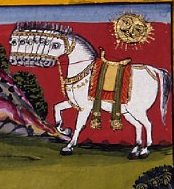
Uchchaiḥśravas (Sanskrit: उच्चैःश्रवस्, "one whose ears are erect" or "of loud neigh") is the prototypical divine horse of Vedic and Puranic mythology. Dazzling white, with seven heads, he rose from the churning of the cosmic ocean and was claimed by Indra, king of the devas, as his steed.
The horse is the central sacred animal of the early Vedic Aryan tradition — the aśva of the Rig Veda, the sacrificial victim of the royal Aśvamedha rite, and the steed of the Sun's chariot. Where Dravidian and folk traditions venerated the bull, buffalo, and elephant, the Aryan Vedic culture elevated the horse to the supreme divine animal.
[INTERMEDIATE]
The Samudra Manthan narrative places Uchchaihshravas among the fourteen treasures churned from the Ocean of Milk, alongside Airavata, Lakshmi, Kamadhenu, and the Kalpavriksha. A famous tale describes how Kadru and Vinata, co-wives of the sage Kashyapa, wagered on the colour of Uchchaihshravas's tail — leading to Vinata's enslavement and eventually to the enmity between snakes (Kadru's children) and eagles (Vinata's son Garuda).
The Vedic horse cult is the oldest and most distinctive feature of Indo-Aryan religion. The Aśvamedha — the year-long royal horse sacrifice — confirmed a king's sovereignty; it is described in the Shatapatha Brahmana (13.1–5) and the Yajur Veda. The horse, set free to wander for a year, symbolically claimed every territory it crossed; armies followed to enforce the claim.
The horse is also associated with:
- Surya, whose chariot is drawn by seven horses (representing the seven colours of light, or the seven days)
- Ashwins, twin Vedic physician-gods whose very name means "horse-possessors"
- Hayagrīva, the horse-headed avatar of Vishnu who restored the stolen Vedas
- Kalki, the tenth avatar of Vishnu who will arrive on a white horse at the end of the Kali Yuga
- Revanta, son of Surya and Sanjna, the patron of hunters and horsemen
Section 2: Vedic Horse Symbolism
- Sovereignty: The king's horse defines his dominion (Aśvamedha)
- Solar energy: The sun is the "celestial horse" in Rig Veda 1.163
- Swiftness and life-force: The horse is prāṇa (breath) in Upanishadic symbolism
- Warrior virtue: Chariot-borne combat was the Vedic ideal; the horse is the kṣatriya's companion
Section 3: Relationships
- Indra — Uchchaihshravas's eternal rider
- Surya — served by the seven horses of the solar chariot
- Bali (asura king) — in some traditions Uchchaihshravas is given to Bali after Indra's banishment
- Kadru & Vinata — the bet over his tail begins the cosmic snake-bird enmity
Section 4: Living Tradition
- Aśvamedha is the quintessential Vedic-Brahminical royal rite, performed by Yudhishthira (Mahabharata), Rama (Ramayana), and historical emperors including Samudragupta (c. 350 CE) and the Chola kings
- Surya temples (Konark, Modhera, Martand) sculpt the seven horses of the solar chariot in monumental stone
- Hayagrīva Jayanti (Shravana Purnima) celebrates Vishnu's horse-headed form in Vaishnavism
- Kalki temples at Sambhal (Uttar Pradesh) await the future horse-avatar
- In Rajasthani and Gujarati folk shrines, terracotta horses are the most characteristic offering — a direct continuation of Vedic horse veneration into living folk practice
Section 5: Key Facts
- Role: Divine horse; Indra's mount; archetype of the aśva
- Heads: Seven (in some accounts); snow-white
- Tradition: Brahminism/Vedic — the defining sacred animal of Aryan religion
- Origin: Samudra Manthan
- Ritual context: Aśvamedha (royal horse sacrifice)
- Successor myth-forms: Hayagrīva, Kalki, Revanta, Surya's seven horses

.jpg/500px-Indra%2C_Chief_of_the_Gods_LACMA_M.69.13.4_(1_of_5).jpg)


.png/500px-Late_Vedic_Culture_(1100-500_BCE).png)