Traditions
Baha'i Faith (Indian Communities)
Baháʼí Faith in India
Baháʼí Faith in India
No primary scriptures are catalogued for this entry yet. If you know of scriptural references we have missed, please contribute them.
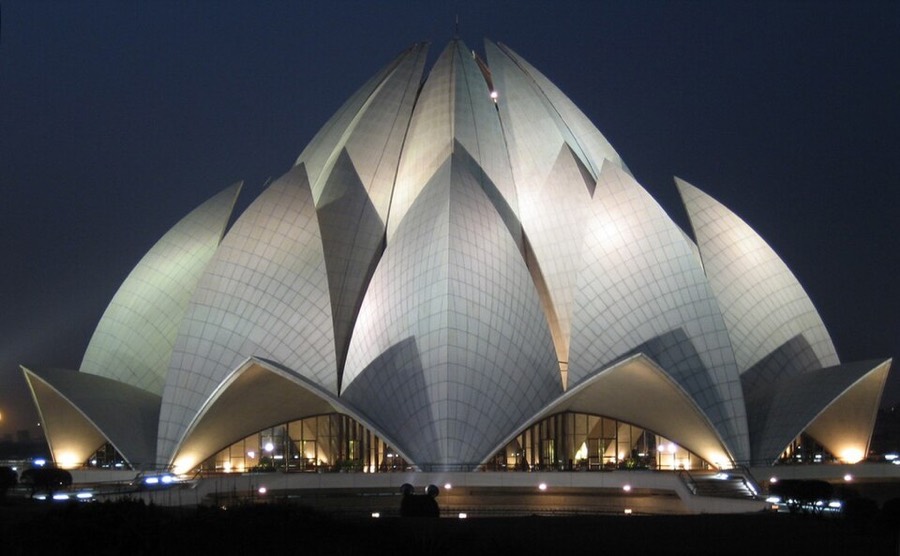
The Baháʼí Faith — youngest of the world's independent religions, founded by Baháʼu'lláh (1817–1892) in Persia — teaches the oneness of God, the oneness of religions, and the oneness of humanity: every great faith as successive chapters of one book. India holds one of the largest Baha'i populations on earth (estimates run into the millions, concentrated in UP, MP, and Maharashtra villages), and Delhi holds its architectural crown: the Lotus Temple.
How it came: Persian Baha'i merchants and teachers reached Bombay in the 1840s–70s; the first Indian believers followed; mass teaching in rural India from the 1960s–80s built village communities by the thousand. Indian Baha'is — Hindu, Muslim, Sikh, Christian, tribal by origin — kept their cultures and added Baha'i worship: no priests, elected assemblies, prayer with scriptures of all faiths.
Distinctive life: the 19-day Feast (community worship + consultation + fellowship); Ridvan (12 days from April 21 — Baha'u'llah's declaration festival, the holiest); children's moral classes and junior-youth groups run in thousands of villages; Huququllah (19% wealth offering) and the Mashriqu'l-Adhkar (dawn prayers). Marriage across religions is welcomed; alcohol and partisan politics are renounced.
Persecution elsewhere, pluralism here: Baha'is face systematic persecution in Iran (their birthplace) — a contrast Indian Baha'is note with gratitude: Delhi's Temple hosts silent prayers of "diverse religious backgrounds side by side" daily.
DivineLens presents perspectives from within this tradition, curated for authenticity. For personal spiritual direction, advanced study, or questions about tradition-specific practice, we recommend finding a qualified teacher. Our Advisory Council reviews all content for theological accuracy.
Recommended reviewers: A Baha'i scholar and a historian of new religions in India.
_in_1868.jpg/500px-Bah%C3%A1'u'll%C3%A1h_(M%C3%ADrz%C3%A1_%E1%B8%A4usayn-%60Al%C3%AD_N%C3%BAr%C3%AD)_in_1868.jpg)