


.jpg/500px-Rajarani_Temple_03_(cropped).jpg)
Sacred Facts · At a Glance
- Element
- air
Primary Scriptures
0 sourcesNo primary scriptures are catalogued for this entry yet. If you know of scriptural references we have missed, please contribute them.
⚠️ CONTENT VERIFICATION STATUS: This draft is . All citations require validation.
Shinto
Section 1: Overview
[BEGINNER]
Shinto (神道, "Way of the Gods") is Japan's indigenous religious tradition, dating back thousands of years. Unlike Buddhism, Christianity, or Islam, Shinto has no single founder, no sacred scripture written by a prophet, and no explicit moral code. Rather, it is an evolving tradition of kami (sacred spirits/deities) veneration, shrine worship, and seasonal festivals.
Kami (神) can be:
- Nature spirits: trees, rocks, mountains, rivers, the sun, the moon
- Ancestors: spirits of the deceased who continue to protect their descendants
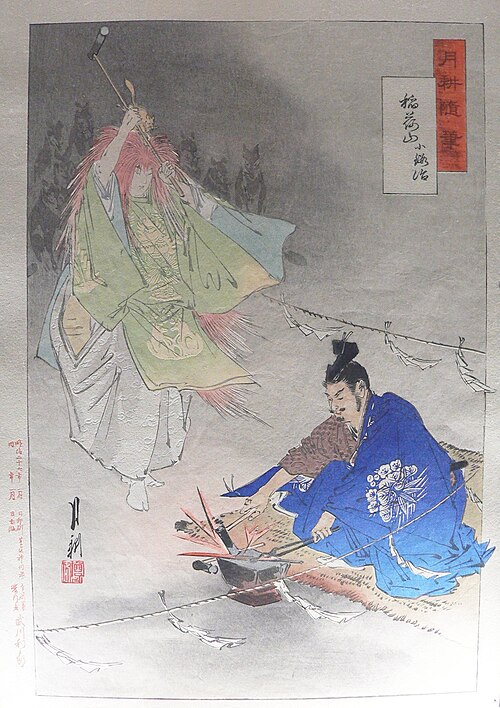
- Deities: major gods like Amaterasu (sun goddess), Susanoo (storm god), Inari (fox deity)
- Spirits of exceptional people: scholars, leaders, or those who contributed greatly
Shinto teaches that kami are present everywhere — in nature, in homes, in shrines. The purpose of Shinto is to maintain harmony (wa) with the kami, with nature, and among people.
Key concepts:
- Musubi: The binding/power that connects all things
- Kei (sei): Reverence, respect, awe before the sacred
- Harae: Purification — removing pollution (kegare) to restore purity
- Matsuri: Festival — celebrating the kami and life
Shinto and Buddhism have coexisted in Japan for centuries, often blended ( shinbutsu shugo). Many Japanese consider themselves both Buddhist and Shinto simultaneously.
[INTERMEDIATE]
The Classical Texts
Shinto's sacred texts include:
- Kojiki (Records of Ancient Matters, 712 CE): Mythology, creation stories, the imperial lineage; written in classical Japanese
- Nihon Shoki (Chronicles of Japan, 720 CE): More detailed mythology; includes Chinese and Buddhist influence
These texts describe:
- The creation of Japan by the gods Izanagi and Izanami
- The sun goddess Amaterasu and her descendants
- The divine origin of the Japanese imperial line
Shinto Sects
After the Meiji Restoration (1868), Shinto was reorganized:
- State Shinto (Kokka Shinto): Nationalistic, worship of the Emperor as divine; dissolved after WWII
- Sect Shinto (Kyoha Shinto): 13 sects with distinct practices, including:
- Fushimi Inari (Inari worship)
- Konko Daijin (founder: Kawate Bunjiro)
- Oomoto (founded by Deguchi Nao)
- Tenrikyo (founded by Nakata Miki; emphasizes Divine Reason)
- Shrine Shinto (Jinja Shinto): The classical shrine-based worship; not organized into sects
Section 2: Core Teachings
[BEGINNER]
Kami
Kami are the central concept:
- Sacred, powerful beings
- Present in nature (sacred mountains, trees, rocks, rivers)
- Present in ancestors (spirit protection)
- Present in great people (their spirits continue to work)
Kami are not omniscient or omnipotent — they are powerful spirits who can bless or curse. They are approached with respect, offerings, and prayer.
Shrine Worship
Shinto takes place primarily at shrines:
- Torii: The gate marking the sacred boundary
- Haiden: The worship hall
- Honden: The inner sanctuary where the kami is enshrined
- Ema: Votive tablets with wishes
- Omikuji: Fortune slips
Visitors:
- Purify hands at the temizuya (water basin)
- Bow twice, clap twice, pray, bow once
- May make offerings (money, sake, food)
- May draw fortunes (omikuji)
Purification (Harae)
Shinto emphasizes ritual purification:
- Misogi: Standing under a waterfall or in cold water
- Homa: Fire rituals
- Daily purification: Brushing away negative influences
Festivals (Matsuri)
Shinto festivals celebrate:
- Nature ( cherry blossoms, harvest)
- The kami ( shrine festivals)
- The imperial line (national holidays)
- Community (local festivals)
Section 3: Practices & Living Tradition
[BEGINNER]
Visiting a Shrine
- Approach the torii gate — bow before passing through
- At the temizuya (water basin): Wash left hand, then right; rinse mouth (do not drink)
- At the offering hall: Drop a coin in the offering box
- Ring the bell (if present) to attract the kami's attention
- Bow twice deeply
- Clap twice
- Pray silently (your wish or thanks)
- Bow once deeply
Home Practice
Many Japanese homes have a kamidana (god shelf) with:
- A miniature shrine or talisman
- Fresh water and offerings (rice, sake)
- Daily prayers for protection
Life Cycle Rituals
Shinto marks major life transitions:
- Birth: Shrine visit to register the child
- 3-5-7 Festival (Shichi-Go-San): Blessing for children at these ages
- Coming of Age (Seijin Shiki): Adulthood at 20
- Marriage: Often at shrines (shrine weddings)
- Funeral: Buddhist custom in Japan; Shinto has no explicit funeral rite (but shrines may commemorate the dead)
Practices you can explore today:
-
Respect for Nature: Shinto teaches that kami are present in nature. Today, spend 10 minutes in nature — a park, a tree, running water — with awareness and respect. This is a Shinto practice.
-
Gratitude: Shinto emphasizes gratitude to the kami and to nature. Take a moment to silently thank the forces that sustain your life.
-
Purification Breath: Stand quietly. Take a deep breath. As you exhale, imagine releasing anything that weighs you down — anxiety, stress, negativity. This simple practice embodies harae (purification).
Section 4: Living Tradition Today
[BEGINNER]
Shinto in Modern Japan
Shinto remains central to Japanese life:
- 80% of Japanese households have a kamidana
- Millions visit shrines on New Year's (Hatsumode)
- Shrine festivals (matsuri) are community events
- Shinto rituals mark many life events
Shinto and Buddhism
Most Japanese consider themselves both Shinto and Buddhist:
- Birth: Shinto rituals
- Death: Buddhist funerals
- Many temples have both Shinto shrines (jinja) and Buddhist elements
Shinto Outside Japan
Shinto has spread with Japanese diaspora:
- Brazil (large Japanese community)
- Hawaii
- North America
Contemporary Issues:
- Relationship between Shinto and State (controversial legacy of State Shinto)
- Role in modern Japanese identity
- Preservation of shrine traditions
- Shinbutsu separation (post-WWII distinction)
DivineLens presents perspectives from within this tradition, curated for authenticity. For personal spiritual direction, advanced study, or questions about tradition-specific practice, we recommend finding a qualified teacher in Shinto. Our Advisory Council reviews all content for theological accuracy.
Known Limitations
- Citations require verification.
- The complexity of Shinto (folk Shinto, shrine Shinto, sect Shinto, State Shinto) is simplified.
- The post-WWII separation of Shinto and state is underexplained.
- The relationship between Shinto and Buddhism (Shinbutsu shugo) is complex.
- Female kami, shamanic elements, and folk traditions deserve more detail.
Recommended reviewers: A Shinto scholar, a Shinto priest, and a historian of Japanese religion.
Sources & provenance
- 🎓Scholarly sourceBookJames G. Lochtefeld. The Illustrated Encyclopedia of Hinduism (2002)
- 🎓Scholarly sourceGazetteer