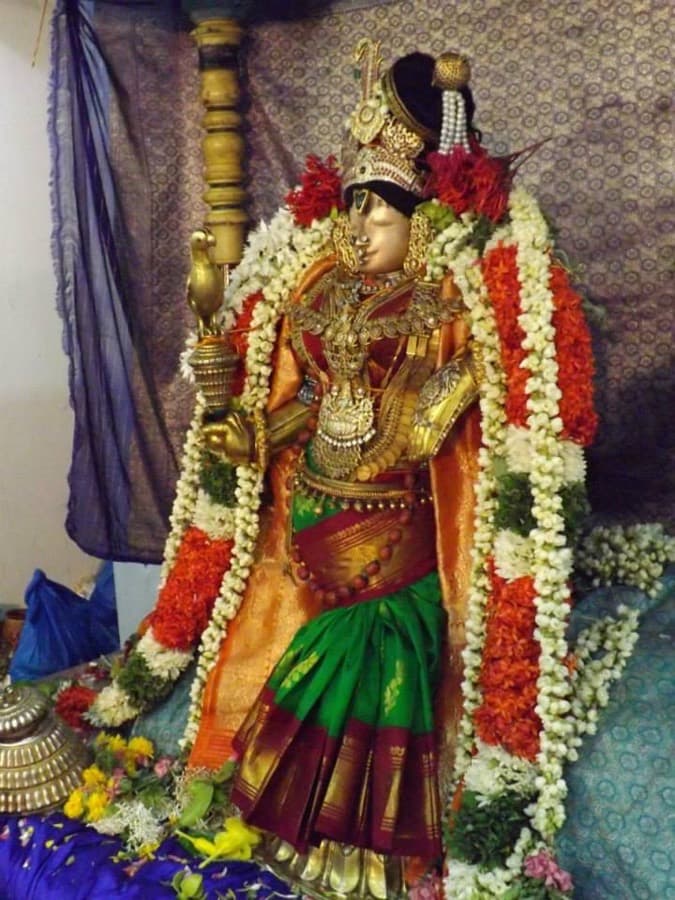
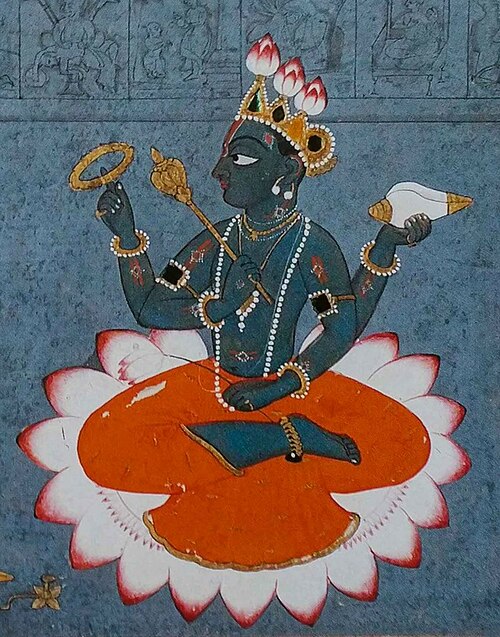
Sacred Facts · At a Glance
- Gender
- female
Primary Scriptures
2 sources- Tiruppāvaistotra30 verses, recited December–JanuaryComposed 9th c. CEMorning worship of Krishna as cowherd
- Nācciyār Tirumoḻistotra143 versesComposed 9th c. CEBridal mysticism — the soul as bride of Vishnu
Āṇḍāḷ (Godādevi) — The Bride of Ranganatha
Birth and Early Life
Āṇḍāḷ was born in Srivilliputhur (near modern Madurai) in the 8th century CE. Her father, Periyāḻvār (Viṣṇucitta), was a devout Brahmin gardener who found her as a baby beneath a tulasi plant while tending his garden. He named her Godā — "she who was born from the earth."
From infancy, Godā breathed only Vishnu. While other children played with dolls, she made a clay image of Krishna and talked to it, fed it, and slept beside it. Her father, worried by her intense devotion, tried to arrange a conventional marriage — but Godā refused. She had already given her heart to Ranganatha of Srirangam.
Tiruppāvai — The Thirty Verses
Every morning during the Tamil month of Mārgaḻi (December–January), Godā would lead the local girls to the river before dawn to bathe and worship Krishna. She composed the Tiruppāvai — 30 exquisite Tamil verses that simulate the voices of cowherd girls calling each other to worship the "Lord of the Yaḍavas."
"Oṅgi ulagaḻanda uttaman pēr pāḍi..." ("Let us sing the name of the Lord who grew and measured the universe...")
These verses are recited every morning in Sri Vaishnava temples worldwide during Mārgaḻi. Even today, no Srirangam brahmotsavam begins without the Tiruppāvai.
Nācciyār Tirumoḻi — Bridal Mysticism
Her second work, the Nācciyār Tirumoḻi ("The Sacred Words of the Lady"), is 143 verses of unprecedented bridal mysticism. Āṇḍāḷ speaks as the soul-bride (jīvātmā) longing for union with the divine bridegroom (paramātmā):
"Nāraṇā! Nāraṇā! Nārāyaṇā!" ("O Lord! O Lord! O Narayana!") *"If you do not come, I will die. I will break my bangles and scatter my hair."
The intensity of these verses shocked conservative brahmins — a young girl speaking so boldly of divine love! But the Godā declared: "I am not this body. I am the eternal bride of the Lord."
Marriage to Ranganatha
When she came of age, her father prepared to marry her to a human groom. Godā sent a message to the priests of Srirangam: "Tell Ranganatha that His bride is waiting." The priests, reading her Tiruppāvai, understood. They brought the Lord's Utsavar (processional image) to Srivilliputhur.
In a grand ceremony, Godā married Ranganatha — not as metaphor, but as living theology. She entered the sanctum, embraced the image, and merged into it. Her physical body disappeared; her soul became one with the Lord. From that day, the Srirangam temple has two wives for Ranganatha: the main goddess Ranganāyaki, and Āṇḍāḷ herself, enshrined in a separate sanctum.
Legacy
Āṇḍāḷ is the only female saint among the 12 Āḻvārs. Her works are recited in every Sri Vaishnava home. Srivilliputhur, her birthplace, has a towering gopuram (11 stories, 192 ft) — the official symbol of the Government of Tamil Nadu. In the Sri Vaishnava tradition, she is considered an incarnation of Bhūdevi (the Earth Goddess), just as Ranganatha is Viṣṇu.
Wisdom Graph: Divine Associations
Principal Temples
Primary Scriptural Sources
- Tiruppāvaistotra9th c. CE30 verses, recited December–JanuaryMorning worship of Krishna as cowherd
- Nācciyār Tirumoḻistotra9th c. CE143 versesBridal mysticism — the soul as bride of Vishnu
Sources & provenance
- 📜Primary sourceBookĀṇḍāḷ (Godādevi). Tiruppāvai (800)30 Tamil verses sung during Margazhi (December–January)
- 📜Primary sourceBookĀṇḍāḷ (Godādevi). Nācciyār Tirumoḻi (800)143 Tamil verses of bridal mysticism
- 📜Primary sourceBookSathianathaier, R.. History of Medieval India (1971)Context on female saints in Tamil Vaishnavism