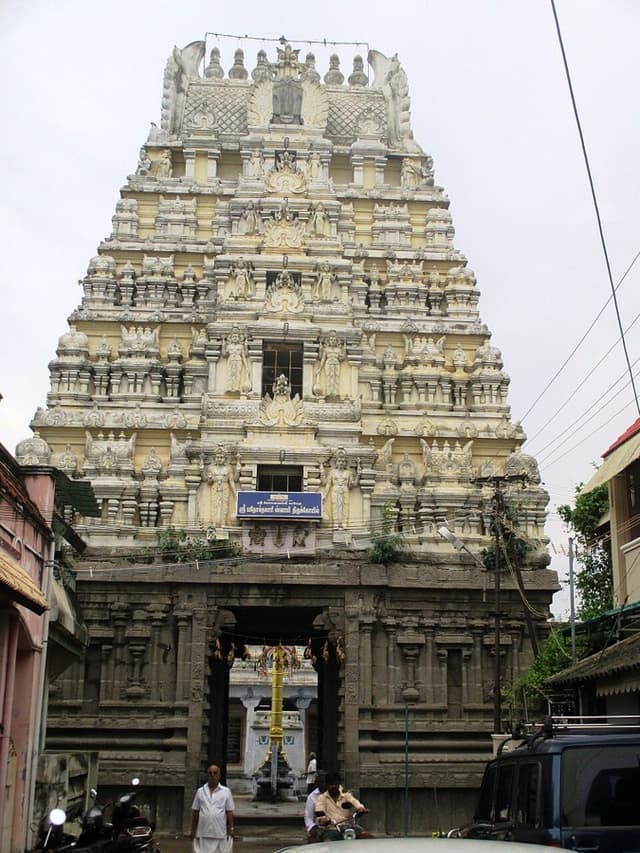
108 Divya Desams
52
Tondai Nadu
← 51. Thiruvekka (Yathottakari)53. Kalva-perumāḷ →
Kāragathān-perumāḷ
KanchipuramTamil Nadu
Attested as Divya Desam #52 in the Nālāyira Divya Prabandham (Āḻvārs 5–8 c. CE). The corpus records a Pallava-Chola attribution; individual construction phases are not yet researched and are not asserted here.
earth
A Temple Record

Kāragathān-perumāḷ

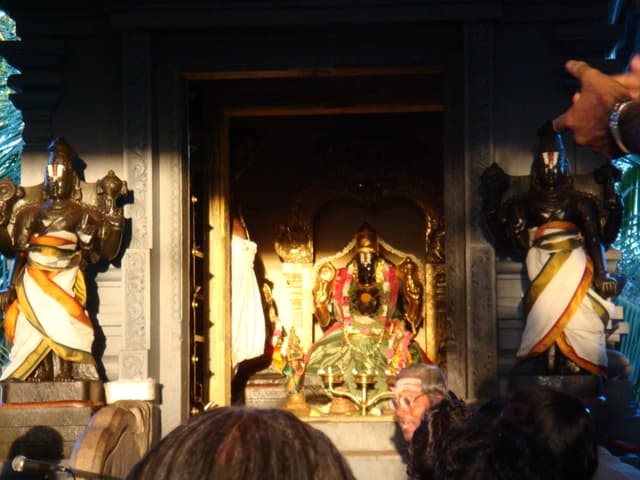
Thiru-kāragam — Vishnu standing in a kārakam (mṛdaṅga/hourglass pose)

HinduVaishnavaSri Vaishnava
Enter the Record
↓
I.Overview

A Sacred Site

Kāragathān-perumāḷ is the presiding Vishnu of Kanchipuram, one of the 108 Divya Desams — the sacred geography of temples sung by the twelve Āḻvār saint-poets of Tamil Vaishnavism (7th–9th c. CE). Goddess: Padma-mani thāyār. Tīrtham: Āgneya-tīrtham. Vimāna: Pushpa-koṭi-vimāna. Sung by Tirumaṅgai-āḻvār — 11 pasurams.

मन्त्रOṁ Namo Nārāyaṇāya / Oṁ Namo Bhagavate VāsudevāyaSacred Mantra
§Sacred Mantra
·

Oṁ Namo Nārāyaṇāya / Oṁ Namo Bhagavate Vāsudevāya

··
Thiru-kāragam — Vishnu standing in a kārakam (mṛdaṅga/hourglass pose) · The Sacred Syllable

Recite softly. Let the syllables settle. The mantra is the shortest path between the devotee and the divine.

II.Architecture

The Built Form

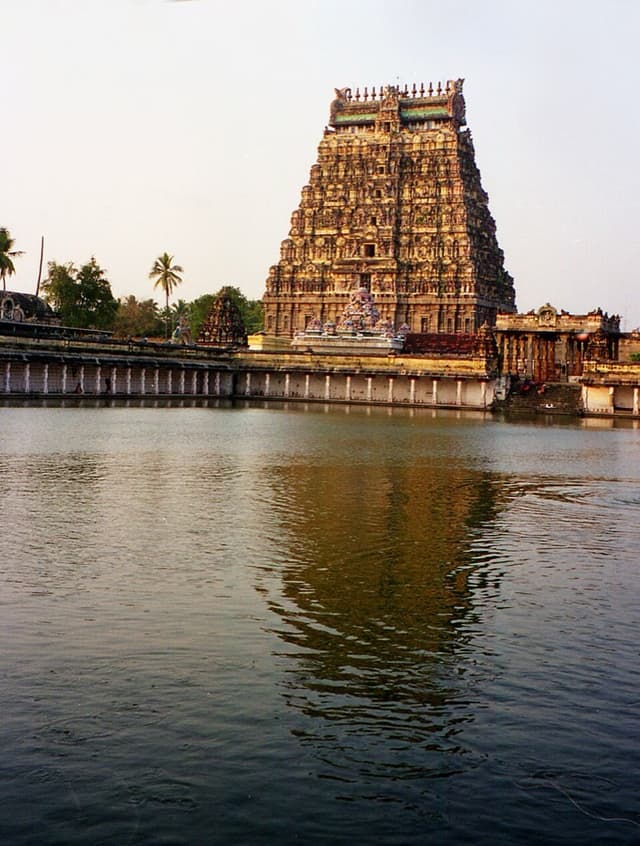
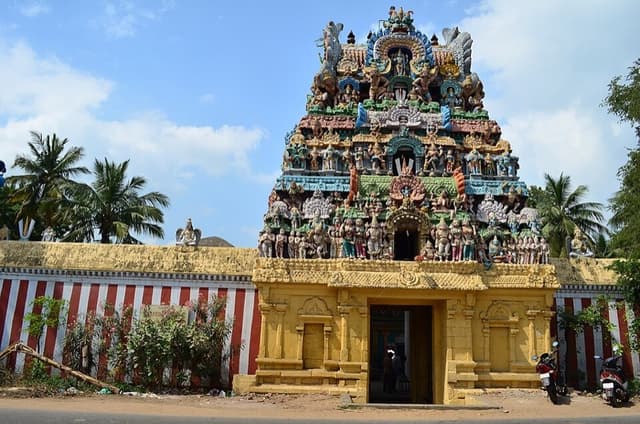
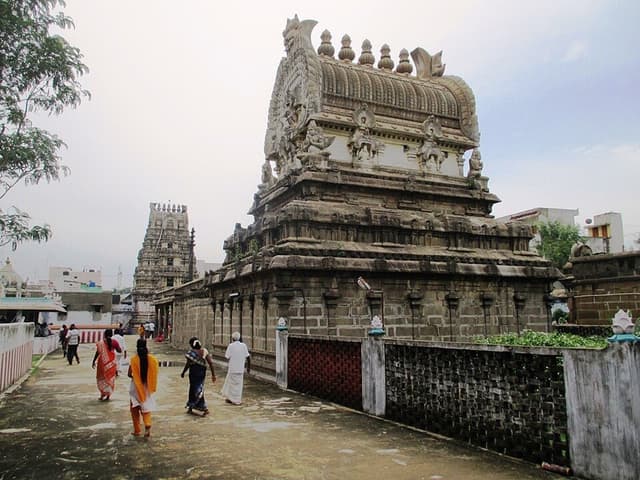
Dravidian (Pallava-Chola) — Divya Desam

2
Gopurams
1
Hectares

Vimana / Gopuram

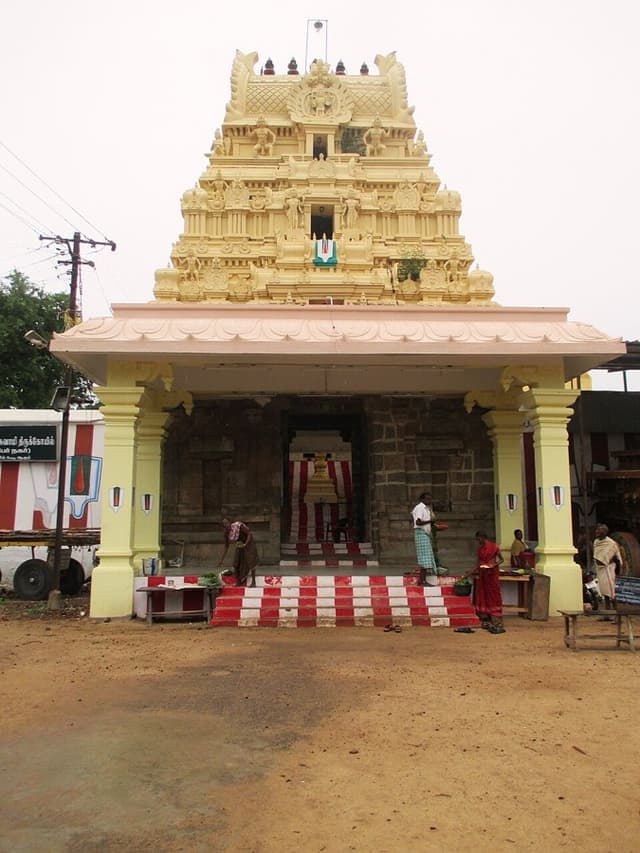
Pushpa-koṭi-vimāna (Flower-crown tower) — Chola-era vimana over the sanctum

Sanctum Sanctorum

Mūlavar — Kāragathān-perumāḷ (Vishnu in kārakam/mṛdaṅga pose), Pallava-Chola era

Mandapas · Halls

  1. Mūlavar Mandapa

    Main worship hall in front of the sanctum with Chola-era carved pillars

Sacred Tank

Āgneya-tīrtham — sacred tank at the southeastern corner

Enclosing Wall

Single prakara with gopuram on the eastern axis; compact urban temple

Construction Material

Granite stone with laterite and lime-plastered brick gopurams

One of 108 Divya Desams; deity in unique kārakam (hourglass/mṛdaṅga) standing pose; sung by Tirumaṅgai-āḻvār with 11 pasurams

§Plan View

An architectural reading of Kāragathān-perumāḷ — a schematic plan drawn from the temple's recorded elements. Building positions are illustrative, not surveyed.

Sacred TankMūlavar MandapaSanctumEast GopuramSouth GopuramN
Legend
Gopurams (2)
Vimana & Sanctum
Mandapas (1)
Sacred Tank
Enclosing Wall
III.Timeline

Sacred Timeline

  1. Chola dynasty construction

    Major temple construction during the Chola imperial period (9th–13th c. CE)

IV.Elements

Sacred Elements

The colours, creatures, and offerings that mark this site.

Sacred Colours

saffron
yellow (pīta)
green (tulasī)

Sacred Flowers

tulasī (holy basil)lotus

Sacred Offerings

tulasī garlandpuliyodara (tamarind rice)sakkarai pongalcurd ricemilk

Divine Mount

Garuda (eagle mount)
V.Patrons

Royal Patrons

  1. Chola dynasty

  2. Pallava dynasty

VI.Texts

Sacred Texts

  1. Nālāyira Divya Prabandham

    Type: Tamil hymn collection (4000 verses by 12 Āḻvārs)

  2. Sthala-purāṇam of this temple

    Type: local temple text

VIII.Festivals

Festivals & Celebrations

  1. Maha Shivaratri (Feb–Mar)

  2. Navaratri (Oct)

IX.Rituals

Worship & Rituals

Daily Rites

  1. viśvarūpa-darśana (5 AM)

  2. kāla-śānti

  3. uccikāla pūjā

  4. sāyaraṣcha

  5. arrdha-jāma (night pūja)

Offering Sequence

  1. 01

    tulasī garland

  2. 02

    milk abhiṣeka

  3. 03

    puliyodara naivedyam

  4. 04

    arati

  5. 05

    tīrtham + śaṭhāri (crown of Nammāḻvār)

X.Sacred Story

A Temple Record

An editorial reading of the site, woven from its architectural, historical, and scriptural data.

In Kanchipuram, Tamil Nadu, Kāragathān-perumāḷ — a attested as divya desam #52 in the nālāyira divya prabandham (āḻvārs 5–8 c. ce). the corpus records a pallava-chola attribution; individual construction phases are not yet researched and are not asserted here. site — kāragathān-perumāḷ is the presiding Vishnu of Kanchipuram, one of the 108 Divya Desams — the sacred geography of temples sung by the twelve Āḻvār saint-poets of Tamil Vaishnavism (7th–9th c. CE). Goddess: Padma-mani thāyār. Tīrtham: Āgneya-tīrtham. Vimāna: Pushpa-koṭi-vimāna. Sung by Tirumaṅgai-āḻvār — 11 pasurams.

§Historical Arc

The site is associated with the patronage of Chola dynasty and Pallava dynasty. The earliest event recorded here is chola dynasty construction. Major temple construction during the Chola imperial period (9th–13th c. CE).

§Reading the Built Form

Built in the Dravidian (Pallava-Chola) — Divya Desam tradition, its 2 gopurams rise into the sky, the garbhagriha holds mūlavar — kāragathān-perumāḷ (vishnu in kārakam/mṛdaṅga pose), pallava-chola era, with its Mūlavar Mandapa. One of 108 Divya Desams; deity in unique kārakam (hourglass/mṛdaṅga) standing pose; sung by Tirumaṅgai-āḻvār with 11 pasurams

Oṁ Namo Nārāyaṇāya / Oṁ Namo Bhagavate Vāsudevāya
§A Visitor's Approach

01Walk the pradakshina path. Note the earliest event recorded here — chola dynasty construction.

02Look up. The vimana above the sanctum is the temple's vertical sermon — each tier a step toward the divine.

03Chant the mantra softly: Oṁ Namo Nārāyaṇāya / Oṁ Namo Bhagavate Vāsudevāya.

04Return during Maha Shivaratri (Feb–Mar), when the temple wears its festival form.

05The tradition here is hindu. Sit. Listen. The darshan is its own teaching.

§Practical Notes
3 उद्धृत स्रोत
1 जुड़ी पवित्र कथाएँ
Historical Period1c CE
Attested as Divya Desam #52 in the Nālāyira Divya Prabandham (Āḻvārs 5–8 c. CE). The corpus records a Pallava-Chola attribution; individual construction phases are not yet researched and are not asserted here.
3000 BCEEpic & Early ClassicalPresent

Sacred Facts · At a Glance

Mantra
Oṁ Namo Nārāyaṇāya / Oṁ Namo Bhagavate Vāsudevāya
Gender
male
Vahana
Garuda (eagle mount)
Element
earth
Sacred Colours
saffronyellow (pīta)green (tulasī)
Sacred Flowers
tulasī (holy basil) · lotus
Sacred Offerings
tulasī garland · puliyodara (tamarind rice) · sakkarai pongal · curd rice · milk
Sacred Plants
tulasī

Primary Scriptures

2 sources
  • Nālāyira Divya Prabandhamtamil hymn collection (4000 verses by 12 āḻvārs)
    Composed 7th–9th c. CE
  • Sthala-purāṇam of this templelocal temple text

Kāragathān-perumāḷ

The 108 Divya Desams

The 108 Divya Desams are the 108 sacred abodes of Vishnu sung in the Tamil hymns of the 12 Āḻvārs. Compiled by Nāthamuni in the 9th c. CE as the Nālāyira Divya Prabandham (4,000 verses), these temples constitute the sacred geography of Tamil Vaishnavism and are the foundational map for the Śrīvaiṣṇava sampradāya (Rāmānuja, 11th c.).

108 is the canonical count — 106 on earth, plus Tirupparkadal (the milk-ocean, Vishnu's cosmic abode) and Paramapadam (Vaikuṇṭha, the eternal realm) — making 108 complete.

This Temple — Kāragathān-perumāḷ

  • Location: Kanchipuram, Kanchipuram district, Tamil Nadu (12.8402°N, 79.7033°E)
  • Presiding deity: Kāragathān-perumāḷ
  • Consort / Thāyār: Padma-mani thāyār
  • Temple tank (tīrtham): Āgneya-tīrtham
  • Vimāna (sanctum tower): Pushpa-koṭi-vimāna
  • Mangalāśāsanam: Sung by Tirumaṅgai-āḻvār — 11 pasurams
  • Built: Pallava-Chola

Sthala-Purāṇa Story

Third of the Ulagaḷantha co-enshrined Divya Desams. The form takes its name from the hourglass/vessel (kārakam) stance of the deity.

Worship Tradition

Daily: viśvarūpa-darśana (pre-dawn), kāla-śānti, uccikāla pūjā, sāyaraṣcha (evening), ardha-jāma (night closure). Principal offerings: tulasī garland (never fresh flowers for the central deity, only tulasī), puliyodara (tamarind rice), sakkarai pongal (jaggery rice), milk abhiṣeka. Pilgrims receive tīrtham (holy water) and the śaṭhāri — Nammāḻvār's crown placed briefly on the head, signifying servitude to the Lord.

Festival Cycle

  • Vaikuṇṭha Ekādaśī (Mārgaḻi, Dec–Jan): the holiest day. The Paramapada-vāsal (gate of Vaikuṇṭha) is opened and devotees who pass through attain mokṣa
  • Brahmotsavam: annual 10-day utsavam with Vishnu paraded on different vāhanas each day — Śeṣa, Garuḍa, Haṃsa, Hanumanta, Siṃha, Chariot
  • Garuḍa Sevai: Vishnu on his eagle-mount, most darśana-rich of all processions
  • Dhanur-māsa (Mārgaḻi): entire month is holy; pilgrims come for pre-dawn neyyavaḷikku darśana

The Āḻvār Tradition

This temple is hallowed because Āḻvār saint-poets sang of it in their Divya Prabandham pasurams. The Āḻvārs were 12 Tamil Vaishnava saint-poets (7th–9th c. CE) whose corpus of 4,000 verses is considered by Śrīvaiṣṇavas to be equivalent to the Vedas in Tamil (Drāviḍa Veda). Each temple's sanctity rests on how many Āḻvārs sang of it and how many pasurams — this is the mangalāśāsanam.

Architectural Note

The vimāna (sanctum tower) over the mūlasthāna is the temple's signature: Pushpa-koṭi-vimāna. Each Divya Desam's vimāna has a unique name and symbolism — the celestial archetype of Vishnu's abode manifesting on earth.

Sthalapurana (Temple Legend)

The sacred history of this shrine is recounted in local Sthalapurana texts and the Divya Prabandham hymns.

❀

Wisdom Graph: Divine Associations

MantraOṁ Namo Nārāyaṇāya / Oṁ Namo Bhagavate Vāsudevāya
Vāhana
Garuda (eagle mount)
Sacred flowers
tulasī (holy basil)lotus
Sacred plants
tulasī
Offerings
tulasī garlandpuliyodara (tamarind rice)sakkarai pongalcurd ricemilk
Sacred colours
saffronyellow (pīta)green (tulasī)

Stories

  • How Kāragathān-perumāḷ came to be worshipped here
    Third of the Ulagaḷantha co-enshrined Divya Desams. The form takes its name from the hourglass/vessel (kārakam) stance of the deity.
    — Divya Prabandham pasurams + sthala-purāṇam

Worship Procedures

Daily rites
• viśvarūpa-darśana (5 AM)
• kāla-śānti
• uccikāla pūjā
• sāyaraṣcha
• arrdha-jāma (night pūja)
Puja sequence
  1. tulasī garland
  2. milk abhiṣeka
  3. puliyodara naivedyam
  4. arati
  5. tīrtham + śaṭhāri (crown of Nammāḻvār)
Vratas (vows / fasts)
• Ekādaśī fast
• Cāturmāsya
• Dhanur-māsa (Mārgaḻi) early darśana
Pilgrimages
• 108 Divya Desam yatra (traditional South Indian Vaishnava pilgrimage)
• Nava Tirupati
• Pañca-ranga circuit

Principal Temples

  • Kāragathān-perumāḷ TemplePallava-Chola
    📍 Kanchipuram, Kanchipuram, Tamil Nadu, India
    Festivals: Vaikuṇṭha Ekādaśī (December–January) · Brahmotsavam (10 days, annual) · Garuḍa Sevai · Nācciyār Tirukolai
    Goddess: Padma-mani thāyār. Tīrtham: Āgneya-tīrtham. Vimāna: Pushpa-koṭi-vimāna. Sung by Tirumaṅgai-āḻvār — 11 pasurams

Festivals

  • Vaikuṇṭha Ekādaśī
    Mārgaḻi (December–January) · 1 day (primary)
    The gate of Vaikuṇṭha (Paramapadam) is opened; all pilgrims who pass through it are said to attain mokṣa
  • Brahmotsavam
    Annual (temple-specific) · 10 days
    Principal utsavam with processions on different vāhanas each day (Hanumanta, Garuḍa, Śeṣa, Haṃsa, etc.)

Primary Scriptural Sources

  • Nālāyira Divya PrabandhamTamil hymn collection (4000 verses by 12 Āḻvārs)7th–9th c. CE
  • Sthala-purāṇam of this templelocal temple text

Sources & provenance

📜 2 Primary🎓 1 Scholarly
  • 📜
    Primary sourceWikipedia
    Divya Desam — Wikipedia (permalink)
    Permalink to revision 1376685759 (2026-09-25). Cited for the canonical #52 position in the 108 Divya Desam list. Finding aid per SOURCES_POLICY rule 5.
    Retrieved 2026-09-28
    View source →
  • 📜
    Primary sourceBook
    Nālāyira Divya Prabandham (Āḻvār pasuram for this shrine)
    Primary attestation of the Divya Desam status. A devotional date, not a constructional one. Text not yet transcribed into this entry.
  • 🎓
    Scholarly sourceWikipedia
    Nālāyira Divya Prabandham — Wikipedia (permalink)
    Permalink to revision 1376779123 (2026-09-26). Compilation 9-10 c. CE.
    View source →