Sacred Facts · At a Glance
- Element
- earth
- Sacred Flowers
- lotus · jasmine · champaka
- Sacred Trees
- kadamba (sthala-vriksha)
- Sacred Offerings
- rose garlands · silk saris for Meenakshi · vibhuti for Sundareshwarar
- Sacred Animals
- parrot (Meenakshi's vehicle) · Nandi (Shiva's mount)
Primary Scriptures
1 source- Tiruvilaiyādal PurāṇamsthalapuranaThe 64 divine sports (tiruvilaiyāḍal) of Śiva at Madurai — the foundation narrative of the temple
Meenakshi Amman Temple — The Fish-Eyed Goddess
The Most Spectacular Temple in India
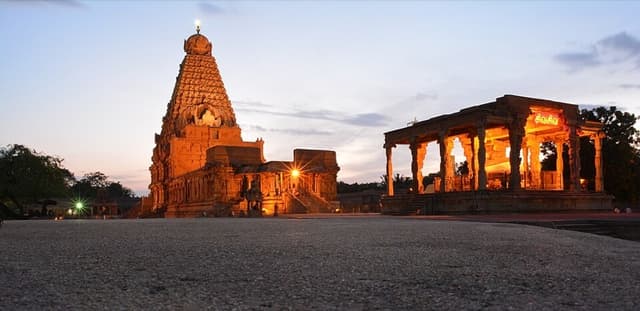
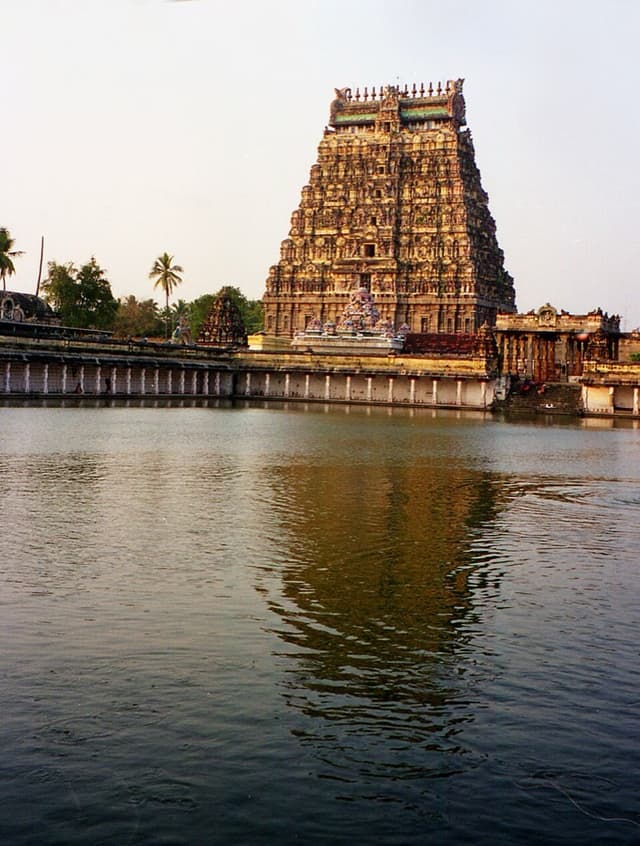
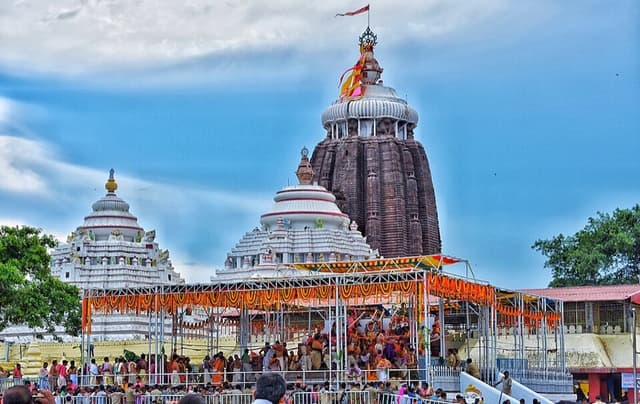
The Arulmigu Meenakshi Sundareshwarar Temple, commonly known as the Meenakshi Temple, sprawls across 14 acres in the heart of Madurai, Tamil Nadu. Dedicated to Meenakshi (the fish-eyed goddess, a form of Parvati) and Sundareshwarar (the beautiful lord, a form of Shiva), it is one of the largest and most visually spectacular temple complexes in India.
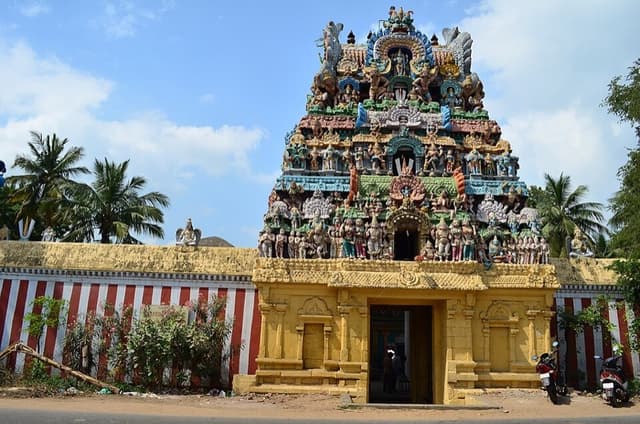
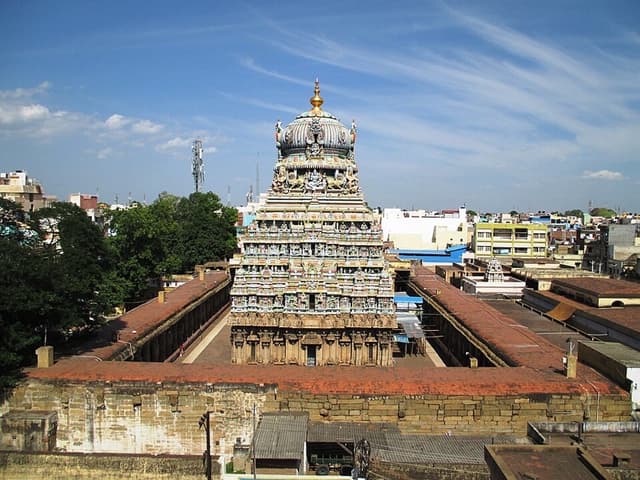
The temple is a city within a city: 6 hectares of shrines, halls, tanks, and corridors, enclosed by a rectangular wall with four gopurams on each side. The 14 gopurams (gateway towers) — each covered in thousands of painted stucco figures — rise to heights of up to 170 feet (52 metres), defining the Madurai skyline and constituting the most recognisable image of Dravidian temple architecture worldwide.
Historical Significance
The temple has been a centre of Tamil culture and Shaiva devotion since the Sangam age (3rd century BCE – 3rd century CE). The Pandya dynasty, the oldest Tamil dynasty, established the original shrine. The Silappatikaram (the great Tamil epic) is set in Madurai's streets and describes Meenakshi's temple. The current structure was largely rebuilt by Tirumala Nayaka (r. 1623–1659) after earlier structures were damaged in the 14th century. Nayak reconstruction added the 14 gopurams, the Thousand Pillar Hall, and the Golden Lotus Tank enclosure — creating the most spectacular temple in South India (Branfoot 2007).
Architecture
- 14 gopurams (gateway towers), the tallest reaching 170 feet (52 metres) — each covered with hundreds of stucco figures repainted every 12 years during kumbhabhishekam
- Hall of Thousand Pillars (Ayirankal Mandapam) — 985 unique sculptured columns with rearing yali capitals; now houses a museum of Chola and Pandya bronzes
- Golden Lotus Tank (Potramarai Kulam) — believed to have been created by Shiva; in Tamil literary tradition, the tank judged the merit of poems — only worthy works would float
- Musical pillars in the mandapam that produce the seven notes when struck
- Pudu Mandapa (New Hall) — built by Tirumala Nayaka with painted ceiling panels narrating the Thiruvilaiyadal episodes
The Divine Marriage
The central narrative of Madurai is the divine marriage of Meenakshi (the fish-eyed goddess) and Sundareshwarar (Shiva). The marriage — the Tirukalyanam — is celebrated annually in the Chithirai Festival: Meenakshi is crowned queen, then given in marriage to Sundareshwarar. The Chithirai Festival draws over 1 million pilgrims and is the biggest temple festival in Tamil Nadu.
Uniquely, Meenakshi's shrine is larger and more important than Sundareshwarar's — the goddess takes precedence. This reflects the Tamil Shaiva tradition where the goddess is the primary deity, with Shiva as her consort (Harman 1989).
Daily Rituals
The temple follows a five-fold daily puja cycle: ushat-kalam (pre-dawn), kalasanti (6 AM), uchikalam (noon), sayarakshai (evening), and arthajamam (night closure). Principal offerings include milk abhishekam, sandal paste, kumkum, bilva leaves for Shiva, and silk vastrams for Meenakshi. The nightly Palli-arai ceremony — in which a silver utsava-murti of Sundareshwarar is processed to Meenakshi's shrine to sleep beside her — is among the most distinctive liturgical features of any Indian temple.
Festival Calendar
- Meenakshi Thirukalyanam (Chithirai Festival, April–May): The divine wedding of Meenakshi and Sundareshwarar, lasting 10 days — Madurai's biggest festival
- Navaratri (September–October): Nine nights dedicated to the goddess
- Float Festival (Thai Poosam, January–February): Deities on a decorated raft in the Golden Lotus Tank
- Maha Shivaratri (Phalguna, February–March): Night-long festival for Shiva
Why This Entry Matters
The Meenakshi Temple is the living heart of Madurai — a two-thousand-year-old institution where Tamil religion, literature, architecture, and politics converge. It is the template for understanding how South Indian temples function not merely as places of worship but as centres of economic, social, and cultural life. Without the Meenakshi Temple, there is no Madurai; without Madurai, there is no Tamil civilisation as we know it.
Wisdom Graph: Divine Associations
- Sacred animals
- parrot (Meenakshi's vehicle)Nandi (Shiva's mount)
- Sacred flowers
- lotusjasminechampaka
- Sacred trees
- kadamba (sthala-vriksha)
- Offerings
- rose garlandssilk saris for Meenakshivibhuti for Sundareshwarar
Primary Scriptural Sources
- Tiruvilaiyādal PurāṇamsthalapuranaThe 64 divine sports (tiruvilaiyāḍal) of Śiva at Madurai — the foundation narrative of the temple
Sources & provenance
- 📜Primary sourceBookC.J. Fuller. Servants of the Goddess: The Priests of a South Indian Temple (1984) pp. 1–34, 120–161Cambridge University Press; foundational ethnography of the Meenakshi temple priesthood
- 📜Primary sourceBookWilliam Harman. The Sacred Marriage of a Hindu Goddess (1989) pp. 1–178Indiana University Press; comprehensive study of Meenakshi mythology and the Chithirai Tirukalyanam
- 📜Primary sourceBookCrispin Branfoot. Gods on the Move: Architecture and Ritual in the South Indian Temple (2007) pp. 1–78, 113–184British Academy; definitive architectural study of Nayak-era Madurai temples
- 📜