

Historical PeriodEra
beyond time
3000 BCEbeyond timePresent
Sacred Facts · At a Glance
Mantra
Om Namo Nārāyaṇāya
Paramapadam — the Supreme Abode, Vaikuntha
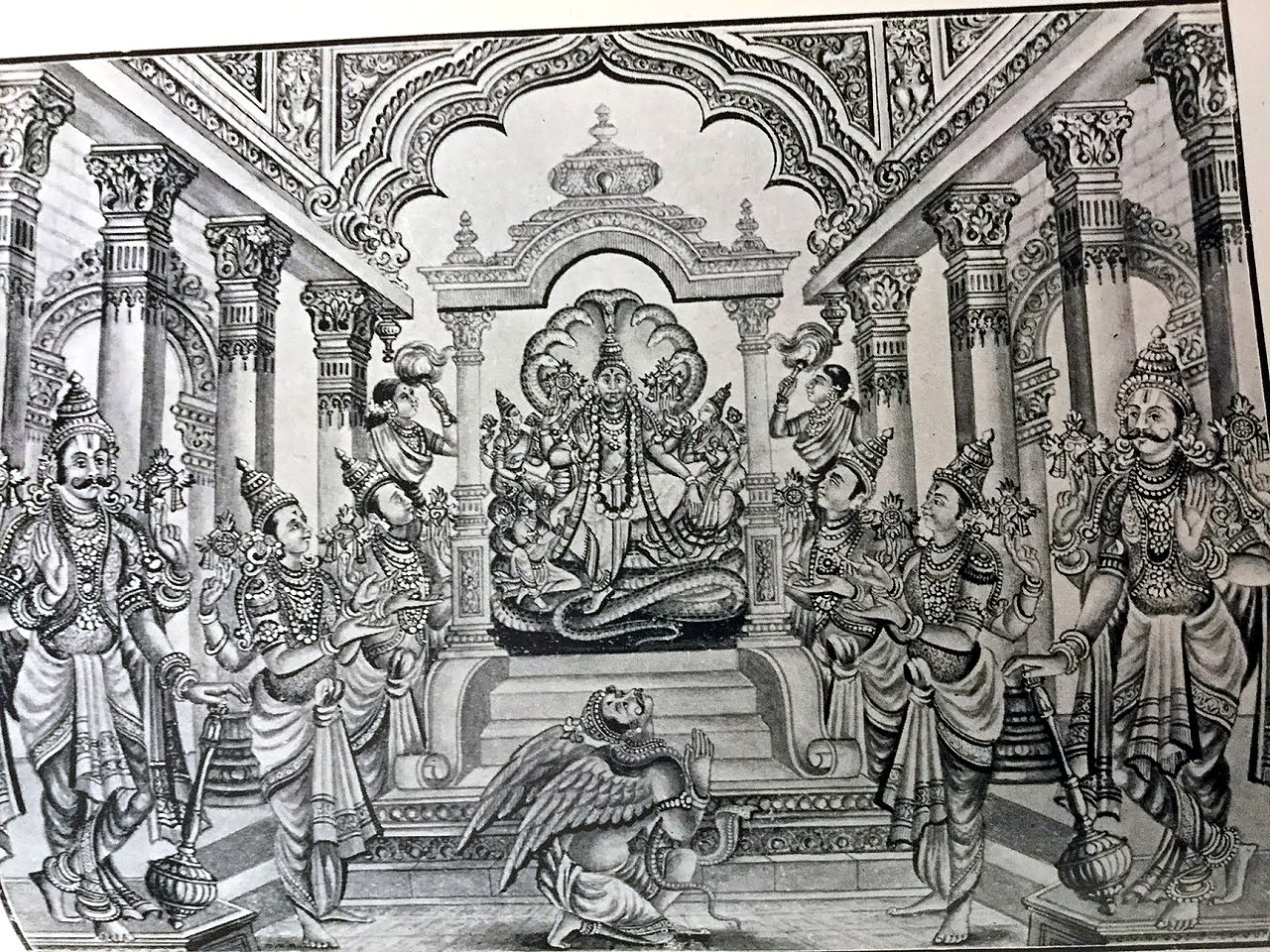
The ultimate among 108 Divya Desams — Paramapadam is literally **Vaikuntha itself**, Vishnu's eternal abode. Alvars sang of journeying here after liberation. The final goal of Sri Vaishnava pilgrimage theology.
Om Namo Nārāyaṇāya
Recite softly. Let the syllables settle. The mantra is the shortest path between the devotee and the divine.
Dravidian
Dravidian vimana over the sanctum — gopuram gateway with pillared mandapas
Garbhagriha — Gopuram gateway with pillared mandapas
granite
The ultimate among 108 Divya Desams — Paramapadam is literally **Vaikuntha
An architectural reading of Paramapadam — a top-down plan derived from the temple's recorded data.
The colours, creatures, and offerings that mark this site.
An editorial reading of the site, woven from its architectural, historical, and scriptural data.
Somewhere on the Indian subcontinent, Paramapadam — a beyond time site — the ultimate among 108 Divya Desams — Paramapadam is literally **Vaikuntha itself**, Vishnu's eternal abode. Alvars sang of journeying here after liberation. The final goal of Sri Vaishnava pilgrimage theology.
Built in the Built in the Dravidian tradition, the temple's 1 gopurams rise 12 metres into the sky the garbhagriha holds garbhagriha — gopuram gateway with pillared mandapas . The ultimate among 108 Divya Desams — Paramapadam is literally **Vaikuntha
Om Namo Nārāyaṇāya
01Walk the pradakshina path. Let the silence settle.
02Look up. The vimana above the sanctum is the temple's vertical sermon — each tier a step toward the divine.
03Chant the mantra softly: Om Namo Nārāyaṇāya.
04The tradition here is hindu. Sit. Listen. The darshan is its own teaching.
Other sites derived from shared frontmatter data — tradition, era, region, or built form.
No primary scriptures are catalogued for this entry yet. If you know of scriptural references we have missed, please contribute them.
trade_routes:
The ultimate among 108 Divya Desams — Paramapadam is literally Vaikuntha itself, Vishnu's eternal abode. Alvars sang of journeying here after liberation. The final goal of Sri Vaishnava pilgrimage theology.
The sacred history of Paramapadam is recounted in the Sthalapurana texts and the Divya Prabandham hymns of the Āḻvārs. Devotees believe that pilgrimage to this shrine grants moksha (liberation) and that the deity here has manifested specifically to bless seekers in the Kali Yuga.
Paramapadam is one of the 108 Divya Desams — the holiest Vishnu shrines hymned by the 12 Āḻvār poet-saints of the Tamil Srivaishnava tradition (6th–9th c. CE). The Divya Desams are enumerated in the Nālāyira Divya Prabandham ("Four-Thousand Divine Hymns"), compiled by Nāthamuni in the 9th–10th c. CE.
Like all Divya Desams, Paramapadam maintains both a Mūlavar (sanctum deity, fixed) and an Utsavar (processional image, carried in festivals). The temple follows the Pañcarātra or Vaikhānasa Āgama traditions of Vaishnava ritual, with daily worship conducted by hereditary priests.
Situated in Unknown (Unknown), this temple is part of the sacred geography that the Āḻvārs mapped through their hymns — transforming specific Tamil, Kerala, and North Indian landscapes into a unified Vaishnava cosmos.


.jpg/500px-Badrinath_Temple%2C_Uttarakhand_(Photo-_Vishwanath_Negi).jpg)



