Pashupatinath — Lord of the Animals
📷 Bijay Chaurasia · [CC BY-SA 4.0](https://creativecommons.org/licenses/by-sa/4.0) · source
DeopatanNepal
Traditional: 5th c. CE (Lichchavi); current structure: 15th c. (Malla); pagoda renewal 17th c.
earth
A Temple Record

Pashupatinath — Lord of the Animals

Paśupatināth — The Holiest Śiva Temple in Nepal

Sanatana Dharma
Enter the Record
↓
I.Overview

A Sacred Site

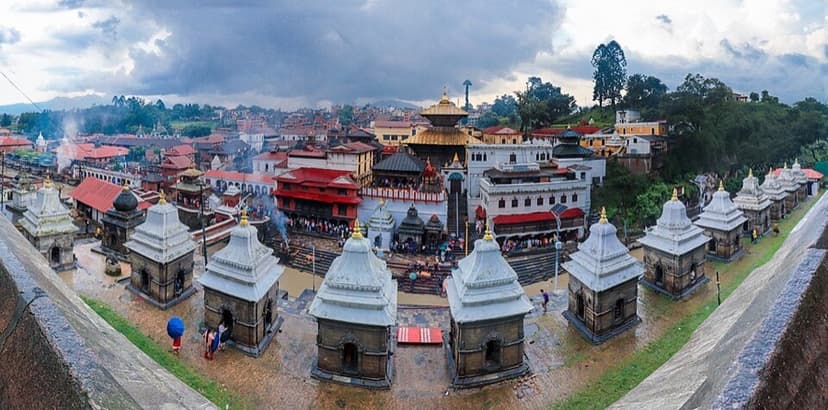
Pashupatinath on the Bagmati River in Kathmandu is the holiest Śiva temple in Nepal — a sprawling temple complex where Hindu cremations take place on the riverbank, and where ascetic sadhus gather every Maha Shivaratri. It is one of the 12 Jyotirlingas (by Nepali tradition) and the most important Shaiva pilgrimage site outside India.

II.Architecture

The Built Form

Nepali pagoda (Malla, 17th c.)

Pashupatinath on the Bagmati River in Kathmandu is the holiest Śiva temple in Nepal — a sprawling temple complex where Hindu cremations take place on the riverbank, and where ascetic sadhus gather every Maha Shivaratri.

III.Timeline

Sacred Timeline

  1. Malla pagoda reconstruction (17th c.)

    Bhupatindra Malla rebuilt the main shrine in the Nepali pagoda style — the multi-tiered copper roof that defines the temple's iconic silhouette

  2. Indian priest controversy (2009)

    Nepal's Maoist government attempted to replace the traditional Indian (Dakshina Kannada) priests with Nepali ones, triggering a diplomatic crisis with India — Pashupatinath is a live wire in India–Nepal relations

  3. 2015 earthquake

    The Gorkha earthquake damaged several shrines in the Pashupatinath complex; restoration was completed in 2019

IV.Elements

Sacred Elements

The colours, creatures, and offerings that mark this site.

Sacred Colours

saffron
white
ash-grey
yellow (marigold — Nepali tradition)

Sacred Flowers

datura (Śiva's flower — dhatura offerings are uniquely important here)lotusmarigold (Nepali tradition)

Sacred Creatures

Nandi (bull — Śiva's mount, enormous brass Nandi faces main shrine)deer (Śiva as Paśupati — 'Lord of Animals')monkey (Hanuman shrine on the complex grounds)cow (sacred on the Bagmati ghats)

Sacred Trees

Bel / bilva (Bilva-patra is the primary Śiva offering)peepalrudrākṣa tree (Elaeocarpus — Śiva's beads grow here)

Sacred Offerings

bilva-patradhatura flowersbhasma (ash from the Bagmati cremation ghats)sindūrmilk abhiṣekapañcāmṛta snāna

Divine Mount

Nandi (bull — Śiva's mount; huge brass Nandi outside main gate)
V.Patrons

Royal Patrons

  1. Bhupatindra Malla (17th c. — rebuilt the pagoda)

  2. Pratap Malla (17th c. — added the Nandi and bull pillars)

VI.Texts

Sacred Texts

  1. Śiva Purāṇa — Koti Rudra Saṃhitā

    Type: purana

    Tells the legend of Śiva fleeing from Varanasi to the Kathmandu Valley in the form of a deer (mṛga — hence Paśupati, Lord of Animals)

VII.Trade

Trade Routes

  1. Trans-Himalayan trade — Kathmandu Valley sat on the primary route linking India to Tibet; Pashupatinath's wealth came from the Tibet–India trade in salt, wool, borax, and gold

  2. Licchavi Nepal–Magadha corridor — the Licchavi dynasty (4th–9th c.) that built Pashupatinath's earliest shrines also controlled the Sankosh–Bagmati trade route linking Nepal to the Gangetic plain

  3. Newar merchant network — the Newar trading communities of the Kathmandu Valley were the primary donors; their network extended from Lhasa to Varanasi

  4. Bagmati cremation-route — the Arya Ghat at Pashupatinath is Nepal's most important cremation ground; the Bagmati flows into the Ganga system, connecting the dead to the same river network as Varanasi

VIII.Festivals

Festivals & Celebrations

  1. Maha Shivaratri (Feb–Mar — 1M+ pilgrims; largest Shivaratri celebration in the world)

  2. Teej (women's festival, Aug–Sep)

  3. Bala Chaturdashi (Nov–Dec)

X.Sacred Story

A Temple Record

An editorial reading of the site, woven from its architectural, historical, and scriptural data.

In Deopatan, Nepal, Pashupatinath — Lord of the Animals — a traditional: 5th c. ce (lichchavi); current structure: 15th c. (malla); pagoda renewal 17th c. site — pashupatinath on the Bagmati River in Kathmandu is the holiest Śiva temple in Nepal — a sprawling temple complex where Hindu cremations take place on the riverbank, and where ascetic sadhus gather every Maha Shivaratri. It is one of the 12 Jyotirlingas (by Nepali tradition) and the most important Shaiva pilgrimage site outside India.

§Historical Arc

The site is associated with the patronage of Bhupatindra Malla (17th c. — rebuilt the pagoda) and Pratap Malla (17th c. — added the Nandi and bull pillars). The earliest event recorded here is malla pagoda reconstruction (17th c.). Through the centuries, the temple witnessed 2015 earthquake. Bhupatindra Malla rebuilt the main shrine in the Nepali pagoda style — the multi-tiered copper roof that defines the temple's iconic silhouette.

§Reading the Built Form

Built in the Nepali pagoda (Malla, 17th c.) tradition. Pashupatinath on the Bagmati River in Kathmandu is the holiest Śiva temple in Nepal — a sprawling temple complex where Hindu cremations take place on the riverbank, and where ascetic sadhus gather every Maha Shivaratri.

Malla pagoda reconstruction (17th c.)
§A Visitor's Approach

01Walk the pradakshina path. Note the earliest event recorded here — malla pagoda reconstruction (17th c.).

02Return during Maha Shivaratri (Feb–Mar — 1M+ pilgrims; largest Shivaratri celebration in the world), when the temple wears its festival form.

03The tradition here is sanatana dharma. Sit. Listen. The darshan is its own teaching.

§Practical Notes
2 उद्धृत स्रोत
1 जुड़ी पवित्र कथाएँ
Historical Period5c CE
Traditional: 5th c. CE (Lichchavi); current structure: 15th c. (Malla); pagoda renewal 17th c.
3000 BCE5th century CEPresent

Sacred Facts · At a Glance

Vahana
Nandi (bull — Śiva's mount; huge brass Nandi outside main gate)
Element
earth
Sacred Colours
saffronwhiteash-greyyellow (marigold — Nepali tradition)
Sacred Flowers
datura (Śiva's flower — dhatura offerings are uniquely important here) · lotus · marigold (Nepali tradition)
Sacred Trees
Bel / bilva (Bilva-patra is the primary Śiva offering) · peepal · rudrākṣa tree (Elaeocarpus — Śiva's beads grow here)
Sacred Offerings
bilva-patra · dhatura flowers · bhasma (ash from the Bagmati cremation ghats) · sindūr · milk abhiṣeka · pañcāmṛta snāna
Sacred Animals
Nandi (bull — Śiva's mount, enormous brass Nandi faces main shrine) · deer (Śiva as Paśupati — 'Lord of Animals') · monkey (Hanuman shrine on the complex grounds) · cow (sacred on the Bagmati ghats)

Primary Scriptures

1 source
  • Śiva Purāṇa — Koti Rudra Saṃhitāpurana
    Tells the legend of Śiva fleeing from Varanasi to the Kathmandu Valley in the form of a deer (mṛga — hence Paśupati, Lord of Animals)

Pashupatinath — Lord of the Animals

The Holiest Śiva Temple in Nepal

Pashupatinath — on the banks of the Bagmati River in Kathmandu — is the holiest Śiva temple in Nepal and one of the most important Shaiva pilgrimage sites in the world. The name Paśupatināth means "Lord of All Animals" — a reference to Śiva's manifestation as a deer in the Kathmandu Valley, where he fled from Varanasi.

The temple's central pagoda — a two-tiered copper-roofed structure with a gold-painted spire — is surrounded by a complex of 518 temples, shrines, and ghats spread across both banks of the Bagmati. The main shrine houses a cylindrical mukhaliṅga (four-faced Śiva linga) — the only four-faced linga in a major Śiva temple. The four faces represent:

  • Tatpurusa (east) — the meditating face
  • Aghora (south) — the fierce face
  • Sadyojata (west) — the creative face
  • Vamadeva (north) — the gentle face

The Bagmati Ghats

The Arya Ghat — the cremation platform directly in front of the temple — is the most sacred cremation ground in Nepal. The Bagmati (a tributary of the Ganga system) flows past the burning pyres; the ash mixes with the river, which flows east into the Gandak and then into the Ganga at Patna. The dead of Pashupatinath and the dead of Varanasi end in the same river.

Maha Shivaratri

Maha Shivaratri at Pashupatinath is the largest Shaiva festival in the world — over 1 million pilgrims and thousands of sadhus (ascetics) gather on the temple grounds. The naga sadhus — naked Shaiva ascetics who normally live in Himalayan caves — emerge only for this festival. The Pashupati Area Development Trust distributes free food and shelter to all pilgrims for three days.

❀

Wisdom Graph: Divine Associations

Vāhana
Nandi (bull — Śiva's mount; huge brass Nandi outside main gate)
Sacred animals
Nandi (bull — Śiva's mount, enormous brass Nandi faces main shrine)deer (Śiva as Paśupati — 'Lord of Animals')monkey (Hanuman shrine on the complex grounds)cow (sacred on the Bagmati ghats)
Sacred flowers
datura (Śiva's flower — dhatura offerings are uniquely important here)lotusmarigold (Nepali tradition)
Sacred trees
Bel / bilva (Bilva-patra is the primary Śiva offering)peepalrudrākṣa tree (Elaeocarpus — Śiva's beads grow here)
Offerings
bilva-patradhatura flowersbhasma (ash from the Bagmati cremation ghats)sindūrmilk abhiṣekapañcāmṛta snāna
Sacred colours
saffronwhiteash-greyyellow (marigold — Nepali tradition)

Primary Scriptural Sources

  • Śiva Purāṇa — Koti Rudra Saṃhitāpurana
    Tells the legend of Śiva fleeing from Varanasi to the Kathmandu Valley in the form of a deer (mṛga — hence Paśupati, Lord of Animals)

Sources & provenance

📜 2 Primary
  • 📜
    Primary sourceWikipedia
    Pashupatinath
    View source →
  • 📜
    Primary sourceBook
    Mary Slusser. Nepal Mandala (1982)