Sacred Facts · At a Glance
- Gender
- female
- Sacred Colours
- saffronwhite
- Sacred Offerings
- tulasi / flowers / tradition-specific
Primary Scriptures
1 source- Primary texts of Hinduscriptural / devotional
Ādi Śaṅkara at Kaladi
The place where the saint is said to have left his body
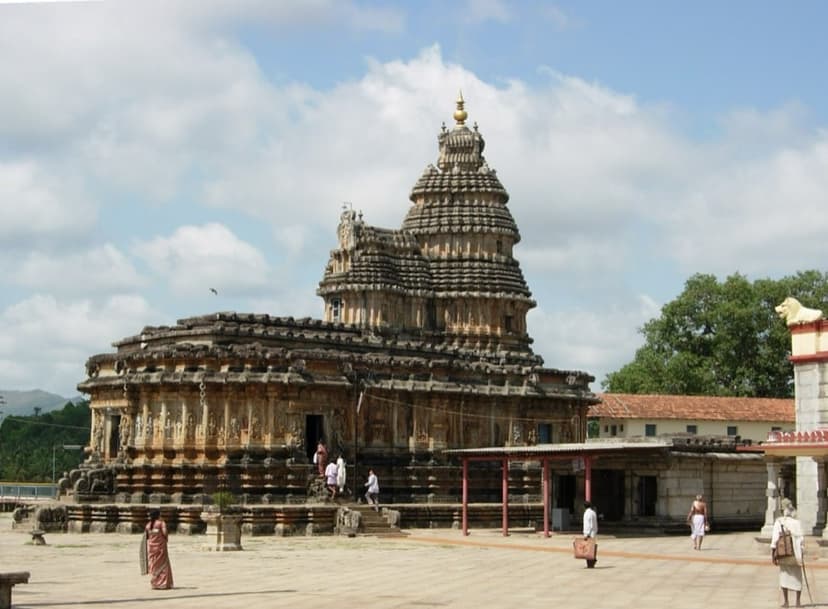
Kaladi, in Ernakulam district of Kerala on the northern side of the Periyar, holds a rock shrine to Śaṅkara that Kerala tradition identifies as the site where the teacher died, or — in the careful version of the story — where his body came to rest. It is one of several such memorial sites in the region, and the Kerala Śaṅkara tradition is distributed across more than one of them rather than concentrated at a single shrine.
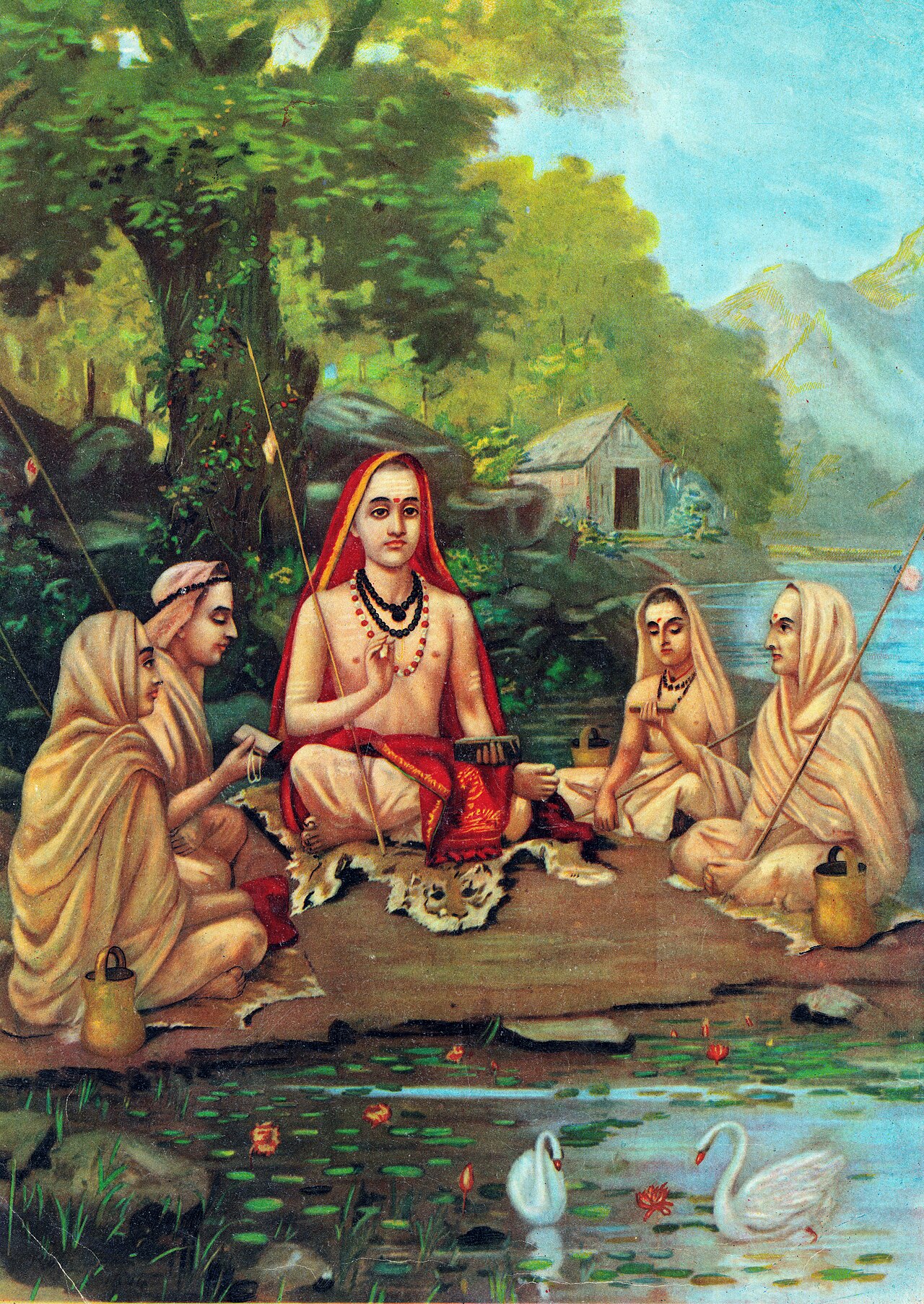
The famous story attached to it is the one about four disciples. On Śaṅkara's death his body was carried by his students — named in different tellings as Śadāśiva, Upādhyāya, Vidyāpūrṇa and Drāviḍa or Avadhāna — who did not know which of them was carrying the living master and which only the corpse. Each set out in a different direction; the body followed one of them and was left at that place. Kaladi is the destination in the most widely circulated Kerala version, and the same story is told elsewhere in the region with a different destination and a differently named set of disciples. Both local versions are in circulation and they are not reconcilable with each other; this entry records the Kaladi version as the one attached to this shrine rather than treating it as the single true version.
At Kaladi the memorial is a modest stone shrine with the samādhi inside, and the neighbourhood cult around it is domestic as much as public: family rites, śivālaya care and mahāśivarātri observance are as much part of the living shrine as the wider Kerala Śaṅkara pilgrimage circuits that also take in Śivapuram near Edakkara and the temple at Nārāyaṇapuram.
Dates, and why they are disputed
The traditional dates 788–820 CE for Śaṅkara's life come from later sectarian genealogies and temple inscriptions of a much later date; most modern scholarship places his life substantially earlier, in the eighth century, and the two chronologies have never been reconciled. Any statement about what existed at Kaladi in the eighth or ninth century is therefore a statement about tradition, not about documented events. The foundation date of the present shrine is a separate matter again and has not been established from an inscription here.
Sources and what is still unverified
- S. N. Dasgupta, A History of Indian Philosophy, volume III — for Śaṅkara's life, travels and doctrine at work level.
- B. N. K. Sharma, The Philosophy of Śaṅkara — for Advaita as taught and its later Kerala transmission.
- Ernakulam District Gazetteer (Government of India gazetteer series) — first place to look for the shrine's administration and for the competing disciple legend.
- A Malayalam local history of the Kaladi śivālaya. None is on file; a local contributor must supply the lineage of the shrine's caretakers before this entry is published as verified.
Wisdom Graph: Divine Associations
- Offerings
- tulasi / flowers / tradition-specific
- Sacred colours
- saffronwhite
Worship Procedures
- Daily rites
- • aarati• abhisheka• naivedya
- Puja sequence
- water/milk abhisheka
- flowers
- prasadam
Principal Temples
- Main shrine of Ādi Śaṅkara at Kaladi788–820 CE📍 Kaladi, Ernakulam, Kerala, IndiaFestivals: Śaṅkara JayantīĀdi Śaṅkara — 8th c. founder of Advaita Vedānta
Festivals
- Śaṅkara JayantīVaishākha Śukla 5 (May) · 1 day
Primary Scriptural Sources
- Primary texts of Hinduscriptural / devotional
Sources & provenance
- 🎓Scholarly sourceBookSurendranath Dasgupta. A History of Indian Philosophy, Volume III
- 🎓Scholarly sourceBookB. N. K. Sharma. The Philosophy of Sankara
- 📖Supporting referenceGazetteerDistrict Gazetteer, Ernakulam (Government of India gazetteer series)