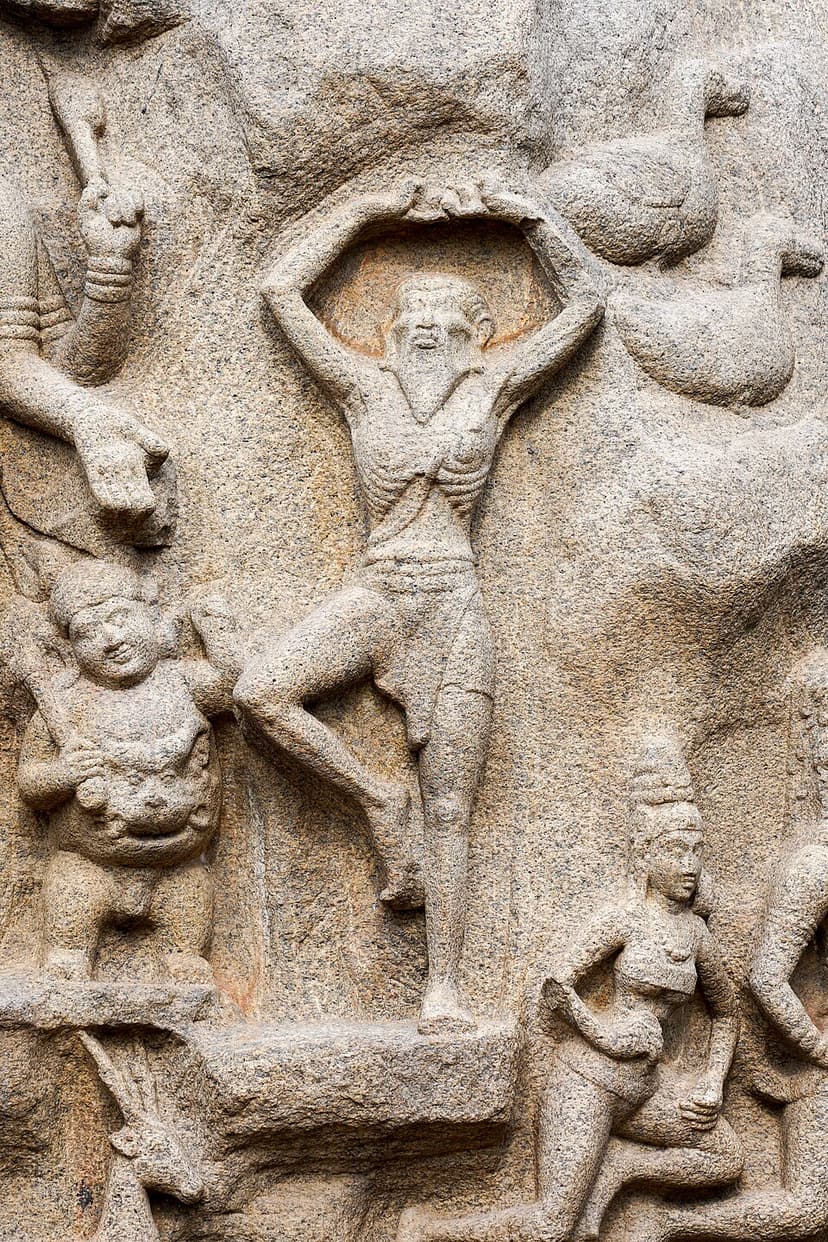
Sacred Facts · At a Glance
- Gender
- female
- Vahana
- Makara (the mythical aquatic crocodile/sea-creature representing the mastery over primordial waters)
- Weapon
- Amrita-kalasha (Pot of nectar of immortality) · White lotus · Abhaya Mudra (Gesture of fearlessness)
- Sacred Number(s)
- 7 · 10 · 108
- Sacred Colours
- pure white (śveta)liquid silvertranslucent emerald
- Sacred Flowers
- white and pink lotus · marigold garlands floated in patras
- Sacred Trees
- Aśvattha (Ficus religiosa) · Banyan (lining the sacred ghats) · Devadaru (Himalayan cedar)
- Sacred Offerings
- Deepa-dāna (floating clay oil lamps at twilight) · pure milk · holy water in copper vessels · sacred ashes of departed ancestors for Moksha
- Sacred Animals
- Makara (aquatic dragon/crocodile) · Ganges river dolphin (Suṃśu / Platanista gangetica) · sacred river fish
- Sacred Plants
- Kusha grass · durva · tulsi
Primary Scriptures
5 sources- Ṛgveda Saṃhitā (Nadīstuti Sūkta, RV 10.75.5)vedaComposed c. 1500–1200 BCEThe primordial Vedic hymn to the sacred rivers: 'Imaṃ me Gaṅge Yamune Sarasvati Śutudri Stomaṃ sacatā Paruṣṇyā' — 'O Ganga, Yamuna, Sarasvati, Shutudri, and Parushni, accept this my praise!'
- Vālmīki Rāmāyaṇa (Bāla Kāṇḍa, Sargas 38–44)epicsComposed c. 5th–4th c. BCESage Vishvamitra recounts the immortal epic of the Gaṅgāvataraṇa: the 60,000 sons of King Sagara burnt by Sage Kapila, King Bhagiratha's 1,000-year ascetic tapasya, and Lord Shiva catching the thunderous descent of Ganga in his matted locks (*Jatā*).
- Mahābhārata (Ādi Parva & Vana Parva)epicsComposed c. 4th c. BCE–4th c. CENarrates the terrestrial incarnation of Ganga as the queen of King Shantanu of Hastinapura, and the birth of her heroic son Devavrata (the grandsire Bhishma).
- Kumārasambhava & Raghuvaṃśa of KālidāsakavyaComposed c. 5th c. CESublime classical poetry describing the celestial descent of Ganga cascading over the snows of the Himalayas and the confluence of dark Yamuna and pale Ganga at Prayaga.
- Gaṅgā Laharī by Jagannātha PaṇḍitarājabhaktiComposed 17th c. CE53 ecstatic Sanskrit stanzas composed on the steps of Panchaganga Ghat in Varanasi; as each verse was recited, Mother Ganga miraculously rose one step to embrace the poet.
Ganga: The Celestial River Goddess & Cosmic Purifier
Mokṣa-Dāyinī, Mother of Bhīṣma & Sacred Lifeline of Jambudweepa
Overview: The Metaphysical Foundation
Mother Gaṅgā (गंगा — from the root gam, "to go, flow rapidly") is not merely a geographical waterway; She is the liquid form of supreme transcendence (Brahma-Dravā), the celestial river that descended from the heavens to purify mortal existence, wash away ancestral sins, and bestow unconditional spiritual liberation (Mokṣa).
In Puranic cosmology, Ganga flows in three distinct cosmic realms (Tripathagā):
- Mandākinī: The celestial river flowing through the heavenly sphere of the Devas.
- Bhāgīrathī: The sacred earthly river flowing from the Himalayan glaciers through the heartlands of India to the ocean.
- Bhogavatī: The subterranean river flowing through the netherworld (Pātāla) to liberate the spirits of the departed.
She is depicted as a radiant four-armed goddess with a white complexion, crowned with the crescent moon, holding a golden pot of nectar (Amṛta-Kalaśa), a blooming white lotus, and displaying the gestures of granting boons (Varada) and dispelling fear (Abhaya). Her mount is the Makara — a mythical aquatic dragon-crocodile symbolizing sovereignty over the deep, unfathomable cosmic waters.
Canonical Scriptural Evolution across Millennia
1. The Vedic Nadīstuti Sūkta
The earliest recorded prayer to Ganga appears in the Ṛgveda Saṃhitā (Nadīstuti Sūkta, RV 10.75.5):
imaṃ me gaṅge yamune sarasvati śutudri stomaṃ sacatā paruṣṇyā |
asiknyā marudvṛdhe vitastayārjīkīye śṛṇuhyā suṣomayā ||
"O Ganga, Yamuna, Sarasvati, Shutudri (Sutlej), and Parushni (Ravi), receive this my song of praise! Hear me, O Asikni (Chenab), Marudvridha, Vitasta (Jhelum), Arjikiya, and Sushoma!"
2. The Epic Descent (Gaṅgāvataraṇa)
The Vālmīki Rāmāyaṇa (Bāla Kāṇḍa, Sargas 38–44) preserves the immortal narrative of her descent:
- King Sagara performed the Ashvamedha sacrifice, but Indra stole the sacrificial horse and hid it in the subterranean hermitage of Sage Kapila.
- Sagara's 60,000 sons dug into the earth and violently accused the meditating sage, whose fiery ascetic glance reduced them to ashes.
- Their souls lingered in torment until generations later, King Bhagīratha performed an agonizing 1,000-year penance on Mount Gokarna.
- Lord Brahma agreed to release Ganga from heaven, but warned that the earth would be shattered by the impact of her fall. Bhagiratha then prayed to Lord Shiva, who stood firm upon the Himalayas and caught the roaring celestial torrent within his tangled matted locks (Jaṭā).
- Pacified within Shiva's hair, Ganga trickled gently into seven streams, followed Bhagiratha's chariot across the plains, flooded the ashram of Sage Jahnu (hence called Jāhnavī), and reached the ocean (Gaṅgā-Sāgara), drowning the ashes of Sagara's sons and elevating their souls to heaven.
3. Classical Kavya & Jagannātha's Gaṅgā Laharī
In the 17th century, the master poet Jagannātha Paṇḍitarāja composed the 53 verses of the Gaṅgā Laharī on the Panchaganga Ghat of Varanasi:
samṛddhaṃ saubhāgyaṃ sakala-vasudhāyāḥ kimapi tan |
maheśasya svāntasphuradamala-mūrtiḥ sakhiva naḥ ||
"She is the consummate treasure of all the earth; She is the pure thought manifesting from the mind of Lord Shiva, a true sister of compassion to us all!"
Century-by-Century Iconographic & Archaeological Record
ARCHAEOLOGICAL MILESTONES OF GANGA
c. 1200 BCE ──► Rigveda 10.75: The primordial river hymn Nadistuti
c. 450 CE ──► Gupta Temple Lintels: Ganga on Makara carved at Udayagiri and Deogarh
c. 650 CE ──► Mahabalipuram: Pallava 96-ft rock relief of the Descent of the Ganga
1025 CE ──► Gangaikondacholapuram: Rajendra Chola builds temple with holy Ganga water
1780 CE ──► Varanasi: Ahilyabai Holkar and Maratha rulers rebuild the 84 stone ghats
Sacred Temples & Shrines
| Temple Name | Location | Century | Significance |
|---|---|---|---|
| Gangotri Temple | Uttarkashi, Uttarakhand (30.9944° N, 78.9397° E) | 18th c. CE | High-altitude Himalayan source shrine (10,200 ft); seat of the Char Dham pilgrimage. |
| Har Ki Pauri | Haridwar, Uttarakhand (29.9567° N, 78.1706° E) | 1st c. BCE / 18th c. CE | Footprint of Lord Vishnu; entry point of Ganga to the plains; venue of Maha Kumbh. |
| Dashashwamedh Ghat | Varanasi, Uttar Pradesh (25.3075° N, 83.0106° E) | Ancient / 1740 CE | Heart of Kashi; ten-horse sacrifice site; venue of the world-famous evening Ganga Aarti. |
| Triveni Sangam | Prayagraj, Uttar Pradesh (25.4294° N, 81.8847° E) | Eternal Tirtha | Confluence of Ganga, Yamuna, and invisible Saraswati; Kumbha Mela gathering. |
| Gangaikondacholapuram | Ariyalur, Tamil Nadu (11.2061° N, 79.4561° E) | 1025–1035 CE | UNESCO World Heritage Chola temple built with holy Ganga water brought from the north. |
Daily Practice & Chanting
- The River Invocatory Śloka (Chanted while bathing):
Gaṅge ca Yamune caiva Godāvari Sarasvati | Narmade Sindhu Kāveri jalesmin sannidhiṃ kuru || - Gaṅgā Stotram of Adi Shankaracharya:
Devi sureśvari bhagavati gaṅge tribhuvana-tāriṇi taralamaraṅge | Śaṅkara-mauli-vihāriṇi vimale mama matirāstāṃ tava pada-kamale || - The Sacred Snāna (Holy Dip): Immersing oneself in Mother Ganga with pure devotion is believed to cleanse three lifetimes of accumulated negative karma, while keeping a sealed copper vessel of Gaṅgājala in the home invites perpetual divine blessings and peace.
Wisdom Graph: Divine Associations
- Vāhana
- Makara
- Sacred animals
- Makara (aquatic dragon/crocodile)Ganges river dolphin (Suṃśu / Platanista gangetica)sacred river fish
- Sacred flowers
- white and pink lotusmarigold garlands floated in patras
- Sacred plants
- Kusha grassdurvatulsi
- Sacred trees
- Aśvattha (Ficus religiosa)Banyan (lining the sacred ghats)Devadaru (Himalayan cedar)
- Offerings
- Deepa-dāna (floating clay oil lamps at twilight)pure milkholy water in copper vesselssacred ashes of departed ancestors for Moksha
- Weapons / emblems
- Amrita-kalasha (Pot of nectar of immortality)White lotusAbhaya Mudra (Gesture of fearlessness)
- Sacred colours
- pure white (śveta)liquid silvertranslucent emerald
- Sacred numbers
- 710108
Principal Temples
- Gangotri Temple18th c. CE (constructed by Amar Singh Thapa)📍 Gangotri, Uttarkashi, Uttarakhand, IndiaPerched at 10,200 ft in the Garhwal Himalayas near Gaumukh glacier; the premier source shrine of the sacred Char Dham Yatra of Uttarakhand.
- Har Ki Pauri1st c. BCE / rebuilt 18th c. CE📍 Haridwar, Haridwar, Uttarakhand, IndiaThe sacred threshold where Ganga enters the plains; houses the divine footprint (Charan Paduka) of Lord Vishnu; host of the historic Maha Kumbh Mela and grand evening Ganga Aarti.
- Dashashwamedh Ghat & Kashi GhatsAncient / rebuilt 1740 CE📍 Varanasi, Varanasi, Uttar Pradesh, IndiaThe spiritual heart of Kashi where Brahma performed ten horse sacrifices; world-renowned evening Ganga Aarti where thousands of oil lamps float on the nocturnal river.
- Triveni SangamEternal Tirtha📍 Prayagraj, Prayagraj, Uttar Pradesh, IndiaHoly confluence of pale Ganga, deep-blue Yamuna, and invisible Saraswati; site of the greatest spiritual human gathering on Earth (Kumbha Mela).
- Brihadisvara Temple (Gangaikondacholapuram)1025–1035 CE📍 Gangaikondacholapuram, Ariyalur, Tamil Nadu, IndiaImperial Chola UNESCO World Heritage monument built by Rajendra Chola I to commemorate the victorious pilgrimage that brought the holy Ganga to South India.
Primary Scriptural Sources
- Ṛgveda Saṃhitā (Nadīstuti Sūkta, RV 10.75.5)vedac. 1500–1200 BCEThe primordial Vedic hymn to the sacred rivers: 'Imaṃ me Gaṅge Yamune Sarasvati Śutudri Stomaṃ sacatā Paruṣṇyā' — 'O Ganga, Yamuna, Sarasvati, Shutudri, and Parushni, accept this my praise!'
- Vālmīki Rāmāyaṇa (Bāla Kāṇḍa, Sargas 38–44)epicsc. 5th–4th c. BCESage Vishvamitra recounts the immortal epic of the Gaṅgāvataraṇa: the 60,000 sons of King Sagara burnt by Sage Kapila, King Bhagiratha's 1,000-year ascetic tapasya, and Lord Shiva catching the thunderous descent of Ganga in his matted locks (*Jatā*).
- Mahābhārata (Ādi Parva & Vana Parva)epicsc. 4th c. BCE–4th c. CENarrates the terrestrial incarnation of Ganga as the queen of King Shantanu of Hastinapura, and the birth of her heroic son Devavrata (the grandsire Bhishma).
- Kumārasambhava & Raghuvaṃśa of Kālidāsakavyac. 5th c. CESublime classical poetry describing the celestial descent of Ganga cascading over the snows of the Himalayas and the confluence of dark Yamuna and pale Ganga at Prayaga.
- Gaṅgā Laharī by Jagannātha Paṇḍitarājabhakti17th c. CE53 ecstatic Sanskrit stanzas composed on the steps of Panchaganga Ghat in Varanasi; as each verse was recited, Mother Ganga miraculously rose one step to embrace the poet.
Sources & provenance
- 📖Supporting referenceOtherRigveda
- 📖Supporting referenceOtherValmiki Ramayana
- 📖Supporting referenceOtherMahabharata
- 📖Supporting referenceOtherKumarasambhava
- 📖Supporting referenceOtherGanga Lahari
- 📖Supporting referenceOtherPadma Purana