



Sacred Facts · At a Glance
- Element
- earth
Primary Scriptures
0 sourcesNo primary scriptures are catalogued for this entry yet. If you know of scriptural references we have missed, please contribute them.
⚠️ CONTENT VERIFICATION STATUS: This draft is . All citations require validation.
Smarta Brahmanism
Section 1: Overview
[BEGINNER]
Smarta (from Smriti, "that which is remembered") is the Brahmanical tradition that centres its practice on the Smritis — the Dharmashastras, Puranas, and Itihasas — and on the philosophical system of Advaita Vedanta. It is the dominant form of Hinduism among Brahmin communities and the intellectual backbone of classical Hindu practice (Flood 1996, ch. 6).
Core features:
- Panchayatana Puja: Worship of five deities as equal manifestations of the same Brahman — Shiva, Vishnu, Devi (Shakti), Surya, and Ganesha. The tradition holds that all five are forms of one supreme reality, and the household shrine typically houses all five (Flood 1996, p. 17)
- Advaita Vedanta: The non-dual philosophy classically associated with Adi Shankaracharya, teaching that the individual soul (Atman) and the universal reality (Brahman) are one
- Scriptural harmony: The Vedas, Upanishads, Bhagavad Gita, and Brahma Sutras are treated as a consistent body of revealed truth
- Varna-ashrama-dharma: The four life-stages (ashramas) and four social classes (varnas) form the inherited social framework
The Five Deities (Panchayatana):
- Shiva — represented by a lingam (earth element)
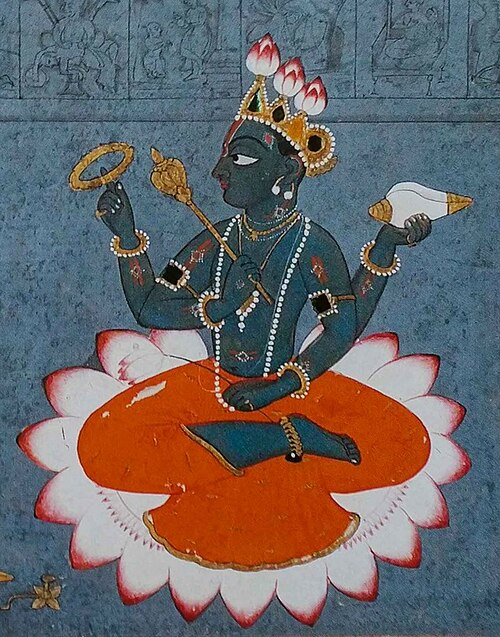
- Vishnu — represented by a salagrama stone (water element)
- Devi — represented by a yantra (fire element)
- Surya — represented by a metallic image (air element)
- Ganesha — represented by a murti (ether element)
[INTERMEDIATE]
Adi Shankaracharya
Adi Shankara is the most influential philosopher of classical Hinduism. Traditional accounts (the hagiographical Śaṅkaradigvijaya) credit him with:
- Commentaries on the Brahma Sutras, the principal Upanishads, and the Bhagavad Gita
- Establishing the Dashanami Sampradaya — ten orders of renunciates (e.g. Sarasvati, Bharati, Puri, Giri)
- Founding four cardinal monasteries (mathas) at Sringeri (south), Dwaraka (west), Jyotirmath/Joshimath (north), and Puri (east) — the traditional "four seats" of Advaita; the historicity and original attribution of these institutions are matters of scholarly debate (Nakamura 1983; Mayeda 1992)
- Composing devotional hymns still sung today
- Defeating rival philosophical schools (Buddhist, Jaina, Mīmāṃsā) in public debate — episodes preserved only in later hagiography
The dating of Shankara is itself contested: traditional dates are 788–820 CE, but Nakamura (1983) and others have argued for a date in the early 8th century or earlier, while some scholars place him in the 7th. What is secure is that his Brahmasutra-bhashya became the founding document of classical Advaita.
Smarta vs. Shaiva/Vaishnava
Unlike sectarian traditions that worship one deity as supreme, Smartism:
- Recognises the major deities as equal manifestations of the formless Brahman
- Does not require exclusive devotion to one god
- Emphasises philosophical understanding alongside ritual practice
- Historically functioned as the "orthodox" centre that could absorb and domesticate sectarian movements
[SCHOLAR]
The term "Smarta" and Hacker's "inclusivism"
The Sanskrit term smārta properly designates "one who follows the smṛti" — and, more technically, a Brahmin who performs the smārta rites (the daily fire rituals and life-cycle ceremonies) laid out in the gṛhya-sūtras. The modern use of "Smartism" as the name of a distinct pan-Hindu tradition owes much to the Indological tradition and, in particular, to the German scholar Paul Hacker, who in a series of essays (collected in Halbfass 1995) analysed the Smarta/Advaita stance as an early example of "inclusivism" — the strategy of subordinating rival deities and doctrines by declaring them partial versions of one's own truth. Hacker's analysis remains the standard frame for understanding how the panchayatana system reconciles five distinct deities within one worship (Klostermaier 2007, ch. 12).
The panchayatana system
The five-deity household worship (pañcāyatana-pūjā) is attested from about the 10th century CE and is classically explained as a Smarta reconciliation: each of the five is "the first" for its own devotees, yet all are one Brahman. Flood (1996) notes that the system is a ritual expression of the Advaita claim that all deities are aspects of a single reality — in effect, a domestic theology of tolerance.
Section 2: Known Limitations & Scholarly Caution
- Smartism is often conflated with general Hinduism; its distinct identity is a matter of definition
- The dating of Adi Shankara is debated (7th–9th century CE range; Nakamura argues for a relatively early date)
- The four mathas' foundation by Shankara himself is hagiographical; their recorded histories begin centuries later
- "Smarta" as a pan-Hindu category owes part of its modern shape to Hacker's inclusivism analysis — a scholarly construct, not an ancient self-designation
- The claim of "50 million adherents" sometimes seen in popular sources is not verifiable from any census and has been removed from this entry
Recommended reviewers: A scholar of Advaita Vedanta; a Smarta Brahmin priest.
Standard Disclaimer
Sources & provenance
- 📜Primary sourceBookGavin Flood. An Introduction to Hinduism (1996)
- 📜Primary sourceBookSengaku Mayeda (transl. & ed.). A Thousand Teachings: The Upadeśasāhasrī of Śaṅkara