⚠️ CONTENT VERIFICATION STATUS: This draft is . All citations require validation.
Vaishnavism
Section 1: Overview
[BEGINNER]
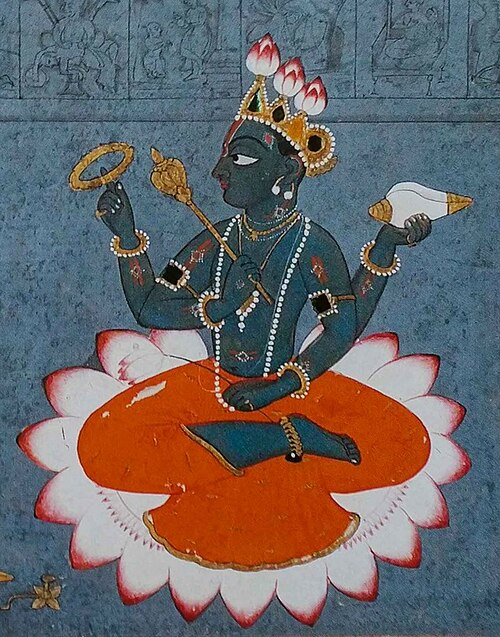
Vaishnavism is the tradition of Hinduism devoted to Vishnu and his incarnations (avatars) — especially Rama and Krishna — as the Supreme Being. It is the largest and most widely distributed of the Hindu traditions, found across the subcontinent and the world (Flood 1996, ch. 6; Klostermaier 2007, ch. 8).
Who is Vishnu?
Vishnu is the Preserver in the Hindu Trimurti (Brahma creates, Vishnu preserves, Shiva destroys). He is known as:
- Narayana (the one who dwells in the waters of creation)
- Hari (the remover of sorrow)
- Vasudeva (the all-pervading one)
The Ten Avatars (Dashavatara)
Vishnu is held to descend to earth whenever dharma (righteousness) declines. The classic list of ten:
- Matsya (Fish) — saved the Vedas from the flood
- Kurma (Tortoise) — supported Mount Mandara during the churning of the ocean
- Varaha (Boar) — rescued the earth from the demon Hiranyaksha
- Narasimha (Man-Lion) — destroyed the demon Hiranyakashipu
- Vamana (Dwarf) — reclaimed the three worlds from King Bali
- Parashurama (Rama with the Axe) — destroyed corrupt Kshatriya kings
- Rama (Prince of Ayodhya) — hero of the Ramayana
- Krishna (Cowherd of Vrindavan) — hero of the Mahabharata and Bhagavad Gita
- Buddha — in the common medieval list; note: the avatar lists vary by tradition — some substitute Balarama for Buddha, and some include both to make eleven
- Kalki (the Horseman) — will come at the end of the current age
[INTERMEDIATE]
Origins: Vedic to Puranic
In the Rig Veda, Vishnu was a comparatively minor deity famous for his three strides across the universe — a myth that later became the basis of the Vamana avatar. From the late Vedic period onward, and decisively in the Puranic period (c. 300–1000 CE), Vishnu rose to supreme status, absorbing the theistic cults of Vasudeva-Krishna and Narayana (Gonda 1970; Flood 1996).
The Bhagavata Purana (commonly dated c. 9th–10th century CE) is the most influential Vaishnava text, especially its Tenth Book, which narrates Krishna's childhood and divine play (lila) in Vrindavan. The Vishnu Purana (c. 4th–5th century CE) is the other foundational Purana of the tradition.
The Alvars (roughly 6th–9th centuries CE)
Twelve Tamil poet-saints transformed Vaishnavism through intense devotional poetry:
- Nammalvar: Considered the greatest; his Tiruvaymoli is honoured as the "Tamil Veda"
- Andal: The only female Alvar; her poetry expresses passionate love for Krishna
- Their hymns are collected in the Nalayira Divya Prabandham (4,000 sacred verses), treated in Sri Vaishnavism as equal in authority to the Sanskrit Vedas (Hardy 1983)
Hardy (1983) argues that the Alvars' emotional, "viraha-bhakti" (love-in-separation) poetry marks a genuinely new development in Indian religion — the earliest full expression of the passionate devotion later associated with the North Indian bhakti movements.
Ramanuja (traditional dates 1017–1137 CE)
The philosopher who systematized Vishishtadvaita ("Qualified Non-Dualism"):
- The soul and God are distinct but inseparable, like body and soul
- Liberation comes through prapatti (total surrender) to Vishnu's grace
- He established the ritual and theological framework of Sri Vaishnavism (Carman 1974)
- The great temple at Srirangam — the largest functioning Hindu temple complex in the world — remains the tradition's centre
The traditional dates of Ramanuja's life are debated; scholarship places him in the 11th–12th centuries.
Section 2: Major Vaishnava Traditions
[BEGINNER]
Sri Vaishnavism (Ramanuja tradition)
- Centered in Tamil Nadu and at Srirangam
- Worships Vishnu with his consort Sri (Lakshmi)
- Emphasizes temple worship and the grace of the guru
- The Divya Desams (108 sacred Vishnu temples) are its pilgrimage circuit
Gaudiya Vaishnavism (Chaitanya tradition)
- Founded by Chaitanya Mahaprabhu (1486–1534) in Bengal
- Emphasizes prema-bhakti (ecstatic love for Krishna)
- The Hare Krishna mantra comes from this tradition
- ISKCON (International Society for Krishna Consciousness), founded by A. C. Bhaktivedanta Swami Prabhupada in 1966, carried the tradition worldwide; it is one modern institutional expression among several
Pushtimarg (Vallabha tradition)
- Founded by Vallabhacharya (1479–1531) in Gujarat/Rajasthan
- Emphasizes pushti (nourishment through divine grace)
- Worships Krishna as Shrinathji at Nathdwara, Rajasthan
- Famous for its elaborate seva (service) rituals, including changing the deity's clothes several times a day
Ramanandi Sampradaya
- The largest Vaishnava monastic order in North India
- Founded by Ramananda (14th–15th centuries)
- Emphasizes Rama as the supreme deity
- Historically open to all castes; several of its celebrated saints (e.g. Kabir's early milieu) came from low-caste or artisan backgrounds — the details are debated in scholarship
Section 3: Worship & Practice
[BEGINNER]
Daily Practices
- Tilaka: Wearing sacred marks on the forehead (U-shaped for Vaishnavas, as opposed to the three horizontal lines of Shaivas)
- Chanting the names: Repeating Rama, Krishna, Hari, or the Hare Krishna mantra
- Deity worship (arca-vigraha): Offering food, flowers, and prayers to temple or home images
- Ekadashi fasting: Twice-monthly fast on the 11th day of the lunar cycle, dedicated to Vishnu
Major Festivals
- Janmashtami: Krishna's birthday (August/September)
- Rama Navami: Rama's birthday (March/April)
- Diwali: celebrated by many Vaishnavas as the day Rama returned to Ayodhya
- Holi: the festival of colours, celebrating Krishna's play with the gopis (cowherd women)
Sacred Sites
- Tirupati (Venkateswara Temple): the richest and most-visited Hindu temple in the world (Andhra Pradesh)
- Vrindavan: the land of Krishna's childhood, with a very large number of temples (the "5,000 temples" figure often quoted is an estimate, not a count)
- Ayodhya: the traditional birthplace of Rama
- Jagannath Puri: the temple of Lord Jagannath (a form of Krishna) in Odisha
- Badrinath: one of the Char Dham pilgrimage sites, high in the Himalayas
Section 4: Known Limitations & Scholarly Caution
- The historical existence of Rama and Krishna is debated; the app presents both traditional and scholarly perspectives
- ISKCON's presentation of Gaudiya Vaishnavism is one modern interpretation among many
- The avatar list is not fixed: the inclusion of Buddha (vs. Balarama) varies by tradition and period
- The dates of the Alvars, Ramanuja, and Ramananda are debated; the figures above follow the scholarly mainstream
- The relationship between Vaishnavism and South Indian tribal traditions is complex and under-documented
- Popular census-style figures for "adherents" (e.g. "800 million") are not verifiable and have been removed from this entry
Recommended reviewers: A Sri Vaishnava scholar; a Gaudiya Vaishnava practitioner; a historian of the bhakti movement.
Standard Disclaimer


_cropped.png/500px-Krishna_Holds_Up_Mount_Govardhan_(MET_70694)_cropped.png)