Historical Period17c CE
Commissioned by Shah Jahan; built 1650–1656 (5,000+ workers); first Imam Syed Abdul Ghafoor Shah Bukhari
3000 BCEEarly ModernPresent
Sacred Facts · At a Glance
- Element
- earth
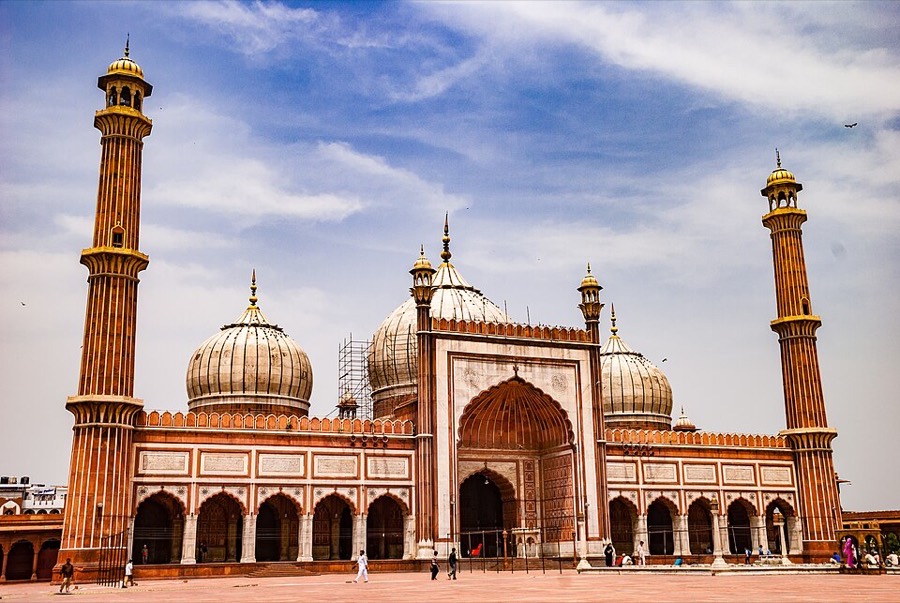
Jama Masjid, Old Delhi (1650–56) — Shah Jahan's Friday mosque and India's largest: red sandstone and white marble, 25,000 courtyard capacity, twin 40-metre minarets, relic chamber with Prophet's relics.
An editorial reading of the site, woven from its architectural, historical, and scriptural data.
In Chandni Chowk, Old Delhi, Delhi, Masjid-i Jehan Numa, Old Delhi — a commissioned by shah jahan; built 1650–1656 (5,000+ workers); first imam syed abdul ghafoor shah bukhari site — jama Masjid, Old Delhi (1650–56) — Shah Jahan's Friday mosque and India's largest: red sandstone and white marble, 25,000 courtyard capacity, twin 40-metre minarets, relic chamber with Prophet's relics.
The earliest event recorded here is construction, 1650–1656. Through the centuries, the temple witnessed living congregation. Crown of Shahjahanabad — the Friday mosque facing the Red Fort; Ustad Ahmad Lahori's workshop tradition links it to the Taj.
Construction, 1650–1656
01Walk the pradakshina path. Note the earliest event recorded here — construction, 1650–1656.
02The tradition here is islamic. Sit. Listen. The darshan is its own teaching.
Other sites derived from shared frontmatter data — tradition, era, region, or built form.
No primary scriptures are catalogued for this entry yet. If you know of scriptural references we have missed, please contribute them.
Three great gateways, four towers, two minarets of alternating sandstone and marble — Masjid-i Jehan Numa, the "mosque commanding the view of the world," rises over Old Delhi as the Mughal capital's exclamation mark. Shah Jahan's last great mosque (1650–56): courtyard for 25,000, prayer hall for the city's Friday thousands still.