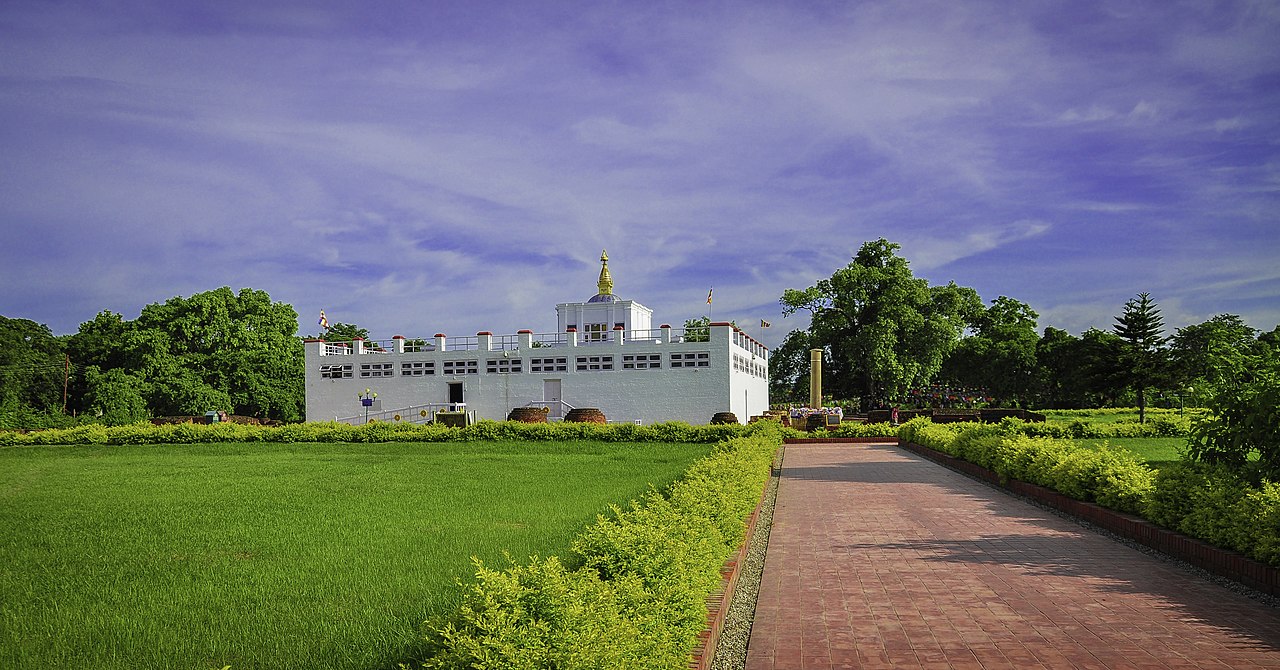
Sacred Facts · At a Glance
- Gender
- male
Primary Scriptures
3 sources- Lalitavistara Sutramahayana buddhist text describing buddha's birth
- Ashoka Pillar inscriptionoriginal 3rd century bce inscription
- Mahavamsa (Sri Lankan chronicle)historical record of buddhist sites
Lumbinī — Birthplace of the Buddha
Tradition
Buddhist / Theravada / Mahayana — First of the four principal Buddhist pilgrimage sites
Location
- Lumbini, Rupandehi, Nepal (27.4833°N, 83.2767°E)
- UNESCO World Heritage Site (inscribed 1997)
Timeline
| Year | Event | Source |
|---|---|---|
| c. 563 BCE | Queen Māyādevī gives birth to Siddhārtha under Sāl tree | Pali Canon; Buddhist tradition |
| c. 249 BCE | Ashoka erects pillar and builds temple at Lumbini | Ashoka Pillar inscription |
| c. 400-411 CE | Faxian visits; describes sacred garden and temple | Faxian, Fo-Kwo-Ki |
| c. 636-637 CE | Xuanzang visits; notes Ashoka pillar and living Sāl tree | Xuanzang, Si-Yu-Ki |
| 1896 CE | Anton Führer rediscovers Ashoka Pillar | British survey records |
| 1997 CE | UNESCO World Heritage inscription | UNESCO WHC |
| 2003 CE | Major restoration by Lumbini Development Trust | LDT records |
Sacred Narrative
Lumbinī — where Queen Māyādevī gave birth to Siddhārtha under the Sāl tree — is the first of the 4 most-holy Buddhist places. UNESCO World Heritage (1997). The Māyādevī Temple houses the marker-stone erected by Emperor Aśoka in 249 BCE to mark the exact birthplace. The Aśoka Pillar (249 BCE) records the site. Pilgrims from all 54 Buddhist nations visit; each nation has built its own temple at Lumbinī — the Thai, Korean, Japanese, Chinese, Vietnamese, Sri Lankan monasteries are spectacular architectural specimens.
Chinese pilgrims Faxian (5th century) and Xuanzang (7th century) both visited Lumbini at times when Buddhism was flourishing. They noted the sacred Sāl tree was still standing, the Ashoka temple was well-maintained, and pilgrims came from many countries to worship. The Ashoka Pillar inscription — still legible today — confirms this as the Buddha's birthplace.
In 1896, German archaeologist Anton Führer rediscovered the Ashoka Pillar during the British survey of Nepal. Today, Lumbini is a UNESCO World Heritage Site and receives millions of Buddhist pilgrims annually.
Wisdom Graph: Divine Associations
Principal Temples
- Māyādevī TempleModern reconstruction; original Ashoka-era marker stone (249 BCE)📍 Lumbini, Rupandehi, Nepal, NepalUNESCO World Heritage Site — marks exact birthplace of Buddha
- Ashoka Pillar249 BCE📍 LumbiniEmperor Ashoka erected to mark Buddha's birthplace; oldest Buddhist inscription in Nepal
- International Buddhist monasteries (Thai, Korean, Japanese, Chinese, Vietnamese, Sri Lankan)20th century📍 Lumbini54 nations have built monasteries at Lumbini
Festivals
- Buddha Jayanti / VesakVaisakh (April-May) · 1-3 daysCommemorates Buddha's birth; UNESCO celebration with international participation
Primary Scriptural Sources
- Lalitavistara SutraMahayana Buddhist text describing Buddha's birth
- Ashoka Pillar inscriptionOriginal 3rd century BCE inscription
- Mahavamsa (Sri Lankan chronicle)Historical record of Buddhist sites
Sources & provenance
- 📜
- 📜Primary sourceFaxian (Fa-Hien). Fo-Kwo-Ki (400)5th century Chinese pilgrim visited Lumbini
- 📜Primary sourceXuanzang (Hiuen Tsang). Si-Yu-Ki (640)7th century Chinese pilgrim described Lumbini
- 🎓Scholarly sourceBookBuddhist tradition: scholarly and community sources
- 📖Supporting referenceGazetteerRupandehi District Gazetteer, Nepal

