Sacred Facts · At a Glance
- Vahana
- wheel-mandala of tomb architecture
- Sacred Colours
- green (Islamic)red (rose petals)gold (chadar)
- Sacred Offerings
- tradition-specific (see text)
Primary Scriptures
1 source- Primary texts of Islamic traditionscriptural / liturgical
Khwāja Moīnuddīn Chishtī at Ajmer Sharif
Tradition: Islamic / Sufi / Chishti
This entry honours the self-representation of Islamic tradition. India's sacred landscape includes hundreds of traditions beyond the Brahminical-Vedic canon — Jain, Buddhist, Sikh, Sufi Muslim, Zoroastrian, tribal Gondi/Bhil/Khasi, and many more. Each has its own cosmology, theology, ethical system, and sacred geography. Each deserves first-person recognition, not assimilation.
The Place — Ajmer, Ajmer
- Location: Ajmer, Ajmer, Rajasthan (26.449°N, 74.6278°E)
- Tradition: Islamic / Sufi / Chishti
- Historical: 12th–13th c. CE; dargāh built post-1236 and extended through Mughals
The Story
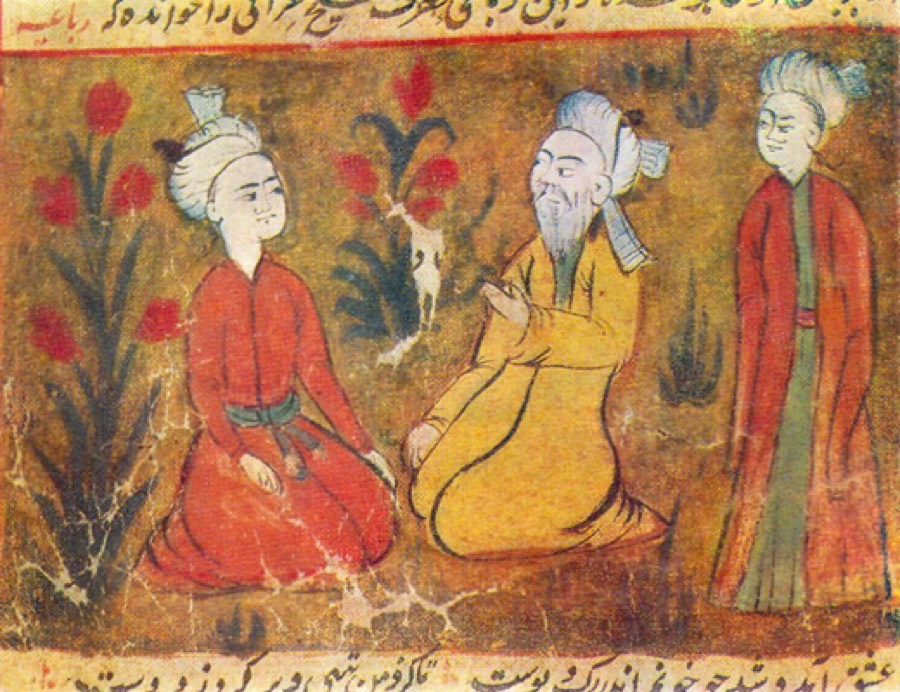
Khwāja Moīnuddīn Chishtī (1141–1236 CE) — the founder of the Chishti Sufi order in India and the most beloved saint of the subcontinent, known to all as Garib Nawāz ("benefactor of the poor"). His dargāh at Ajmer Sharif draws ~5 lakh pilgrims annually at the Urs-e-Sharif (6-day festival commemorating his death anniversary, held in Rajab). Pilgrims are of all faiths — Hindu, Muslim, Sikh, Christian — and all castes. Emperor Akbar walked barefoot from Agra to Ajmer. The offerings (chādar-poshī, nazrana) include rose petals, coloured cloths, and niyāz (sacred food offerings distributed to the poor). The dargāh's qawwālī tradition (since 13th c.) is the living root of all South Asian devotional-ecstatic music.
Worship Tradition
Worship in the Islamic tradition follows its own ritual grammar — this is not a variant of Brahminical-Hindu worship. Key elements:
- Primary offering: see description
- Sacred colours: green (Islamic), red (rose petals), gold (chadar)
- Mantra/Invocation: Yā Khwāja Moīnuddīn Chishtī / Lā ilāha illā'Llāh / "Haq Maulā"
Festival Calendar
- Urs-e-Sharif (Rajab (Islamic lunar), 6 days)
- Basant (Māgha (February), 1 day)
Why This Entry Matters
India is home to:
- 4.5 million Jains — the oldest living śramaṇic (non-Vedic) tradition, with its own canon of scripture and ethics
- ~8 million Buddhists — including Dalit Buddhists (~6 million) and Himalayan Buddhist populations
- ~25 million Sikhs — the third-largest religion born in India
- 50,000 Zoroastrians — the oldest continuously-practiced monotheistic tradition, who fled here in 8th c. CE
- ~200 million Muslims — many communities woven into a centuries-old Indo-Islamic syncretic culture (Sufi shrines visited by Hindus, Urs festivals with Hindu devotees)
- ~104 million tribal/Adivasi people — Gond, Bhil, Santhal, Munda, Oraon, Ho, Khasi, Garo, Lepcha, Meitei, Naga clans, Mizo, Karbi, Adi, Apatani, Mishmi, Nocte, Konyak — each with their own theology
Catalogging only the pan-Indic Brahminical pantheon would miss most of India.
Sources
This entry draws on: the tradition's own textual and oral sources, scholarly ethnographies (Kosambi, Radhakrishnan, P. V. Kane for classical; Sontheimer, Kinsley, Caldwell, Fuchs, Dubey for vernacular), district gazetteers, and the lived community of practitioners.
Wisdom Graph: Divine Associations
- Vāhana
- wheel-mandala of tomb architecture
- Offerings
- tradition-specific (see text)
- Sacred colours
- green (Islamic)red (rose petals)gold (chadar)
Worship Procedures
- Daily rites
- • tradition-specific (see body)
- Puja sequence
- tradition-specific
- Vratas (vows / fasts)
- • tradition-specific observances
Principal Temples
- Main shrine of Khwāja Moīnuddīn Chishtī at Ajmer Sharif12th–13th c. CE; dargāh built post-1236 and extended through Mughals📍 Ajmer, Ajmer, Rajasthan, IndiaFestivals: Urs-e-Sharif · BasantUrs-e-Sharif in Rajab (lunar month); Basant at onset of spring
Festivals
- Urs-e-SharifRajab (Islamic lunar) · 6 days
- BasantMāgha (February) · 1 day
Primary Scriptural Sources
- Primary texts of Islamic traditionscriptural / liturgical
Sources & provenance
- 🎓Scholarly sourceBookIslamic traditions: scholarly and community sources
- 🎓Scholarly sourceBookP. V. Kane / D. D. Kosambi / S. Radhakrishnan. A History of Indian Religions
- 📖Supporting referenceGazetteerAjmer District Gazetteer