Sacred Facts · At a Glance
- Element
- earth
Primary Scriptures
0 sourcesNo primary scriptures are catalogued for this entry yet. If you know of scriptural references we have missed, please contribute them.
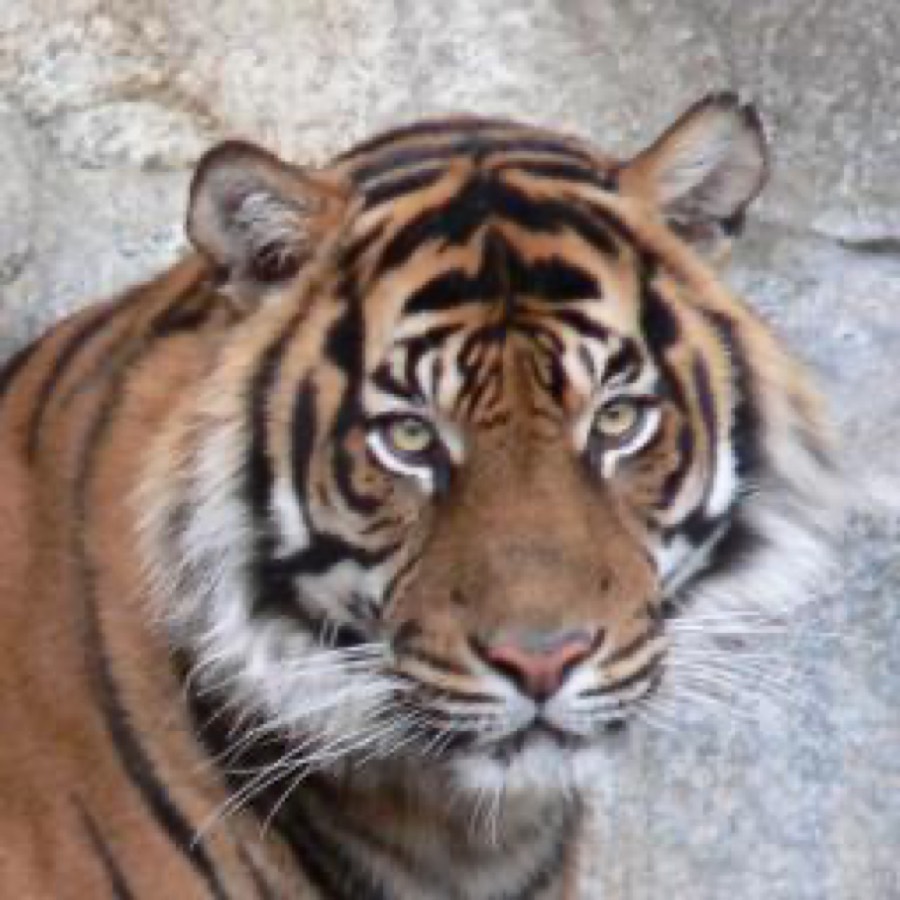
Vyaghra — The Divine Tiger
Overview
In brief
The tiger (vyāghra / bāgh / puli) is the truly indigenous apex animal of the Indian subcontinent — unlike the lion (which historically roamed only the northwest) the tiger is native from the Himalayas to Kanyakumari, from the mangroves of the Sundarbans to the Central Indian forests. As a divine animal, the tiger belongs most deeply to indigenous, tribal, and Dravidian traditions, rather than the imported Aryan pantheon.
Key divine riders of the tiger:
- Durga Sherawali / Vaishno Devi — Durga seated on a tiger (often interchangeably called lion in Hindi as sher; in Kashmir and the Himalayan foothills she is explicitly depicted on a Bengal tiger)
- Amman goddesses of Tamil Nadu — the village mothers (Mariamman, Chamundi, Angala Parameshwari, Karumariamman) are often shown or processed with tiger imagery
- Ayyappa of Sabarimala — mounted on a tiger; his legend involves fetching tigress's milk for his mother
- Bonbibi — the Sundarbans Forest Mother who protects honey-collectors and woodcutters from tigers (especially from the tiger demon Dakshin Ray)
- Dakshin Ray — syncretic tiger-god of the Sundarbans, revered by both Hindus and Muslims
- Parvati / Shakti in certain eastern and Himalayan traditions
In more detail
The tiger's divine associations are darker and more ambivalent than the lion's. Where the lion is majestic sovereignty, the tiger is primal wildness, the liminal boundary between village and forest, the devouring aspect of the Mother.
- In Baiga, Gond, and Santal tribal cosmology the tiger is both ancestor and guardian; Baiga priests invoke Bagheshwar (Tiger-Lord)
- In Warli art the tiger is the supreme creature of the forest goddess
- In Nagaland and Northeast India, the tiger-ancestor myth (man and tiger descending from the same mother) is foundational
- The Tiger Dance (Pulikali) of Thrissur, Kerala — performed during Onam — is a direct folk continuity of tiger veneration
- In Chinese cultural transmission, the tiger of the White West (Baihu) becomes syncretized with local Indian traditions in Tibetan Buddhism — Dorje Drolo, a wrathful form of Padmasambhava, rides a tigress
Sundarbans — The Bonbibi / Dakshin Ray System
The Sundarbans offers the most elaborate tiger-related devotional complex anywhere in India. Hindu and Muslim honey-gatherers (mouli), wood-cutters (bawali), and fisher-folk share veneration of:
- Bonbibi (Lady of the Forest) — protector
- Shah Jangali — her brother
- Dakshin Ray — the tiger-demon who demands offerings
- Dukhe — the human boy whose story is recited in the Bonbibir Johuranama, a verse-narrative in mixed Bengali-Arabic
Every honey expedition traditionally begins with offerings at a Bonbibi shrine — indigenous religion that long predates sectarian categorization.
Iconography
- Durga's tiger is often depicted mid-leap, fangs bared, golden-orange with black stripes
- Ayyappa sits cross-legged on a tiger, yogi-like — yogapattam strap around his knees
- Bonbibi shrines feature clay figurines of goddess, brother, and crocodile Makara plus Dakshin Ray
Relationships
- Durga / Chamundeshwari / Mariamman — principal goddesses with tiger mounts
- Ayyappa — tiger mount in Kerala tradition
- Bonbibi & Dakshin Ray — Sundarbans tiger system
- Bagheshwar — Baiga tribal tiger-lord
- Bagh Bhairon — Punjabi-Rajasthani hero-god associated with tigers
Living Tradition
- Pulikali — tiger dance festival of Thrissur (Onam season, Kerala)
- Project Tiger (1973) — India's flagship conservation program, inaugurated at Corbett National Park; conservation and veneration interlink politically
- National animal of India (Royal Bengal Tiger) since 1973 (replacing the lion)
- National animal of Bangladesh since independence
- Mangal Kavya tradition — Bengali narrative poetry invoking forest goddesses and their tiger companions (15th–18th c. CE)
Key Facts
- Role: Vāhana of Ayyappa, Sherawali-Vaishno Devi, Sundarbans deities, Amman goddesses
- Sanskrit: Vyāghra; Bengali: বাঘ (bāgh); Tamil: புலி (puli)
- Native range: Entire subcontinent — unlike the lion
- Tradition center: Indigenous/tribal/Dravidian/Sundarbans syncretic
- Dark aspect: Embodiment of the forest's devouring power, liminal menace
- Conservation: National animal of India (since 1973) and Bangladesh
Sources & provenance
- 🎓Scholarly sourceBookEveline Meyer. Amman: The Mother Goddess of Tamil Nadu (1986)
- 🎓Scholarly sourceBookA. K. Ramanujan (ed.). The Tiger and the Ruminant: Folk Tales, Forest Cosmology (1997)
- 📖