Sacred Facts · At a Glance
- Gender
- male
- Element
- earth
- Sacred Colours
- saffronyellow (pīta)green (tulasī)
- Sacred Flowers
- tulasī (holy basil) · lotus
- Sacred Offerings
- tulasī garland · puliyodara (tamarind rice) · sakkarai pongal · curd rice · milk
- Sacred Plants
- tulasī
Primary Scriptures
2 sources- Nālāyira Divya Prabandhamtamil hymn collection (4000 verses by 12 āḻvārs)Composed 7th–9th c. CE
- Sthala-purāṇam of this templelocal temple text
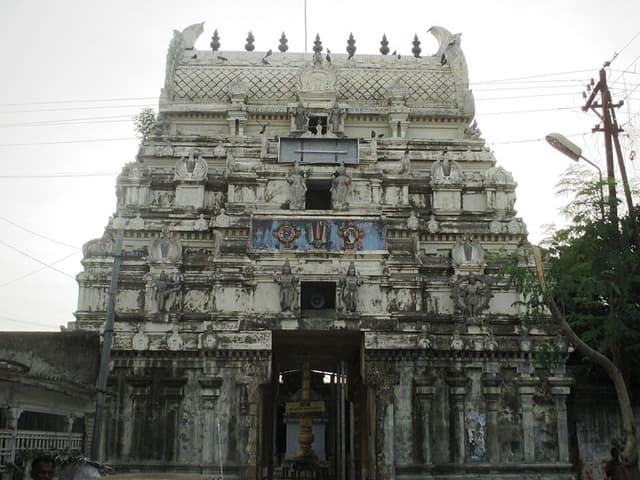
Thrikkākara Vāmana
The 108 Divya Desams
The 108 Divya Desams are the 108 sacred abodes of Vishnu sung in the Tamil hymns of the 12 Āḻvārs. Compiled by Nāthamuni in the 9th c. CE as the Nālāyira Divya Prabandham (4,000 verses), these temples constitute the sacred geography of Tamil Vaishnavism and are the foundational map for the Śrīvaiṣṇava sampradāya (Rāmānuja, 11th c.).
108 is the canonical count — 106 on earth, plus Tirupparkadal (the milk-ocean, Vishnu's cosmic abode) and Paramapadam (Vaikuṇṭha, the eternal realm) — making 108 complete.
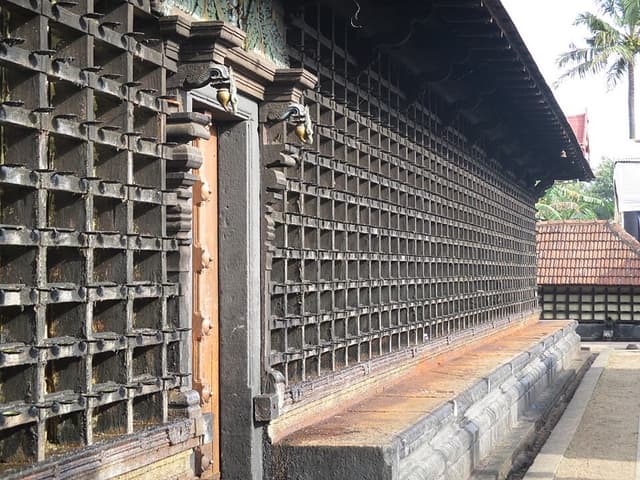
This Temple — Thrikkākara Vāmana
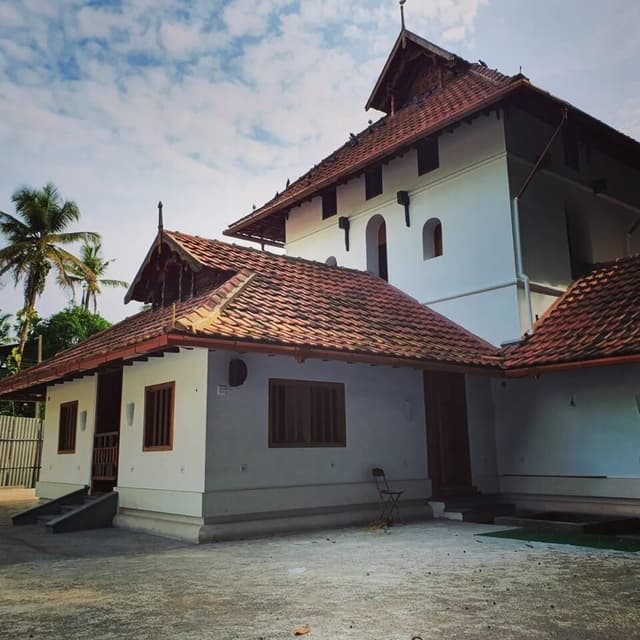
- Location: Thrikkakara (near Kochi), Ernakulam district, Kerala (10.0246°N, 76.3359°E)
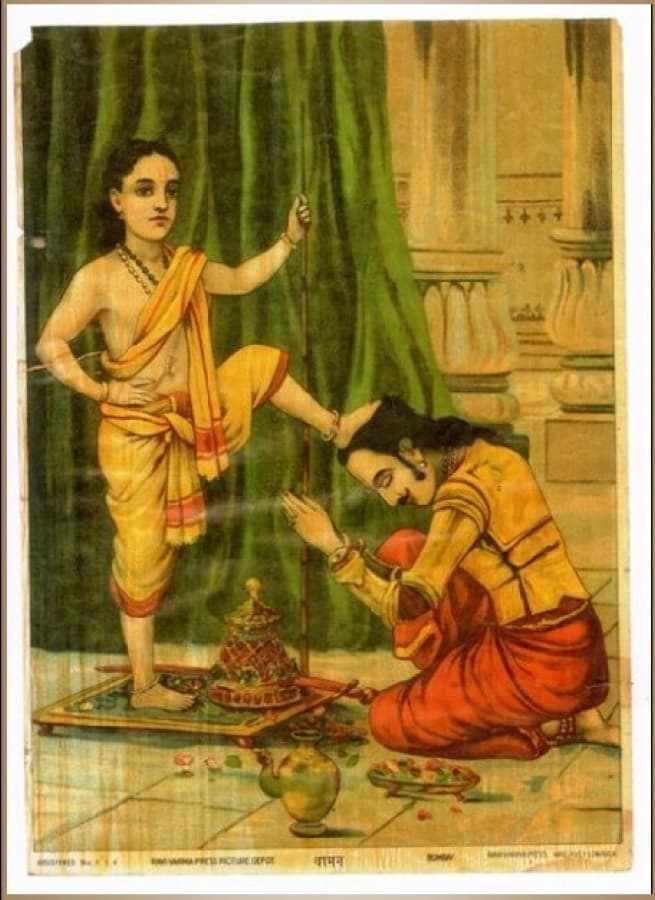
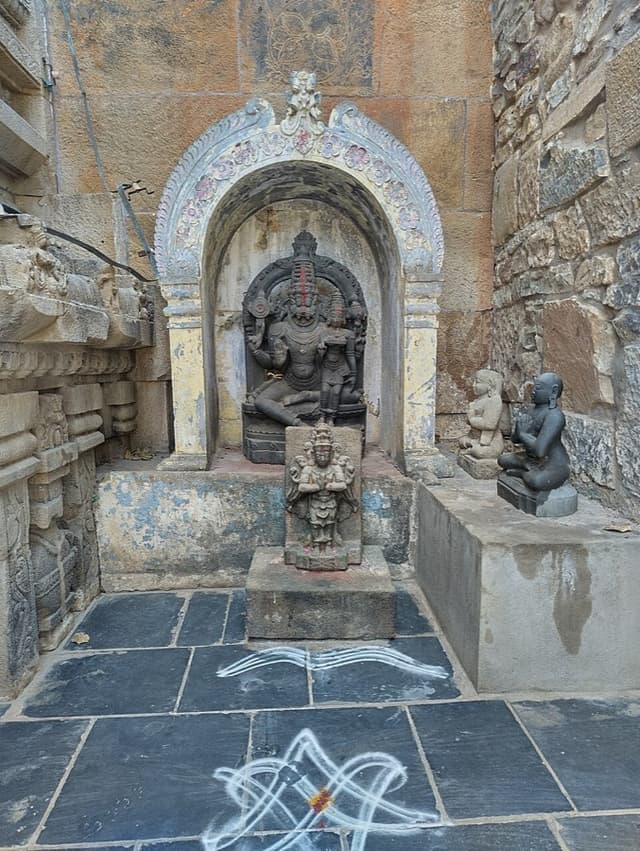
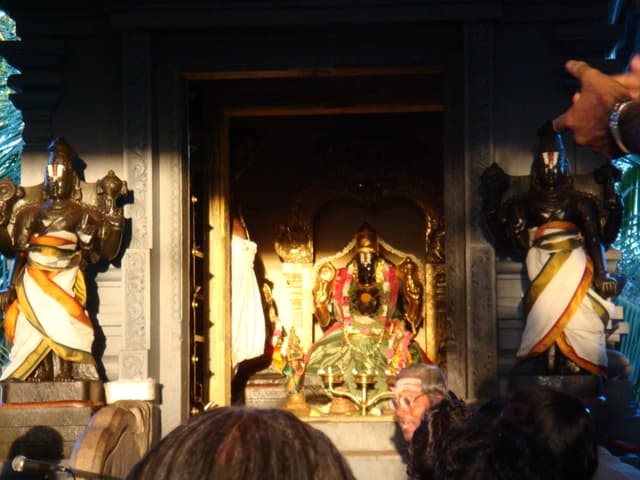
- Presiding deity: Vāmana-mūrti (Vishnu in dwarf-boy form holding staff)
- Consort / Thāyār: Vāma-kṣetra-valli
- Temple tank (tīrtham): Kapila-tīrtham
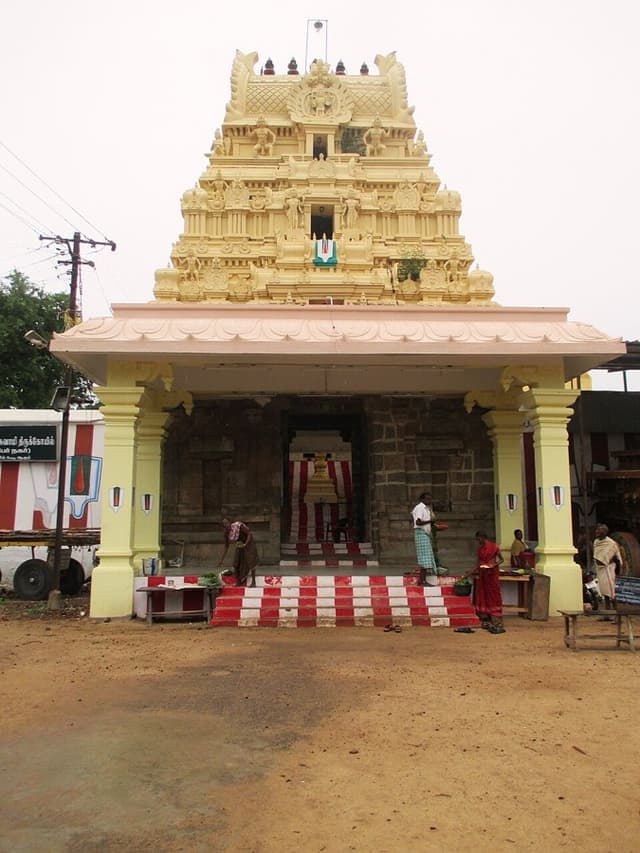
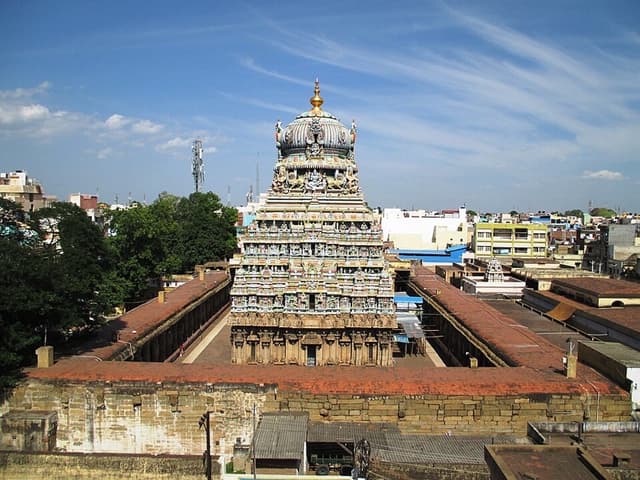
- Vimāna (sanctum tower): Vāmana-vimāna
- Mangalāśāsanam: Sung by Nammāḻvār — 11 pasurams. Kerala's most important Vaiṣṇava shrine and the ritual origin of the Onam festival.
- Built: 9th–12th c. CE (Chera); reconstructed post-1921 floods
Sthala-Purāṇa Story
Thrikkākara is where Vāmana pressed the demon-king Mahābali into the underworld and made the annual promise that Mahābali would return each year to see his people — the promise commemorated every Onam. The 10-day festival Thrikkākara Utsavam in Chingam is the template for home Onam observance across Kerala.
Worship Tradition
Daily: viśvarūpa-darśana (pre-dawn), kāla-śānti, uccikāla pūjā, sāyaraṣcha (evening), ardha-jāma (night closure). Principal offerings: tulasī garland (never fresh flowers for the central deity, only tulasī), puliyodara (tamarind rice), sakkarai pongal (jaggery rice), milk abhiṣeka. Pilgrims receive tīrtham (holy water) and the śaṭhāri — Nammāḻvār's crown placed briefly on the head, signifying servitude to the Lord.
Festival Cycle
- Vaikuṇṭha Ekādaśī (Mārgaḻi, Dec–Jan): the holiest day. The Paramapada-vāsal (gate of Vaikuṇṭha) is opened and devotees who pass through attain mokṣa
- Brahmotsavam: annual 10-day utsavam with Vishnu paraded on different vāhanas each day — Śeṣa, Garuḍa, Haṃsa, Hanumanta, Siṃha, Chariot
- Garuḍa Sevai: Vishnu on his eagle-mount, most darśana-rich of all processions
- Dhanur-māsa (Mārgaḻi): entire month is holy; pilgrims come for pre-dawn neyyavaḷikku darśana
The Āḻvār Tradition
This temple is hallowed because Āḻvār saint-poets sang of it in their Divya Prabandham pasurams. The Āḻvārs were 12 Tamil Vaishnava saint-poets (7th–9th c. CE) whose corpus of 4,000 verses is considered by Śrīvaiṣṇavas to be equivalent to the Vedas in Tamil (Drāviḍa Veda). Each temple's sanctity rests on how many Āḻvārs sang of it and how many pasurams — this is the mangalāśāsanam.
Architectural Note
The vimāna (sanctum tower) over the mūlasthāna is the temple's signature: Vāmana-vimāna. Each Divya Desam's vimāna has a unique name and symbolism — the celestial archetype of Vishnu's abode manifesting on earth.
Sthalapurana (Temple Legend)
The sacred history of this shrine is recounted in local Sthalapurana texts and the Divya Prabandham hymns.
Wisdom Graph: Divine Associations
- Sacred flowers
- tulasī (holy basil)lotus
- Sacred plants
- tulasī
- Offerings
- tulasī garlandpuliyodara (tamarind rice)sakkarai pongalcurd ricemilk
- Sacred colours
- saffronyellow (pīta)green (tulasī)
Worship Procedures
- Daily rites
- • viśvarūpa-darśana (5 AM)• kāla-śānti• uccikāla pūjā• sāyaraṣcha• arrdha-jāma (night pūja)
- Puja sequence
- tulasī garland
- milk abhiṣeka
- puliyodara naivedyam
- arati
- tīrtham + śaṭhāri (crown of Nammāḻvār)
- Vratas (vows / fasts)
- • Ekādaśī fast• Cāturmāsya• Dhanur-māsa (Mārgaḻi) early darśana
- Pilgrimages
- • 108 Divya Desam yatra (traditional South Indian Vaishnava pilgrimage)• Nava Tirupati• Pañca-ranga circuit
Principal Temples
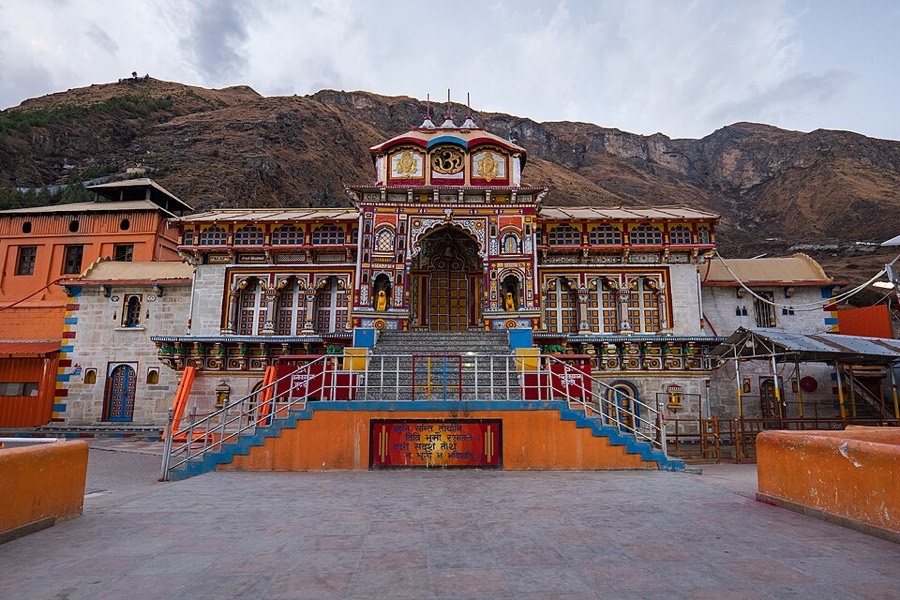
- Thrikkākara Vāmana Temple9th–12th c. CE (Chera); reconstructed post-1921 floods📍 Thrikkakara (near Kochi), Ernakulam, Kerala, IndiaFestivals: Vaikuṇṭha Ekādaśī (December–January) · Brahmotsavam (10 days, annual) · Garuḍa Sevai · Nācciyār TirukolaiGoddess: Vāma-kṣetra-valli. Tīrtham: Kapila-tīrtham. Vimāna: Vāmana-vimāna. Sung by Nammāḻvār — 11 pasurams. Kerala's most important Vaiṣṇava shrine and the ritual origin of the Onam festival.
Festivals
- Vaikuṇṭha EkādaśīMārgaḻi (December–January) · 1 day (primary)The gate of Vaikuṇṭha (Paramapadam) is opened; all pilgrims who pass through it are said to attain mokṣa
- BrahmotsavamAnnual (temple-specific) · 10 daysPrincipal utsavam with processions on different vāhanas each day (Hanumanta, Garuḍa, Śeṣa, Haṃsa, etc.)
Primary Scriptural Sources
- Nālāyira Divya PrabandhamTamil hymn collection (4000 verses by 12 Āḻvārs)7th–9th c. CE
- Sthala-purāṇam of this templelocal temple text
Sources & provenance
- 🎓Scholarly sourceBookĀḻvārs (compiled by Nāthamuni, 9th c.). Divya Prabandham — Nālāyira Divya Prabandham
- 🎓Scholarly sourceBookPrema Nandakumar. 108 Divya Desams — The Sacred Abodes of Vishnu (2008)
- 🎓Scholarly sourceBookK. V. Raman. The Divya-Desams of the Alvars (2006)
- 📖Supporting referenceOtherThrikkākara Vāmana Temple — Tamil Nadu / Kerala Archaeological Survey
- 📜Primary sourceBook12 Āḻvārs. Nālāyira Divya Prabandham (600)Tamil Vaishnava canon of 4,000 hymns