

.jpg/500px-Church_of_the_Holy_Sepulchre_by_Gerd_Eichmann_(cropped).jpg)
Primary Scriptures
0 sourcesNo primary scriptures are catalogued for this entry yet. If you know of scriptural references we have missed, please contribute them.
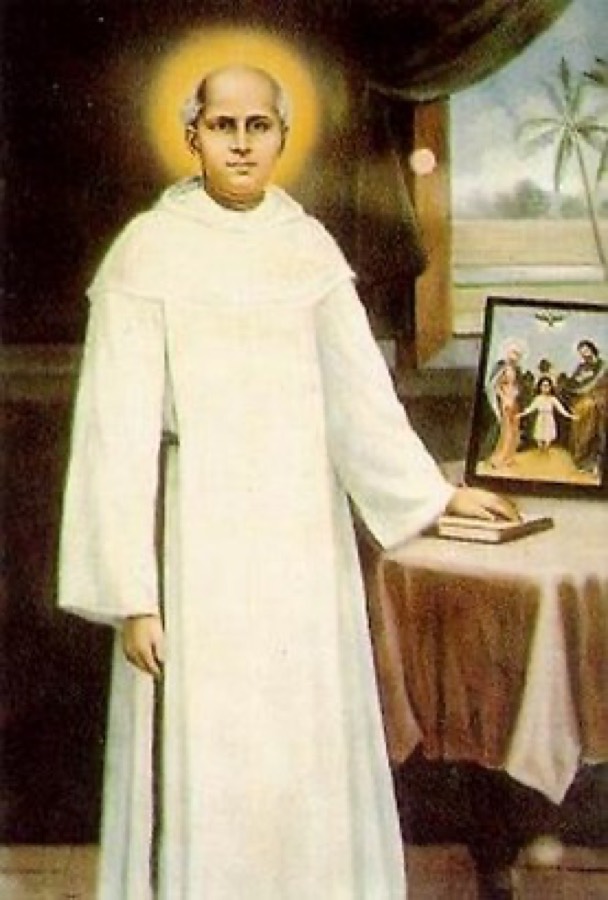
St. Kuriakose Chavara
The Common Prior Who Schooled Kerala
Overview
Kuriakose Chavara (10 February 1805 – 3 January 1871) — born at Kainakary, ordained 1829 — built with two companions the hut at Mannanam (1831) that became the Carmelites of Mary Immaculate (CMI), the Syro-Malabar Church's first men's congregation, and then spent forty years reforming everything he touched: schools, presses, liturgy, and caste itself.
Key Facts
- Prior General: took Carmelite vows 8 December 1855 ("of the Holy Family"); led the congregation 1856–71; founded the women's CMC congregation (1866) with Fr. Leopold Beccaro
- Education: Sanskrit school at Mannanam (1846) open to lower castes — Sanskrit then forbidden to them; drove the pallikudam movement (a school with every parish church)
- Press: St. Joseph's Press, Mannanam (1846) — Kerala's first indigenous press; birthplace of Nasrani Deepika, the oldest surviving Malayalam newspaper
- Churchmanship: as Vicar-General, held the Syro-Malabar Church together against the 1861 Rokos schism; compiled liturgical books, the Thukkasa, and the beloved family counsels (Oru Nalla Appante Chavarul — Testament of a Loving Father)
- Sainthood: beatified with Alphonsa 8 February 1986 (John Paul II, Kottayam); canonised 23 November 2014 (Francis); feasts 3 January (Syro-Malabar) / 18 February (Latin); shrine at St. Joseph's, Mannanam (remains translated from Koonammavu in 1889)
Why He Matters Beyond the Church
Chavara admitted Pulaya children to school and Sanskrit decades before the state moved — education as sacrament, not charity. Kerala's near-universal literacy has many fathers; the "Common Prior" is among the earliest. His press made Malayalam print Catholic before it was governmental.
Visiting
- Mannanam: monastery church and tomb, museum room with his articles and press replica, the first school — Saturday novenas draw thousands; feast season 26 December–3 January
- Koonammavu (St. Philomena's): his death-place and first grave
Sources & provenance
- 📜
- 🎓Scholarly source