


.jpg/500px-Church_of_the_Holy_Sepulchre_by_Gerd_Eichmann_(cropped).jpg)
Historical Period20c CE
1910–1997 (India mission 1929–1997; Calcutta slums from 1948)
3000 BCEModernPresent
Primary Scriptures
0 sourcesNo primary scriptures are catalogued for this entry yet. If you know of scriptural references we have missed, please contribute them.
Mother Teresa
Saint of the Slums
Overview
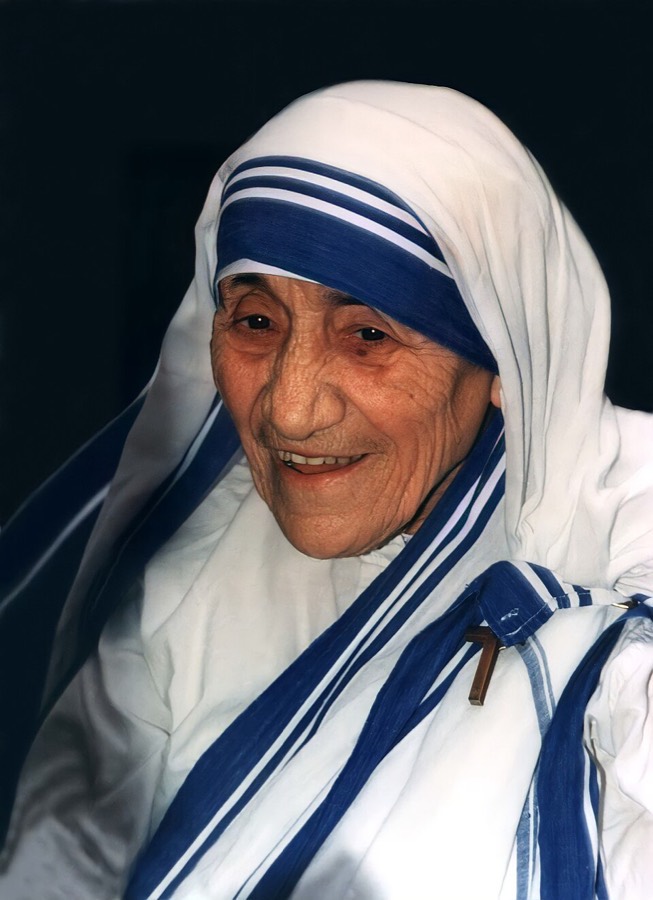
Anjeze Gonxhe Bojaxhiu (26 August 1910 – 5 September 1997) — Albanian Catholic, Loreto sister, teacher at St. Mary's Entally — heard in 1946 a "call within a call" on a Darjeeling train: to leave the convent school for the slums. In December 1948 she walked into Motijhil with no funds and an open-air school; on 7 October 1950 Rome authorised the Missionaries of Charity, in the white sari with blue borders now known worldwide.
Key Facts
- Born: 26 August 1910, Skopje (baptised 27 August); arrived Kolkata January 1929
- Order: Missionaries of Charity — serving "the poorest of the poor"; fourth vow of wholehearted free service
- Nobel Peace Prize: 1979 — refused the banquet, asking its cost be given to the poor
- Died: 5 September 1997, Mother House; state funeral 13 September; buried on site
- Sainthood: beatified 2003 (John Paul II), canonised 4 September 2016 (Francis); feast 5 September; co-patron of Calcutta Archdiocese (2017)
Works
- Nirmal Hriday (Kalighat Home for the Dying, 1952) — the dying received care "to die like angels — loved and wanted," each by their own faith's rites
- Homes for HIV/AIDS, leprosy, and tuberculosis patients; orphanages; soup kitchens; mobile clinics; schools — 5,076 sisters in 754 missions across 138 countries (2025)
- Daily Mass at Mother House chapel (6 AM); Friday tomb Mass for petitioners; volunteers received from across the globe
In India
- Tomb and rooms preserved at Mother House — pilgrimage site for people of all faiths and none
- Her life is frankly debated (care standards in her homes are criticised in some accounts) — this entry records the devotion she inspires and the facts above, leaving polemics to other shelves
- Kolkata's September 5 feast fills the Mother House lanes; Skopje and the Vatican keep parallel celebrations
Sources & provenance
📜 3 Primary
- 📜
- 📜Primary sourceMother Teresa — Biographical