Sacred Facts · At a Glance
- Gender
- male
- Sacred Colours
- tradition-specific
- Sacred Offerings
- tradition-specific
Primary Scriptures
1 source- Primary texts of Sikhscriptural / devotional / oral
Takht Hazur Sahib, Nanded
Where the Guru Granth became Guru
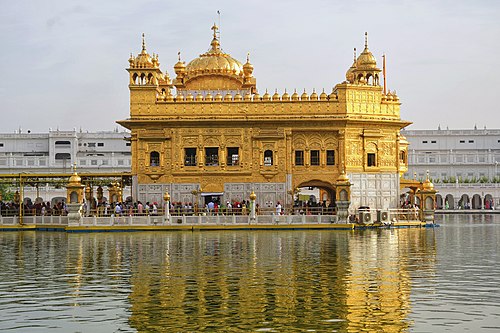
Takht Hazur Sahib is the gurdwara at Nanded, in Maharashtra, marking the place where Guru Gobind Singh — the tenth and last human Guru of the Khalsa — died. It is one of the five Takhts, the five seats of Sikh authority, and the fourth of them. The Guru was struck down in 1708 and died in the city; the gurdwara stands where he was cared for and where he passed. The shrine is treated as the place where the succession of the Guru passed from the human line to the Guru Granth Sahib, and in the Sikh understanding this is the moment the Guru became eternal.
This makes Nanded a site of doctrinally unusual weight. The Guru's death and the declaration of the Guru Granth as Guru happened in a span of days, and the Takht at Nanded is the seat of that declaration. The Dasam Granth — the writings associated with Guru Gobind Singh's poetic voice, particularly the Charitropakhyan and the Bach Bhai Gurdas — is venerated at Nanded in a manner and to a degree not reproduced at the Akal Takht at Amritsar. This is a real regional difference within Sikh practice, not a curiosity: the Nanded tradition gives a distinctive standing to the Dasam Granth, and a Nanded-specific maryada (custom) is recognised. The scholarly debate over the authorship and status of parts of the Dasam Granth should not be flattened here — the tradition holds its own and the scholarship holds its own, and this entry reports the tradition.
The gurdwara's ritual life is shaped by its Deccan setting as well as by its Sikh identity. Aarati with lamps and the presence of devotees from all backgrounds are part of the Nanded observance, and this is characteristic of the western-Indian and Deccan gurdwaras, which have long stood in a plural religious neighbourhood and developed a more public, festival-like worship than the Amritsar Takhts. The Gurpurab — the commemoration of the Guru's death, kept on the day of Jeth Mashi in the Bikrami calendar — is the great annual event, and it draws pilgrims from across the diaspora. The wider Deccan Sikh history — the Sakal tradition of the southern Sikhs, the martyrs of the Khalsa, and the long connection of the region to the namdhari and rural Sikh communities — is a substantial and largely under-recorded field.
Nanded's larger Sikh ecology matters: the town is a centre of Sikh community life in Deccan India, and the shrine is where that community's historical memory is held. The gurdwara is open to all, and its langar serves all, consistent with Sikh practice.
Sources and what is still unverified
This entry is grounded in the Sikh tradition and the works on the Guru Granth and the Takhts, on Richard Mann's and Piar Singh's Sikh scholarship, and on the Nanded district gazetteer tradition. A human guardian from a Sikh, ideally a Deccan-Sikh or specifically Nanded source, should supply and check: the exact calendar position of Gurpurab and the local observances; the current standing of the Dasam Granth veneration at Nanded and how it is described by the gurdwara itself; the history of the shrine's reconstruction; and the local maryada details. A claim in an earlier version of this entry that the gurdwara "preserves a Dasam Granth maryada distinct from Akal Takht's" is broadly right but was stated too confidently and too simply; the distinction is real but its precise content is a matter for a Nanded source. No date of the shrine's original construction is asserted here, because the standing building has been rebuilt and no epigraphic basis has been consulted.
Wisdom Graph: Divine Associations
- Offerings
- tradition-specific
- Sacred colours
- tradition-specific
Worship Procedures
- Daily rites
- • tradition-specific observances
- Puja sequence
- tradition-specific
Principal Temples
- Main shrine of Takht Hazūr SāhibVaries📍 Nanded, Nanded, Maharashtra, IndiaFestivals: Annual festival · Weekly/seasonalHazūr Sāhib — where Gurū Gobind Singh ascended
Festivals
- Annual Takht Hazūr Sāhib festivalSeasonally · 1–15 days
Primary Scriptural Sources
- Primary texts of Sikhscriptural / devotional / oral
Sources & provenance
- 📜Primary sourceBookRichard Mann. Guru Granth Sahib: A Translation of the Sacred Text
- 📜Primary sourceBookPiar Singh. The Guru Granth Sahib
- 🎓Scholarly sourceBookJ. S. Grewal. The Sikhs of the Punjab
- 📖Supporting referenceGazetteerNanded District Gazetteer
- 📖Supporting referenceOtherHazur Sahib Darbar and Nanded Sikh community records on Gurpurab and the Dasam Granth