

Sacred Facts · At a Glance
- Element
- fire
Primary Scriptures
0 sourcesNo primary scriptures are catalogued for this entry yet. If you know of scriptural references we have missed, please contribute them.
vahana: "lāñchana (emblem — Jains distinguish by lāñchana, not vahana)" sacred_colours:
- white (marble)
- red
- gold sacred_flowers:
- lotus
- jasmine sacred_flowers:
- lotus
- mango-leaf garlands sacred_trees:
- kalpavṛkṣa (wish-fulfilling tree)
- mango sacred_animals:
- lion (lāñchana)
- elephant sacred_colours:
- white (marble)
- red
- gold
vahana: "Nandi (sacred bull)"
primary_scriptures:
- title: "Ādipurāṇa" type: "scripture" festival_dates:
- "Mahāvīra Jayantī (Mar–Apr)"
- "Paryushana (Aug–Sep)"
Khajuraho Group of Monuments — Stone Encyclopedias of Medieval India
Cosmic Creation in Stone
Originally 85 temples, 25 survive today. The Chandela kings built these temples as a celebration of cosmic creation, where the erotic sculptures represent the union of purusha and prakriti — not mere sensuality but tantric cosmology. The temples combine Hindu and Jain traditions, showing medieval India's religious pluralism.
The Kandariya Mahadeva
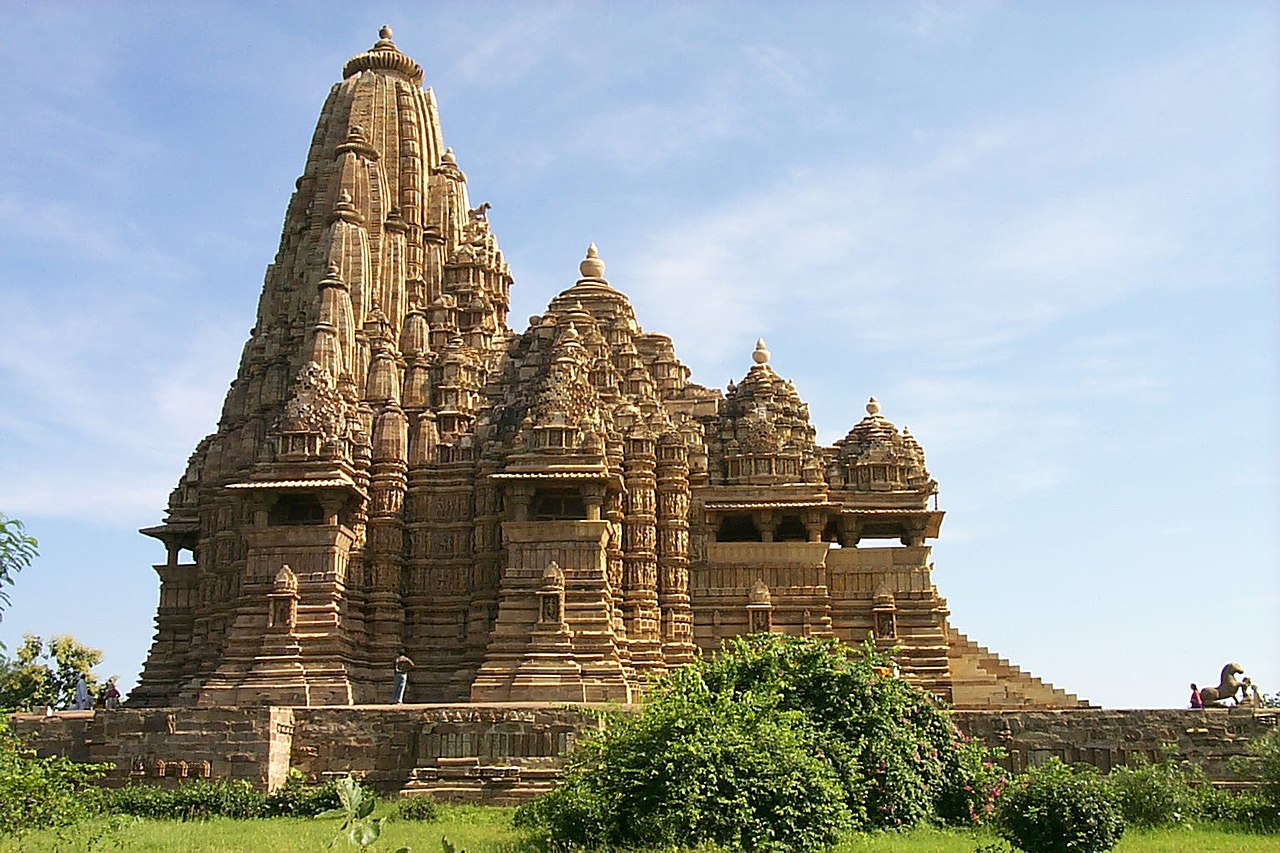
The largest and most ornate temple, the Kandariya Mahadeva, is dedicated to Shiva. Its inscription names the architect Virmani — a rare case where the builder is known by name. The temple rises in a series of vertically clustered towers, creating a mountain-like silhouette.
Sculptural Spectrum
The sculptures cover the full spectrum of life — from gods and wars to musicians, teachers, and lovers — making Khajuraho a visual encyclopedia of medieval Indian civilization. The famous erotic panels represent only about 10% of the total sculptures; the majority depict divine beings, animals, and daily life.
Inscriptions
Inscriptions record donations from queens, merchants, and courtesans. Jain temple inscriptions document Chandela tolerance, showing that the dynasty patronized both Hindu and Jain temples simultaneously.
Sources & provenance
- 📜Primary sourceBookDevangana Desai. The Religious Imagery of Khajuraho (1996)
- 📜