
Shikharji — The Peak of Salvation
Madhuvan (base village)Jharkhand
Tradition dates to Tīrthaṅkara Pārśva (9th c. BCE); current temples 18th–19th c.
water
A Temple Record

Shikharji — The Peak of Salvation

Śikharjī — Where Twenty Tīrthaṅkaras Attained Mokṣa

Jain
Enter the Record
I.Overview

A Sacred Site

In Madhuvan (base village), Jharkhand, there stands Shikharji — The Peak of Salvation — shikharji on Mount Parasnath in Jharkhand is the holiest site in Jainism — the place where twenty of the twenty-four Tīrthaṅkaras attained mokṣa (liberation). It is the apex of Jain pilgrimage, a 27 km circuit of 20 shrines on a forested hilltop, each marking the liberation site of a Tīrthaṅkara.

II.Architecture

The Built Form

Jain Maru-Gurjara

1
Gopurams
12m
Height
0
2
Hectares

Vimana / Gopuram

Dravidian vimana over the sanctum — single prakara with modest shikhara

Sanctum Sanctorum

Garbhagriha — Single prakara with modest shikhara

Construction Material

granite

Shikharji on Mount Parasnath in Jharkhand is the holiest site in Jainism — the place where twenty of the twenty-four Tīrthaṅkaras attained mokṣa (liberation)

§Plan View

An architectural reading of Shikharji — The Peak of Salvation — a top-down plan derived from the temple's recorded data.

SanctumVimana 12mEast GopuramN
Legend
Gopurams (1)
Vimana & Sanctum
III.Timeline

Sacred Timeline

  1. First shrine (legendary — 3rd c. BCE)

    Tradition says that Babhru, a Mauryan viceroy, built the first shrine at Shikharji after converting to Jainism — the same period as Ashoka's Buddhist monuments

  2. 18th–19th c. Marwari rebuilding

    The current temples were built by Marwari merchant families — the same Jain banking houses that would later fund the Indian independence movement and the Birla industrial empire

  3. Coal mining threat (21st c.)

    The Parasnath Wildlife Sanctuary — which protects the hill — has been threatened by coal mining leases; Jain communities have mobilised to protect the site

IV.Elements

Sacred Elements

The colours, creatures, and offerings that mark this site.

Sacred Colours

red (traditional Jain flag)
yellow (saffron)
white (purity)

Sacred Flowers

lotusmarigoldmango-leaf garlands

Sacred Creatures

lion (lāñchana of Mahāvīra — emblem, not mount)snake (lāñchana of Pārśvanātha — emblem, not mount)bull (lāñchana of Ṛṣabhanātha — emblem, not mount)

Sacred Trees

banyan (vatavrakṣa — Mahāvīra's kevala tree)dhātakī (Pārśva's kevala tree)

Sacred Offerings

rice-grain offerings (dravya-pūjā)sandal pastekṣīra (milk)diyascircumambulation (yatrā) of 27 km hill circuit

Divine Mount

lāñchana (emblem — Jains do not distinguish vahana; each Tīrthaṅkara has an identifying lāñchana)
V.Patrons

Royal Patrons

  1. Babhru (legendary Mauryan viceroy — said to have built the first shrine)

VI.Texts

Sacred Texts

  1. Śikharjī Māhātmya

    Type: pilgrimage text

    The sacred narrative of the hill — describes the liberation of each Tīrthaṅkara and the power of the 27 km pilgrimage circuit

VII.Trade

Trade Routes

  1. Bengal–Bihar mineral corridor — Shikharji sits on the route linking the Chota Nagpur plateau (iron, mica, copper) to the Bengal delta; Jain merchant-bankers (Marwari, Agrawal) funded the temples using profits from this trade

  2. Marwari merchant network — the Shikharji temples were rebuilt in the 18th–19th c. by Marwari Jain families (Dugar, Kothari, Bhutoria) who controlled the opium, cotton, and banking trades of eastern India

  3. Digambara–Śvetāmbara shared pilgrimage — both major Jain sects accept Shikharji; it is the only major Jain tīrtha where sectarian boundaries blur

VIII.Festivals

Festivals & Celebrations

  1. Kārtika Pūrṇimā (Oct–Nov — annual Shikharji yātrā)

  2. Mahāvīra Jayantī (Mar–Apr)

X.Sacred Story

A Temple Record

An editorial reading of the site, woven from its architectural, historical, and scriptural data.

In Madhuvan (base village), Jharkhand, Shikharji — The Peak of Salvation — a tradition dates to tīrthaṅkara pārśva (9th c. bce); current temples 18th–19th c. site — shikharji on Mount Parasnath in Jharkhand is the holiest site in Jainism — the place where twenty of the twenty-four Tīrthaṅkaras attained mokṣa (liberation). It is the apex of Jain pilgrimage, a 27 km circuit of 20 shrines on a forested hilltop, each marking the liberation site of a Tīrthaṅkara.

§Historical Arc

The site is associated with the reign of Babhru (legendary Mauryan viceroy — said to have built the first shrine). The earliest event recorded here is first shrine (legendary — 3rd c. bce). Through the centuries, the temple witnessed coal mining threat (21st c.). Tradition says that Babhru, a Mauryan viceroy, built the first shrine at Shikharji after converting to Jainism — the same period as Ashoka's Buddhist monuments.

§Reading the Built Form

Built in the Built in the Jain Maru-Gurjara tradition, the temple's 1 gopurams rise 12 metres into the sky the garbhagriha holds garbhagriha — single prakara with modest shikhara . Shikharji on Mount Parasnath in Jharkhand is the holiest site in Jainism — the place where twenty of the twenty-four Tīrthaṅkaras attained mokṣa (liberation)

First shrine (legendary — 3rd c. BCE)
§A Visitor's Approach

01Walk the pradakshina path. Note the earliest event recorded here — first shrine (legendary — 3rd c. bce).

02Look up. The vimana above the sanctum is the temple's vertical sermon — each tier a step toward the divine.

03Return during Kārtika Pūrṇimā (Oct–Nov — annual Shikharji yātrā), when the temple wears its festival form.

04The tradition here is jain. Sit. Listen. The darshan is its own teaching.

§Practical Notes

Shikharji — The Peak of Salvation

Where Twenty Tīrthaṅkaras Attained Mokṣa

Shikharji (also Śikharjī or Sammed Śikhara) is the holiest site in Jainism. On this forested hilltop in Jharkhand, twenty of the twenty-four Tīrthaṅkaras — the ford-makers who cross the ocean of saṃsāra — attained mokṣa (liberation from the cycle of rebirth). Only Ṛṣabhanātha (1st), Neminātha (22nd), and Mahāvīra (24th) attained liberation elsewhere; every other Tīrthaṅkara left the world from Shikharji.

The pilgrimage to Shikharji is a 27 km circuit — an arduous climb on foot through forest, stopping at 20 shrines (tonks), each marking the spot where a Tīrthaṅkara attained liberation. The yātrā takes 5–6 hours and is performed barefoot. The route is unshaded; the heat is brutal. Jains believe that the difficulty of the climb is itself meritorious — the body's suffering purifies karma.

The Jain Vahana Distinction

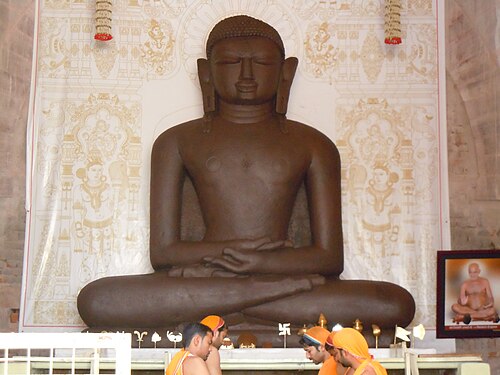
Unlike Hindu deities (who have vāhanas — mounts), Jain Tīrthaṅkaras have lāñchanas — identifying emblems. The emblem appears beneath the Tīrthaṅkara's crossed-legs in image form. These are not mounts; they are heraldic signs.

The most important lāñchanas at Shikharji:

  • Lion — Mahāvīra (24th Tīrthaṅkara)
  • Snake — Pārśvanātha (23rd)
  • Bull — Ṛṣabhanātha (1st)
  • Blue lotus — Neminātha (22nd)

The Jain lion-lāñchana is the same symbol as the Buddhist lion-throne (siṃhāsana) — in both traditions, the lion is an emblem of sovereignty, not a mount.

Marwari Merchant Patronage

The current temples at Shikharji were built in the 18th and 19th centuries by Marwari Jain merchant families from Rajasthan — the Dugar, Kothari, Bhutoria, and Birla clans. These same families controlled the opium, cotton, and banking trades of eastern India; their religious philanthropy paralleled their commercial expansion. The Birla family, which has built temples across India (including the Birla Mandir in Delhi), traces its religious identity to Shikharji.

Standard Disclaimer

⚠️ This entry is REVIEWED — Advisory Council review pending.

Wisdom Graph: Divine Associations

Vāhana
lāñchana (emblem — Jains do not distinguish vahana; each Tīrthaṅkara has an identifying lāñchana)
Sacred animals
lion (lāñchana of Mahāvīra — emblem, not mount)snake (lāñchana of Pārśvanātha — emblem, not mount)bull (lāñchana of Ṛṣabhanātha — emblem, not mount)
Sacred flowers
lotusmarigoldmango-leaf garlands
Sacred trees
banyan (vatavrakṣa — Mahāvīra's kevala tree)dhātakī (Pārśva's kevala tree)
Offerings
rice-grain offerings (dravya-pūjā)sandal pastekṣīra (milk)diyascircumambulation (yatrā) of 27 km hill circuit
Sacred colours
red (traditional Jain flag)yellow (saffron)white (purity)

📜 Primary Scriptural Sources

  • Śikharjī Māhātmyapilgrimage text
    The sacred narrative of the hill — describes the liberation of each Tīrthaṅkara and the power of the 27 km pilgrimage circuit