Historical Period5c CE
c. 483/400 BCE (parinirvana); Ashokan visit c. 249 BCE; Parinirvana Temple 5th c. CE
3000 BCE5th century CEPresent
Sacred Facts · At a Glance
- Vahana
Kuśinārā — The Place of the Great Passing
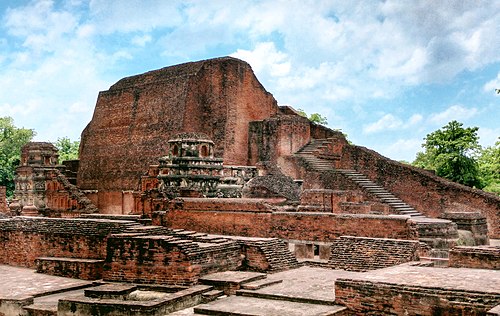
In Kushinagar, Uttar Pradesh, there stands Kushinagar — Where the Buddha Attained Parinirvana — kushinagar in eastern Uttar Pradesh is the site of the Buddha's parinirvana — his final passing into nirvana at the age of 80, lying between two sal trees in the Hiranyavati River valley. It is the last of the four great Buddhist pilgrimage sites, and the most contemplative — a place not of triumph, but of release.
Buddhist (Gupta/local)
Dravidian vimana over the sanctum — stupa-influenced with brick tower
Garbhagriha — Stupa-influenced with brick tower
brick
Kushinagar in eastern Uttar Pradesh is the site of the Buddha's parinirvana — his final passing into nirvana at the age of 80, lying between two sal trees in the Hiranyavati River valley
An architectural reading of Kushinagar — Where the Buddha Attained Parinirvana — a top-down plan derived from the temple's recorded data.
The colours, creatures, and offerings that mark this site.
The Buddha's final journey from Rajgir to Kushinagar — the longest and most detailed discourse in the Pali Canon; names the four pilgrimage sites
An editorial reading of the site, woven from its architectural, historical, and scriptural data.
In Kushinagar, Uttar Pradesh, Kushinagar — Where the Buddha Attained Parinirvana — a c. 483/400 bce (parinirvana); ashokan visit c. 249 bce; parinirvana temple 5th c. ce site — kushinagar in eastern Uttar Pradesh is the site of the Buddha's parinirvana — his final passing into nirvana at the age of 80, lying between two sal trees in the Hiranyavati River valley. It is the last of the four great Buddhist pilgrimage sites, and the most contemplative — a place not of triumph, but of release.
The site is associated with the patronage of Ashoka Maurya (c. 249 BCE — visited and built stupa) and Harsha (7th c. CE — recorded that Kushinagar was already in decline). The earliest event recorded here is parinirvana (c. 483/400 bce). Through the centuries, the temple witnessed maitreya project (2005–2014). The Buddha's last words: 'Vayadhammā saṅkhārā appamādena sampādetha — All conditioned things are impermanent; strive on with diligence.' The Mallas cremated his body and divided the relics into eight portions.
Built in the Built in the Buddhist (Gupta/local) tradition, the temple's 1 gopurams rise 12 metres into the sky the garbhagriha holds garbhagriha — stupa-influenced with brick tower . Kushinagar in eastern Uttar Pradesh is the site of the Buddha's parinirvana — his final passing into nirvana at the age of 80, lying between two sal trees in the Hiranyavati River valley
Parinirvana (c. 483/400 BCE)
01Walk the pradakshina path. Note the earliest event recorded here — parinirvana (c. 483/400 bce).
02Look up. The vimana above the sanctum is the temple's vertical sermon — each tier a step toward the divine.
03Return during Vesak / Buddha Purnima (May), when the temple wears its festival form.
04The tradition here is buddhist. Sit. Listen. The darshan is its own teaching.
Other sites derived from shared frontmatter data — tradition, era, region, or built form.

Ayodhya, Uttar Pradesh
Husainabad, Old Lucknow, Lucknow, Uttar Pradesh
Varanasi, Varanasi, Uttar Pradesh

Naimisaranya, Sitapur, Uttar Pradesh

Fatehpur Sikri, Agra, Uttar Pradesh

Sarnath, Varanasi, Uttar Pradesh
The telling that made this ground sacred — one sitting, one face.
Kushinagar — ancient Kuśinārā, capital of the Malla republic — is where the Buddha died. At the age of 80, after a final meal of sūkara-maddava (a preparation of truffles or pork — the identification is disputed and controversial), the Buddha lay down between two sal trees in the Hiranyavati valley. His last words:
"Vayadhammā saṅkhārā appamādena sampādetha" — All conditioned things are impermanent; strive on with diligence.
The Parinirvana Temple houses a 6.1 m (20 ft) reclining Buddha carved from a single block of red sandstone — the Buddha lying on his right side, head to the north, in the exact posture described in the Mahāparinibbāna Sutta. The image is Gupta-period (5th c. CE), one of the finest Buddha sculptures ever made.
After the Buddha's cremation at Kushinagar, the Mallas initially refused to share the relics. Representatives of seven other kingdoms — Ajatasattu of Magadha, the Licchavis of Vaishali, the Sakyas of Kapilavastu, the Bulis of Allakappa, the Koliyas of Ramagrama, the Brahmin of Vethadipa, and the Mallas of Pava — each demanded a share. A Brahmin named Dona divided the relics into eight equal portions. The eight stupas built over these relics are the original Buddhist pilgrimage sites.
Unlike Bodh Gaya (enlightenment) or Sarnath (first sermon), Kushinagar is not about triumph. It is about impermanence — the most central teaching in all of Buddhism. The site is quiet, uncrowded, and deeply still. Pilgrims sit beside the Parinirvana Stupa and contemplate the one certainty: everything that arises also passes away.

.jpg/500px-Ajanta_(63).jpg)