108 Divya Desams
12
Chola Nadu
11. Thiruaadhanur13. Thiruvinnagar (Uppiliappan)
Sārangapāṇi Svāmi
KumbakonamTamil Nadu
12th c. CE (Later Chola); expanded by Nayaks and Vijayanagara
earth
A Temple Record

Sārangapāṇi Svāmi

Kumbakonam Sārangapāṇi

HinduVaishnavaSri Vaishnava
Enter the Record
I.Overview

A Sacred Site

In Kumbakonam, Tamil Nadu, there stands Sārangapāṇi Svāmi — sārangapāṇi Svāmi is the presiding Vishnu of Kumbakonam, one of the 108 Divya Desams — the sacred geography of temples sung by the twelve Āḻvār saint-poets of Tamil Vaishnavism (7th–9th c. CE). Goddess: Komalavalli Thāyār. Tīrtham: Porthāmarai & Hema Puṣkariṇī. Vimāna: Sārangapāṇi-vimāna (chariot-shaped). Sung by Tirumaṅgai-āḻvār, Tirumaḻiśai-āḻvār, Peri-āḻvār, Nammāḻvār, Āṇḍāḷ — 51 pasurams.

मन्त्रOṁ Namo Nārāyaṇāya / Oṁ Namo Bhagavate VāsudevāyaSacred Mantra
§Sacred Mantra
·

Oṁ Namo Nārāyaṇāya / Oṁ Namo Bhagavate Vāsudevāya

··
Kumbakonam Sārangapāṇi · The Sacred Syllable

Recite softly. Let the syllables settle. The mantra is the shortest path between the devotee and the divine.

II.Architecture

The Built Form

Dravidian

1
Gopurams
12m
Height
0
2
Hectares

Vimana / Gopuram

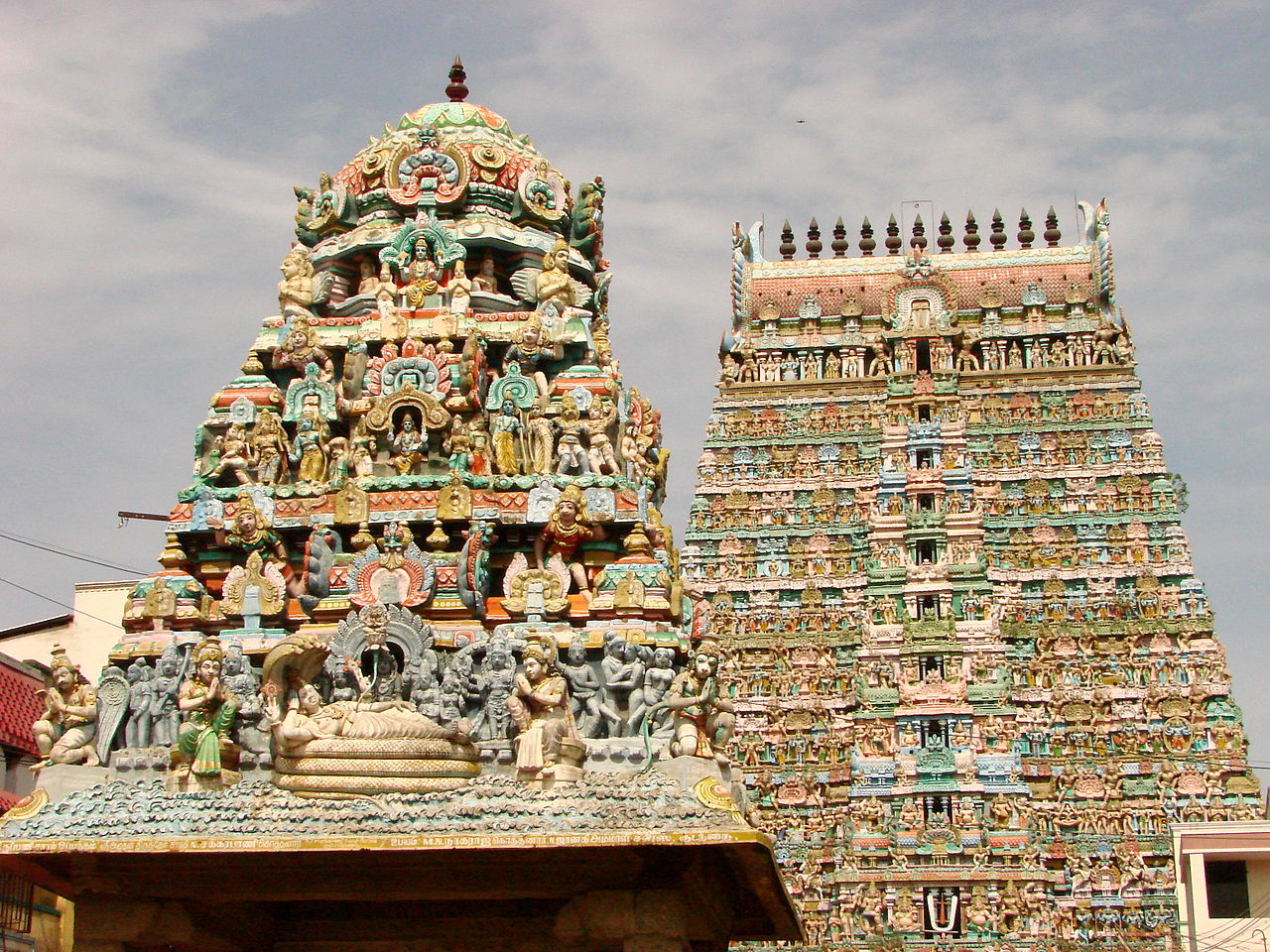
Dravidian vimana over the sanctum — gopuram gateway with pillared mandapas

Sanctum Sanctorum

Garbhagriha — Gopuram gateway with pillared mandapas

Construction Material

granite

Sārangapāṇi Svāmi is the presiding Vishnu of Kumbakonam, one of the

§Plan View

An architectural reading of Sārangapāṇi Svāmi — a top-down plan derived from the temple's recorded data.

SanctumVimana 12mEast GopuramN
Legend
Gopurams (1)
Vimana & Sanctum
IV.Elements

Sacred Elements

The colours, creatures, and offerings that mark this site.

Sacred Colours

saffron
yellow (pīta)
green (tulasī)

Sacred Flowers

tulasī (holy basil)lotus

Sacred Offerings

tulasī garlandpuliyodara (tamarind rice)sakkarai pongalcurd ricemilk
VI.Texts

Sacred Texts

  1. Nālāyira Divya Prabandham

    Type: Tamil hymn collection (4000 verses by 12 Āḻvārs)

  2. Sthala-purāṇam of this temple

    Type: local temple text

IX.Rituals

Worship & Rituals

Daily Rites

  1. viśvarūpa-darśana (5 AM)

  2. kāla-śānti

  3. uccikāla pūjā

  4. sāyaraṣcha

  5. arrdha-jāma (night pūja)

Offering Sequence

  1. 01

    tulasī garland

  2. 02

    milk abhiṣeka

  3. 03

    puliyodara naivedyam

  4. 04

    arati

  5. 05

    tīrtham + śaṭhāri (crown of Nammāḻvār)

X.Sacred Story

A Temple Record

An editorial reading of the site, woven from its architectural, historical, and scriptural data.

In Kumbakonam, Tamil Nadu, Sārangapāṇi Svāmi — a 12th c. ce (later chola); expanded by nayaks and vijayanagara site — sārangapāṇi Svāmi is the presiding Vishnu of Kumbakonam, one of the 108 Divya Desams — the sacred geography of temples sung by the twelve Āḻvār saint-poets of Tamil Vaishnavism (7th–9th c. CE). Goddess: Komalavalli Thāyār. Tīrtham: Porthāmarai & Hema Puṣkariṇī. Vimāna: Sārangapāṇi-vimāna (chariot-shaped). Sung by Tirumaṅgai-āḻvār, Tirumaḻiśai-āḻvār, Peri-āḻvār, Nammāḻvār, Āṇḍāḷ — 51 pasurams.

§Reading the Built Form

Built in the Built in the Dravidian tradition, the temple's 1 gopurams rise 12 metres into the sky the garbhagriha holds garbhagriha — gopuram gateway with pillared mandapas . Sārangapāṇi Svāmi is the presiding Vishnu of Kumbakonam, one of the

Oṁ Namo Nārāyaṇāya / Oṁ Namo Bhagavate Vāsudevāya
§A Visitor's Approach

01Walk the pradakshina path. Let the silence settle.

02Look up. The vimana above the sanctum is the temple's vertical sermon — each tier a step toward the divine.

03Chant the mantra softly: Oṁ Namo Nārāyaṇāya / Oṁ Namo Bhagavate Vāsudevāya.

04The tradition here is hindu. Sit. Listen. The darshan is its own teaching.

§Practical Notes

trade_routes:

  • "Chola heartland temple corridor (Kaveri delta)" connected_events:
    • event: "Chola dynasty temple construction" significance: "Major temple construction during the Chola imperial period (9th–13th c. CE)" vahana: "Garuda (eagle mount)" connected_events:
    • event: "Chola dynasty temple construction" significance: "Major temple construction during the Chola imperial period (9th–13th c. CE)" associated_kings:
  • "Chola dynasty" connected_events:
    • event: "Chola dynasty temple construction" significance: "Major temple construction during the Chola imperial period (9th–13th c. CE)" associated_kings:
  • "Chola dynasty" sacred_trees:
  • peepal
  • bilva (bael)
  • tulasi sacred_animals:
  • Nandi (sacred bull)
  • peacock
  • elephant vahana: "Garuda (eagle mount)" associated_kings:
  • "Chola dynasty" connected_events:
    • event: "Chola dynasty construction" significance: "Major temple construction during the Chola period (9th–13th c. CE)" festival_dates:
  • "Maha Shivaratri (Feb–Mar)"
  • "Diwali (Oct–Nov)"

Sārangapāṇi Svāmi

The 108 Divya Desams

The 108 Divya Desams are the 108 sacred abodes of Vishnu sung in the Tamil hymns of the 12 Āḻvārs. Compiled by Nāthamuni in the 9th c. CE as the Nālāyira Divya Prabandham (4,000 verses), these temples constitute the sacred geography of Tamil Vaishnavism and are the foundational map for the Śrīvaiṣṇava sampradāya (Rāmānuja, 11th c.).

108 is the canonical count — 106 on earth, plus Tirupparkadal (the milk-ocean, Vishnu's cosmic abode) and Paramapadam (Vaikuṇṭha, the eternal realm) — making 108 complete.

This Temple — Sārangapāṇi Svāmi

  • Location: Kumbakonam, Thanjavur district, Tamil Nadu (10.9635°N, 79.381°E)
  • Presiding deity: Sārangapāṇi (Vishnu reclining in a celestial chariot)
  • Consort / Thāyār: Komalavalli Thāyār
  • Temple tank (tīrtham): Porthāmarai & Hema Puṣkariṇī
  • Vimāna (sanctum tower): Sārangapāṇi-vimāna (chariot-shaped)
  • Mangalāśāsanam: Sung by Tirumaṅgai-āḻvār, Tirumaḻiśai-āḻvār, Peri-āḻvār, Nammāḻvār, Āṇḍāḷ — 51 pasurams
  • Built: 12th c. CE (Later Chola); expanded by Nayaks and Vijayanagara

Sthala-Purāṇa Story

Vishnu emerged from a golden lotus in the Porthāmarai tank, as Sage Hema's daughter, the goddess Komalavalli, performed tapas. The temple's 11-tier gopuram is the tallest in Kumbakonam.

Worship Tradition

Daily: viśvarūpa-darśana (pre-dawn), kāla-śānti, uccikāla pūjā, sāyaraṣcha (evening), ardha-jāma (night closure). Principal offerings: tulasī garland (never fresh flowers for the central deity, only tulasī), puliyodara (tamarind rice), sakkarai pongal (jaggery rice), milk abhiṣeka. Pilgrims receive tīrtham (holy water) and the śaṭhāri — Nammāḻvār's crown placed briefly on the head, signifying servitude to the Lord.

Festival Cycle

  • Vaikuṇṭha Ekādaśī (Mārgaḻi, Dec–Jan): the holiest day. The Paramapada-vāsal (gate of Vaikuṇṭha) is opened and devotees who pass through attain mokṣa
  • Brahmotsavam: annual 10-day utsavam with Vishnu paraded on different vāhanas each day — Śeṣa, Garuḍa, Haṃsa, Hanumanta, Siṃha, Chariot
  • Garuḍa Sevai: Vishnu on his eagle-mount, most darśana-rich of all processions
  • Dhanur-māsa (Mārgaḻi): entire month is holy; pilgrims come for pre-dawn neyyavaḷikku darśana

The Āḻvār Tradition

This temple is hallowed because Āḻvār saint-poets sang of it in their Divya Prabandham pasurams. The Āḻvārs were 12 Tamil Vaishnava saint-poets (7th–9th c. CE) whose corpus of 4,000 verses is considered by Śrīvaiṣṇavas to be equivalent to the Vedas in Tamil (Drāviḍa Veda). Each temple's sanctity rests on how many Āḻvārs sang of it and how many pasurams — this is the mangalāśāsanam.

Architectural Note

The vimāna (sanctum tower) over the mūlasthāna is the temple's signature: Sārangapāṇi-vimāna (chariot-shaped). Each Divya Desam's vimāna has a unique name and symbolism — the celestial archetype of Vishnu's abode manifesting on earth.

Sthalapurana (Temple Legend)

The sacred history of this shrine is recounted in local Sthalapurana texts and the Divya Prabandham hymns.

Wisdom Graph: Divine Associations

MantraOṁ Namo Nārāyaṇāya / Oṁ Namo Bhagavate Vāsudevāya
Sacred flowers
tulasī (holy basil)lotus
Sacred plants
tulasī
Offerings
tulasī garlandpuliyodara (tamarind rice)sakkarai pongalcurd ricemilk
Sacred colours
saffronyellow (pīta)green (tulasī)

📖 Stories

  • How Sārangapāṇi Svāmi came to be worshipped here
    Vishnu emerged from a golden lotus in the Porthāmarai tank, as Sage Hema's daughter, the goddess Komalavalli, performed tapas. The temple's 11-tier gopuram is the tallest in Kumbakonam.
    Divya Prabandham pasurams + sthala-purāṇam

🪔 Worship Procedures

Daily rites
viśvarūpa-darśana (5 AM)
kāla-śānti
uccikāla pūjā
sāyaraṣcha
arrdha-jāma (night pūja)
Puja sequence
  1. tulasī garland
  2. milk abhiṣeka
  3. puliyodara naivedyam
  4. arati
  5. tīrtham + śaṭhāri (crown of Nammāḻvār)
Vratas (vows / fasts)
Ekādaśī fast
Cāturmāsya
Dhanur-māsa (Mārgaḻi) early darśana
Pilgrimages
108 Divya Desam yatra (traditional South Indian Vaishnava pilgrimage)
Nava Tirupati
Pañca-ranga circuit

🛕 Principal Temples

  • Sārangapāṇi Svāmi Temple12th c. CE (Later Chola); expanded by Nayaks and Vijayanagara
    📍 Kumbakonam, Thanjavur, Tamil Nadu, India
    Festivals: Vaikuṇṭha Ekādaśī (December–January) · Brahmotsavam (10 days, annual) · Garuḍa Sevai · Nācciyār Tirukolai
    Goddess: Komalavalli Thāyār. Tīrtham: Porthāmarai & Hema Puṣkariṇī. Vimāna: Sārangapāṇi-vimāna (chariot-shaped). Sung by Tirumaṅgai-āḻvār, Tirumaḻiśai-āḻvār, Peri-āḻvār, Nammāḻvār, Āṇḍāḷ — 51 pasurams

🎊 Festivals

  • Vaikuṇṭha Ekādaśī
    Mārgaḻi (December–January) · 1 day (primary)
    The gate of Vaikuṇṭha (Paramapadam) is opened; all pilgrims who pass through it are said to attain mokṣa
  • Brahmotsavam
    Annual (temple-specific) · 10 days
    Principal utsavam with processions on different vāhanas each day (Hanumanta, Garuḍa, Śeṣa, Haṃsa, etc.)

📜 Primary Scriptural Sources

  • Nālāyira Divya PrabandhamTamil hymn collection (4000 verses by 12 Āḻvārs)7th–9th c. CE
  • Sthala-purāṇam of this templelocal temple text
