Sacred Facts · At a Glance
- Gender
- male
- Vahana
- Garuḍa / Appears spontaneously from within the cleft pillar
- Weapon
- adamantine claws (vajra-nakha) · Sudarśana Cakra · Pāñcajanya conch · Kaumodakī mace
- Sacred Number(s)
- 4 · 9 · 32 · 108
- Sacred Colours
- radiant gold (tapta-kāñcana)blood-red (fury/śoṇita)dark blue (Śyāma)
- Sacred Flowers
- red lotus (rakta padma) · mandāra (coral tree flower) · pārijāta
- Sacred Trees
- aśvattha (peepal) · śamī
- Sacred Offerings
- panakam (jaggery, black pepper, and cardamom water — cooling offering at Mangalagiri) · pāyasam · sesame oil · sandalwood paste
- Sacred Animals
- lion (siṃha) · eagle (Garuḍa)
- Sacred Plants
- tulasī (holy basil) · mustā
Primary Scriptures
7 sources- Taittirīya ĀraṇyakavedicPrapāṭhaka 10, Anuvāka 1, Verse 7Composed c. 800 BCEContains the Vedic Nṛsiṃha Gāyatrī: 'Vajranakhāya vidmahe tīkṣṇadaṃṣṭrāya dhīmahi / tanno nārasiṃhaḥ pracodayāt'.
- Nṛsiṃha Pūrva Tāpanīya UpaniṣadupanishadChapters 1–5Composed c. 300 BCE – 200 CEAuthoritative Vedic Upanishad establishing the 32-syllable Anushtubha mantra and analyzing Narasiṃha as cosmic Atman.
- Bhāgavata PurāṇapuranaSkandha 7, Chapters 2–10Composed c. 800–1000 CEThe supreme canonical narrative of Prahlāda's steadfast devotion, the demonic hubris of Hiraṇyakaśipu, and the pillar emergence.
- Viṣṇu PurāṇapuranaBook 1, Chapters 17–20Composed c. 400–500 CEEarly classical Sanskrit account of the demonic persecutions endured by Prahlāda and his liberation by Viṣṇu.
- Matsya PurāṇapuranaChapters 161–163Composed c. 500–700 CEContains exhaustive iconographic descriptions of the 8-armed and 16-armed battling forms of Narasiṃha.
- Kamba RāmāyaṇamepicYuddha Kāṇḍam, Iraṇiyan Vadhai Paṭalam (176 verses)Composed 12th c. CEMagnificent Tamil epic discourse where Vibhīṣaṇa recites the story of Narasiṃha to Rāvaṇa to warn him of divine justice.
- Nālāyira Divya PrabandhambhaktiPeriyāḻvār Tirumoḻi, Tirumaṅgai Āḻvār Periya TirumoḻiComposed 8th–9th c. CETamil hymns celebrating Narasiṃha's spontaneous mercy at Ahobilam, Sholinghur, and Tiruvallikeni.
Narasimha
The Man-Lion — Primal Protector of Dharma (Nṛsiṃha Avatāra)
Overview
Narasiṃha (Sanskrit: नरसिंह, Narasimha, "man-lion"; also spelled Nṛsiṃha, Nṛhari) is the fourth primary avatāra of Lord Viṣṇu. Manifesting neither purely as beast nor ordinary man, Narasiṃha erupts from a stone pillar at twilight to vanquish the tyrant demon-king Hiraṇyākṣa's brother, Hiraṇyakaśipu, and rescue his celebrated five-year-old child-devotee, Prahlāda.
In Vaishnava metaphysics, Narasiṃha represents the pinnacle of protective grace (Śaraṇāgati-Rakṣaka) and divine omnipresence (Sarva-Vyāpitva). While other avatāras take birth through ordinary uterine wombs and live full human spans on earth, Narasiṃha appears spontaneously in response to a direct challenge to the immanence of God, dissolving all cosmic barriers of time, place, and biological classification to uphold righteous order (Dharma).
Canonical Scripture & Theological Evolution
1. Vedic Forebears: The Roaming Fierce Beast
In Vedic literature, the divine is repeatedly characterized by the terrible majesty of the lion:
- Rig Veda (1.154.2): Celebrates Viṣṇu:
"Pra tad viṣṇuḥ stavate vīryeṇa mṛgo na bhīmaḥ kucaro giriṣṭhāḥ..."
("Viṣṇu is praised for his heroic might; like a dread, wild beast that roams the mountains...") - Taittirīya Āraṇyaka (10.1.7): Contains the earliest known liturgical mantra explicitly addressing Narasiṃha:
"Vajranakhāya vidmahe tīkṣṇadaṃṣṭrāya dhīmahi / tanno nārasiṃhaḥ pracodayāt."
("We meditate upon the one with adamantine claws; we contemplate the one with razor-sharp fangs; may that Narasiṃha illuminate our intellect.") - Nṛsiṃha Tāpanīya Upaniṣad (Atharvaveda): Systematizes the celebrated 32-syllable Anuṣṭubh Mantra Rāja, teaching that Narasiṃha is the fourth state of consciousness (Turīya), transcending waking, dreaming, and deep sleep.
2. The Puranic Narrative: Defying the Impossible Boon
The Bhāgavata Purāṇa (Book 7) and Viṣṇu Purāṇa (Book 1) record the classic drama of divine justice: Hiraṇyakaśipu had extracted an ostensibly airtight boon from Brahmā through millennia of austerities:
- He could not be slain inside any house nor outside;
- Neither by day nor by night;
- Neither on the earth nor in the sky;
- Neither by man nor by beast, nor by any god or demon;
- Neither by living weapon (sāstra) nor lifeless weapon (astra).
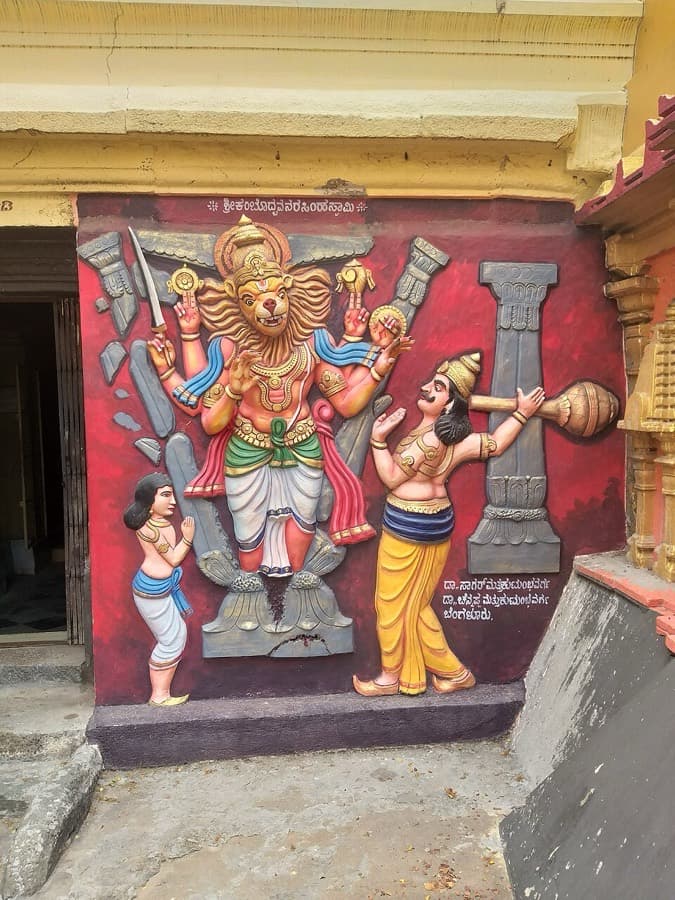
When Hiraṇyakaśipu violently struck a palace pillar shouting, "If your Hari is everywhere, why is he not visible in this pillar?", the marble shaft split open with a roar that shattered the directions. Narasiṃha stepped forth, capturing Hiraṇyakaśipu and resolving every condition of the boon simultaneously:
- Place: On the threshold (dehali) of the palace hall — neither inside nor outside.
- Time: At twilight (sandhyā) — the junction where day has ended but night has not yet arrived.
- Location: Upon his own lap (ūru) — neither on the earth nor suspended in the air.
- Agent: In a man-lion form (Nara-siṃha) — neither beast nor mortal man.
- Instrument: With his bare, diamond-hard claws (nakha) — neither manufactured weapon nor lifeless arrow.
3. The Pacification: Ugra to Prasanna (Fierce to Serene)
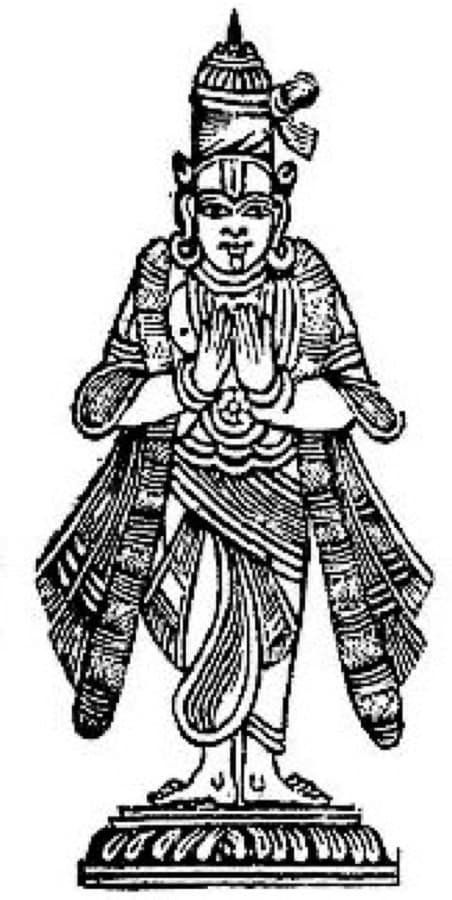
Following the demon's death, Narasiṃha's fiery rage (Ugra) remained so incandescent that even the gods, Brahmā, and Śiva feared to approach him. It was only when the child Prahlāda stepped forward fearlessly with tears of pure devotion, prostrating at the Lord's feet, that Narasiṃha's wrath dissolved instantly into supreme parental tenderness, licking the child's brow and crowning him king.
Archaeological Iconography & Statues Across Centuries
The evolution of Narasiṃha in Indian sculpture reflects a deliberate transition from raw early zoomorphism to the sophisticated multi-armed iconographic manuals of the classical medieval era.
1. Kushan Period (1st–2nd Century CE, Mathura)
The earliest surviving sculptures of Narasiṃha in stone were created by the master sculptors of the Mathura school:
- Executed in spotted red Sikri sandstone, these early murtis depict a two-armed or four-armed figure with a naturalistic lion head and a vigorous human torso, wrestling or subduing a human adversary.
- Exhibited in the Mathura Museum and the State Museum Lucknow, these pieces prove that the worship of Narasiṃha was actively established across North India prior to the rise of the Guptas.
2. Classical Gupta Sculptures (4th–6th Century CE)
During the Gupta Empire, artists crystallized the contemplative and protective manifestations:
- Nachna and Vidisha (Madhya Pradesh): Produced elegant stone reliefs of Yoga-Narasiṃha, seated in deep meditation with knees drawn up and bound by a meditation band (yogapaṭṭa), demonstrating the peaceful inner state of the ascetic deity.
- Eran (Madhya Pradesh): A monumental Gupta-era stone panel depicting four-armed Narasiṃha standing in heroic pratyālīḍha posture, radiating majestic imperial authority.
3. Badami Cave 3 (578 CE, Early Chalukya, Karnataka)
Carved during the reign of King Maṅgaleśa, Cave 3 at Badami contains one of the most sublime rock-cut masterworks in the Deccan:
- A colossal standing four-armed Narasiṃha stands in tranquil majesty (Kevala-Narasiṃha), leaning gracefully with his lower right hand resting upon the handle of his massive mace (Gadā).
- His upper hands hold the radiant Conch and Discus; his lion face features stylized, spiral curls of mane and an expression of serene detached triumph rather than bestial fury.
4. Ellora Cave 15 (Dasavatara, 8th Century CE, Rashtrakuta)
The rock-cut panel in Cave 15 at Ellora is celebrated as one of the most dynamically dramatic narrative compositions in world sculpture:
- Captures the exact microsecond of emergence: Narasiṃha leaps sideways out of the shattered pillar with terrifying kinetic momentum.
- With one hand he seizes Hiraṇyakaśipu by the shoulder, while another pushes back the demon's sword-wielding hand; the demon recoils in shock as Narasiṃha's roaring jaws tower above him.
5. Hoysala Soapstone Masterpieces (12th–13th Century CE, Karnataka)
Under the Hoysala dynasty at Belur, Halebidu, and Nuggehalli, master sculptors (such as Mallitamma and Dasoja) executed Narasiṃha reliefs in dark, fine-grained chloritic schist:
- Frequently depicts eight-armed or sixteen-armed Ugra-Narasiṃha: two hands rip open the demon across his lap; two upper hands raise the entrails as a garland of victory; other hands brandish the conch, discus, sword, and shield, while the small figure of Prahlāda stands serenely at his side with hands folded in añjali mudrā.
6. The Monolithic Lakshmi Narasimha of Hampi (1528 CE, Vijayanagara)
The largest monolithic statue within the UNESCO World Heritage ruins of Vijayanagara:
- Scale: Carved out of a single monolithic granite boulder standing 6.7 meters (22 feet) high.
- Commission: Commissioned in 1528 CE by Emperor Krishnadevaraya and executed by the sculptor Aryabhatta.
- Composition: The Lord is seated in Utkuṭikāsana upon the coils of the celestial serpent Ādiśeṣa, whose magnificent seven hoods unfurl over Narasiṃha's crowned head like a royal parasol.
- Historical Note: The original sculpture featured Goddess Lakṣmī seated upon his left lap (Lakṣmī-Narasiṃha). Although the statue was vandalized during the sack of Hampi in 1565 CE (damaging the goddess figure and the Lord's limbs), the colossal monolith remains an awe-inspiring symbol of spiritual invulnerability and imperial Indian art.
Canonical Iconographic Typologies
Traditional Śilpa Śāstras classify Narasiṃha images into five primary liturgical typologies:
| Form | Posture & Meaning | Typical Attributes / Mudrās |
|---|---|---|
| Ugra-Narasiṃha | Slaying Hiraṇyakaśipu; terrifying combat mode | 8 to 16 arms; claws tearing the demon; entrail garland; wide eyes (phulla-locana) |
| Yoga-Narasiṃha | Seated in yogic contemplation; master of senses | 4 arms; seated in Utkuṭikāsana with knees bound by yogapaṭṭa; upper hands hold conch & discus |
| Lakṣmī-Narasiṃha | Pacified, benevolent family form | Seated with Goddess Lakṣmī on his left lap; right hand in Abhaya Mudrā |
| Prasanna-Narasiṃha | Peaceful post-battle state | Standing or seated quietly with Prahlāda standing beside in reverence |
| Kevala-Narasiṃha | Standalone heroic protector | Four-armed standing erect (Samabhaṅga), radiating absolute sovereign calm |
Living Traditions & Major Shrines
1. Ahobilam: The Nine Shrines of the Nallamala Forest (Andhra Pradesh)
Revered in the Brahmāṇḍa Purāṇa as the exact site of Hiraṇyakaśipu's palace:
- Lower Ahobilam: Houses the peaceful Lakṣmī Narasiṃha temple patronized by the kings of Vijayanagara.
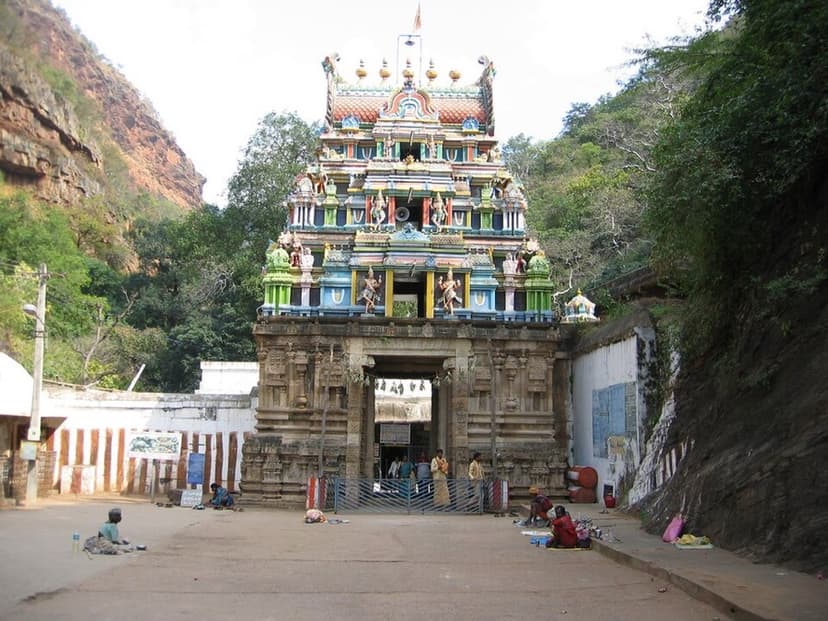
- Upper Ahobilam: Deep in the mountain canyons lies the rock-cave sanctum of Ahobila Narasiṃha, the ancient cleft pillar (Ugra Stambha) high on the mountain cliff, and the ferocious shrine of Jvālā Narasiṃha beside a cascading waterfall.
2. Mangalagiri: The Panakala Shrine (Andhra Pradesh)
Situated on an ancient volcanic hill near Vijayawada:
- The sanctum contains no stone murti, but a natural wide-open mouth in the mountain rock.
- Devotees pour pots of sweet jaggery-pepper water (Pānakam) into the mouth with a conch shell. As the priest pours the water, a distinctive gurgling sound is heard as though the deity is drinking; unfailingly, exactly half the vessel is consumed, and the remaining half is returned to the devotee as divine prasādam.
3. Simhachalam: The Sandalwood Sanctum (Andhra Pradesh)
Perched on the Simhachalam hill range near Visakhapatnam:
- The deity represents a composite manifestation of Varāha and Narasiṃha (Varāha-Lakṣmī-Narasiṃha).
- To pacify the avatar's continuous cosmic heat, the idol is encased under a perpetual coat of pure sandalwood paste weighing nearly 500 kilograms throughout the year. The sacred paste is removed for only twelve hours on the auspicious day of Akshaya Tritiya (Candana Yātrā), allowing tens of thousands of devotees to behold the true stone form (Nija-rūpa darśana).
Wisdom Graph: Divine Associations
- Vāhana
- Garuḍa
- Sacred animals
- lion (siṃha)eagle (Garuḍa)
- Sacred flowers
- red lotus (rakta padma)mandāra (coral tree flower)pārijāta
- Sacred plants
- tulasī (holy basil)mustā
- Sacred trees
- aśvattha (peepal)śamī
- Offerings
- panakam (jaggery, black pepper, and cardamom water — cooling offering at Mangalagiri)pāyasamsesame oilsandalwood paste
- Weapons / emblems
- adamantine claws (vajra-nakha)Sudarśana CakraPāñcajanya conchKaumodakī mace
- Sacred colours
- radiant gold (tapta-kāñcana)blood-red (fury/śoṇita)dark blue (Śyāma)
- Sacred numbers
- 4932108
Principal Temples
- Nava Narasimha Kshetra of AhobilamPre-Chalukya cave origin; major structural temples by Vijayanagara kings (14th–16th c.)📍 Ahobilam (Nallamala Hills), Nandyal / Kurnool, Andhra Pradesh, IndiaThe supreme Narasiṃha kshetra on earth. Features nine distinct sanctuaries set across rugged mountain forests: Jvālā, Ahobila, Mālola, Kroḍa, Kārañja, Bhārgava, Yogananda, Chatravata, and Pāvana Narasiṃha.
- Varaha Lakshmi Narasimha TempleAncient; renovated by Eastern Ganga King Narasimhadeva I c. 1267 CE📍 Simhachalam Hill, Visakhapatnam, Andhra Pradesh, IndiaThe sanctum murti is continuously covered in a heavy layer of sandalwood paste (candana) throughout the year to pacify the fiery wrath, resembling a Śivaliṅga; the true form is revealed for only 12 hours annually on Akshaya Tritiya.
- Panakala Lakshmi Narasimha Swamy TemplePre-Satavahana origin; 11-storeyed gopuram built by Vasireddy Venkatadri Nayudu c. 1807 CE📍 Mangalagiri, Guntur, Andhra Pradesh, IndiaEnshrines a natural rock mouth inside the hill. Devotees offer sweet jaggery water (Pānakam) into the mouth; according to ancient living tradition, the deity drinks exactly half of whatever quantity is poured, rejecting the rest.
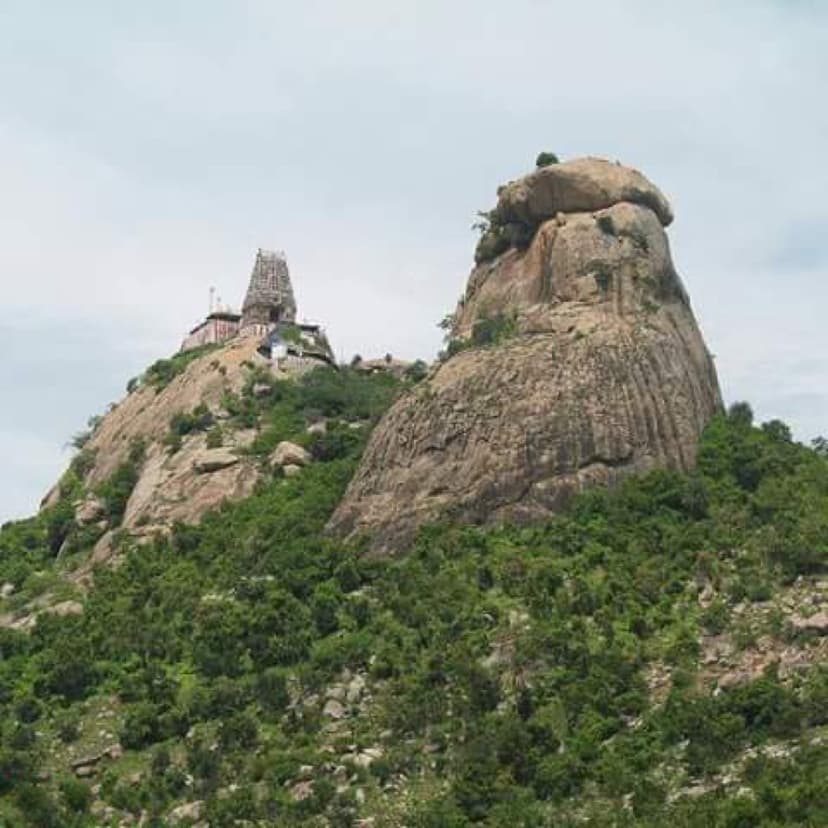
- Yoga Narasimha Swamy Temple8th c. CE (Pallava and Chola); sung by Peyalvar and Thirumangai Alvar📍 Sholinghur (Ghatikachalam), Ranipet, Tamil Nadu, India108 Divya Desam (#64). Perched atop a steep 750-step hill. Renowned in tradition for curing psychiatric ailments and dispelling negative planetary afflictions when devotees stay for one ghatika (approx. 24 minutes).
- Lakshmi Narasimha Swamy TempleAncient cave shrine of sage Yadarishi; magnificent Krishna-granite reconstruction 2016–2022 CE📍 Yadagirigutta (Yadadri), Yadadri Bhuvanagiri, Telangana, IndiaEnshrines three sacred manifestations in a natural cavern beneath a stone dome: Jvālā Narasiṃha, Yogananda Narasiṃha, and Gandabherunda Narasiṃha.
- Yoga Narasimha Temple12th c. CE (consecrated/renovated during Sri Ramanuja's stay; Hoysala patronage)📍 Melkote (Yadugiri Hill), Mandya, Karnataka, IndiaPerched atop a granite crag overlooking Melkote. Enshrines an ancient seated Yoga-Narasiṃha with crossed legs secured by a yogapatta strap, holding discus and conch.
Primary Scriptural Sources
- Taittirīya Āraṇyakavedicc. 800 BCEPrapāṭhaka 10, Anuvāka 1, Verse 7Contains the Vedic Nṛsiṃha Gāyatrī: 'Vajranakhāya vidmahe tīkṣṇadaṃṣṭrāya dhīmahi / tanno nārasiṃhaḥ pracodayāt'.
- Nṛsiṃha Pūrva Tāpanīya Upaniṣadupanishadc. 300 BCE – 200 CEChapters 1–5Authoritative Vedic Upanishad establishing the 32-syllable Anushtubha mantra and analyzing Narasiṃha as cosmic Atman.
- Bhāgavata Purāṇapuranac. 800–1000 CESkandha 7, Chapters 2–10The supreme canonical narrative of Prahlāda's steadfast devotion, the demonic hubris of Hiraṇyakaśipu, and the pillar emergence.
- Viṣṇu Purāṇapuranac. 400–500 CEBook 1, Chapters 17–20Early classical Sanskrit account of the demonic persecutions endured by Prahlāda and his liberation by Viṣṇu.
- Matsya Purāṇapuranac. 500–700 CEChapters 161–163Contains exhaustive iconographic descriptions of the 8-armed and 16-armed battling forms of Narasiṃha.
- Kamba Rāmāyaṇamepic12th c. CEYuddha Kāṇḍam, Iraṇiyan Vadhai Paṭalam (176 verses)Magnificent Tamil epic discourse where Vibhīṣaṇa recites the story of Narasiṃha to Rāvaṇa to warn him of divine justice.
- Nālāyira Divya Prabandhambhakti8th–9th c. CEPeriyāḻvār Tirumoḻi, Tirumaṅgai Āḻvār Periya TirumoḻiTamil hymns celebrating Narasiṃha's spontaneous mercy at Ahobilam, Sholinghur, and Tiruvallikeni.
Sources & provenance
- 📜Primary sourceVedic Shakhas. Taittirīya Āraṇyaka (Nṛsiṃha Gāyatrī) (-800)
- 📜Primary sourceTraditional. Nṛsiṃha Pūrva & Uttara Tāpanīya Upaniṣads (300)
- 📜Primary sourceParāśara Tradition. Viṣṇu Purāṇa (450)
- 📜Primary sourceVyāsa / Śuka Tradition. Bhāgavata Purāṇa (Canto 7) (800)
- 📜Primary sourceTraditional. Nṛsiṃha Purāṇa (700)
- 📜Primary sourceTraditional. Matsya Purāṇa (Chapters 161–163) (600)
- 📜Primary sourceĀḻvārs. Nālāyira Divya Prabandham (750)
- 📜Primary sourceKambar. Kamba Rāmāyaṇam (Iraṇiyan Vadhai Paṭalam) (1180)
- 🎓Scholarly sourceBookT. A. Gopinatha Rao. Elements of Hindu Iconography (1914)
- 🎓Scholarly sourceBookB. C. Law. Narasimha in Indian Art and Literature (1941)