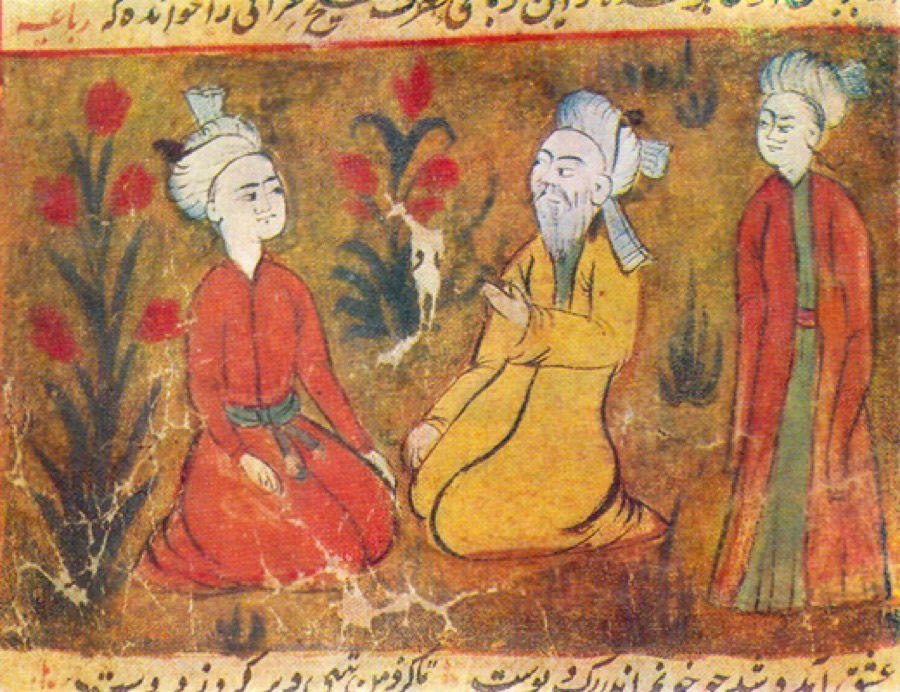
.jpg/500px-Painting_of_Sheikh_Fareed_Shakarganj%2C_ca.1823%E2%80%9324_(cropped).jpg)






Primary Scriptures
0 sourcesNo primary scriptures are catalogued for this entry yet. If you know of scriptural references we have missed, please contribute them.
Amir Khusrau
The Parrot of India
Overview
Abul Hasan Khusrau (1253–1325) served seven Delhi sultans as court poet — and served one Sufi as a slave of love. Disciple of Nizamuddin Auliya, he poured Persian ghazals, Hindavi riddles, and musical inventions into the crucible that became Hindustani culture: Hindi-Urdu poetry, qawwali, and (tradition holds) the tabla and sitar's ancestors.
Key Facts
- Born: 1253, Patiali (Uttar Pradesh), of Turkic-Indian parentage
- Court: royal poet under the Khaljis and Tughluqs; chronicler of conquests and courts
- Master: Nizamuddin Auliya — Khusrau called himself the master's dog; the master said whoever visits his grave must greet Khusrau's first
- Died: 1325, months after his master; buried at the master's feet
Works and Inventions
- Poetry: five divans of Persian verse; the Khamsa (quintet) answering Nizami; Hindavi verses and riddles (paheliyan, mukeriyan) still recited at weddings and Sufi gatherings
- Music: tradition credits him with fusing Persian and Indian melody into qawwali for the sama gatherings, and with inventing the tabla, sitar, and the khayal and tarana vocal forms — scholars debate the organology, but the cultural memory is unanimous
- Language: his Hindavi couplets are among the earliest literary Urdu/Hindi — "the Parrot of India" (Tuti-e-Hind) sang in two tongues
The Disciple
The beloved story: when Nizamuddin grieved inconsolably for a dead nephew, Khusrau dressed in yellow, scattered mustard flowers, and sang of spring (Basant) till the master smiled — the origin, legend says, of Basant Panchami at the dargah. When the master died, Khusrau blackened his face, mourned extravagantly, and followed within months. Delhi still sings them together every Thursday night.
Visiting
- Nizamuddin Dargah: Khusrau's tomb beside his master's; his Urs (18 Shawwal) is a qawwali marathon
- Rekhta.org hosts his kalaam with translations — start with "Chhaap tilak sab chheeni" and "Aaj rang hai"
Sources & provenance
- 📜
- 📜Primary sourceWikipedia