Sacred Facts · At a Glance
- Gender
- male
- Vahana
- Airāvata (the majestic four-tusked white elephant born from the Churning of the Ocean); also the seven-headed celestial stallion Uccaiḥśravas
- Weapon
- Vajra (the diamond thunderbolt forged from the selfless spine of Sage Dadhīci) · Bāṇa (arrows of lightning) · Aṅkuśa (elephant goad)
- Sacred Number(s)
- 100 · 1000
- Sacred Colours
- golden yellow (hari-keśa)storm cloud bluecrimson
- Sacred Flowers
- pārijāta (the celestial night-flowering coral jasmine brought from heaven) · yellow lotus
- Sacred Trees
- kalpavṛkṣa (the wish-fulfilling tree of Svarga) · pārijāta
- Sacred Offerings
- oblations of pure cow's ghee into the sacrificial fire · pressed soma juice (represented by sanctified herbs and milk) · yellow garments
- Sacred Animals
- Airāvata (white elephant) · Uccaiḥśravas (divine flying horse) · Vṛṣabha (mighty bull)
- Sacred Birds
- peacock (associated with the thousand eyes of Indra)
- Sacred Plants
- soma (the sacred exhilarating plant pressed in Vedic rituals) · kuśa grass
Primary Scriptures
5 sources- Ṛgveda Saṃhitā (1.32 — Vṛtra-Hatyā Sūkta)vedaComposed c. 1500–1200 BCEHymn of Hiranyastupa: 'indrasya nu vīryāṇi pravocaṃ yāni cakāra prathamāni vajrī | ahann ahim anv apas tatarda pra vakṣaṇā abhinat parvatānām'
- Ṛgveda Saṃhitā (2.12 — Sa Janāsa Indraḥ)vedaComposed c. 1500–1200 BCEFamous hymn of Gritsamada: 'He who made the quaking earth firm, who calmed the shaken mountains... He, O men, is Indra!'
- Kena Upaniṣad (3.12–4.1)upanishadComposed c. 600 BCEIndra approaches the mysterious Yaksha in the sky and is instructed by Uma Haimavati on the supreme reality of Brahman
- Śatapatha BrāhmaṇabrahmanaComposed c. 800 BCEDetails the royal consecration rituals (Rajasuya and Sautramani) centered on Indra's cosmic kingship
- Mahābhārata (Vana Parva & Udyoga Parva)epicComposed c. 5th–2nd c. BCEChronicles Indra testing Karna's generosity to grant the divine Vasavi Shakti weapon and granting weapons to his son Arjuna
Indra
King of the Devas — Master of Thunder, Bringer of Monsoon Rains, and Sovereign of Svarga
Overview
Lord Indra (इन्द्र) — acclaimed as Śakra ("The Mighty One"), Vṛtrahan ("Slayer of Vritra"), Vajrapāṇi ("Wielder of the Thunderbolt"), Maghavan ("The Bountiful"), and Deva-Rāja ("King of the Gods") — is the paramount warrior and cosmic sovereign of the Vedic age. In the Ṛgveda Saṃhitā, Indra is the most frequently celebrated deity, addressed in over 250 hymns (nearly one-fourth of the entire Vedic corpus).
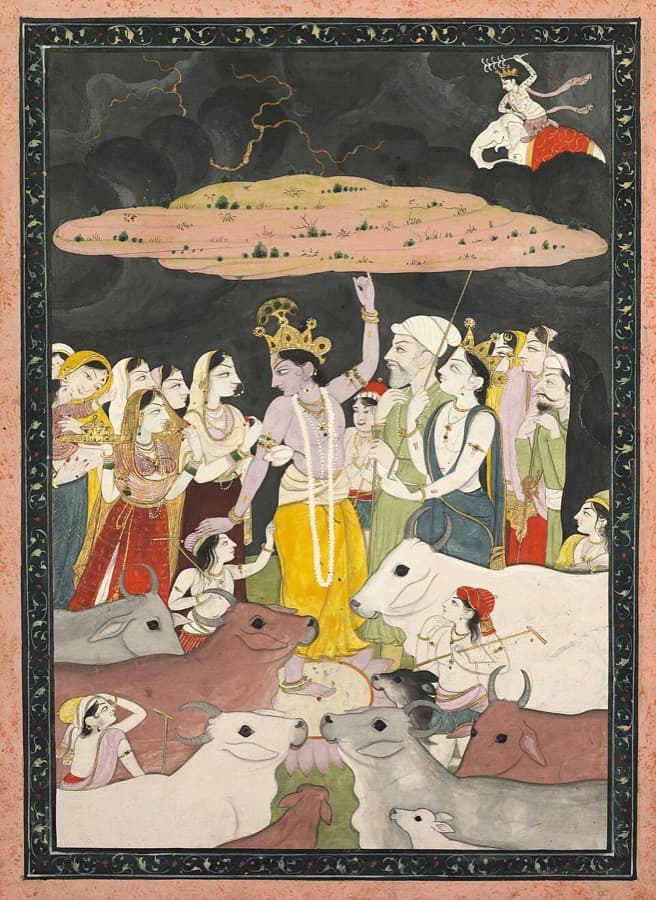
Mounted upon his celestial four-tusked white elephant Airāvata, wielding the adamantine thunderbolt (Vajra) forged from the sacrificial spine of Sage Dadhichi, Indra represents the irresistible life-force of cosmic order (Ṛta). He shatters the petrifying dragon of drought (Vṛtra), releasing the pent-up cosmic waters and torrential monsoon rains that sustain all terrestrial life and agriculture across Jambudweep.
Century-by-Century Archaeological & Epigraphical Evolution
c. 1200 BCE      c. 2nd c. BCE    c. 1st c. CE     7th c. CE        9th c. CE       10th c. CE      1294 CE
     │                │                │               │                │               │               │
     ▼                ▼                ▼               ▼                ▼               ▼               ▼
Rigveda          Bhaja Caves      Kushan           Mamallapuram     Ellora          Banteay Srei    Panauti
1.32 Vritra-Han  Rock-Cut Airavata Mathura         Great Penance    Cave 32         Pink Sandstone  Indreshwar
Monsoon Myth     Elephant Relief  Indrakirita      Purva Dikpala    Indra Sabha     Khmer Reliefs   Pagoda Shrine
1. The Vedic Monument: The Slaying of Vṛtra (c. 1500–800 BCE)
- In the Ṛgveda (1.32), the cosmic battle that defines the Indian agricultural imagination is immortalized:
अहन्नहिं पर्वते शिश्रियाणं त्वष्टास्मै वज्रं स्वर्यं ततक्ष ।
वाश्रा इव धेनवः स्यन्दमाना अञ्जः समुद्रमव जग्मुरापः ॥
"He slew the serpent who lay coiled upon the mountain; Tvashtar had fashioned for him the booming thunderbolt. Like lowing kine rushing swiftly to their calves, the freed waters flowed straight onward to the ocean!" - In Ṛgveda (2.12), Sage Gritsamada composes the celebrated Sa Janāsa Indraḥ hymn, declaring that the one who made the trembling earth firm, who measured out the intermediate spaces, and who carries the lightning bolt in his right fist is alone Indra.
2. Early Rock-Cut Art: Bhaja Caves (c. 2nd c. BCE)
- In the Western Ghats at Bhaja Caves (Maharashtra), Shunga-era sculptors carved the earliest surviving monumental stone relief of Indra in Indian history.
- The god sits high upon the shoulders of his four-tusked elephant Airāvata, which strides through the sky uprooting trees with its trunk, while attendants carry royal standards—a visual metaphor of the roaring monsoon squall sweeping over the Sahyadri mountains.
3. Kushan Red Sandstone & The Indrakirita (c. 1st–2nd c. CE)
- In Mathura, Kushan artisans standardized the classical iconography of Indra:
- Crowned with the majestic rectangular cylindrical crown (Indrakirīṭa).
- Exhibiting a horizontal third eye across the center of his forehead (contrasting with Shiva's vertical third eye).
- Holding the vajra in his right hand and the vessel of heavenly nectar (amṛta-ghaṭa) in his left.
4. Deccan & Pallava Rock-Cut Monuments (c. 7th–8th c. CE)
- Mamallapuram (Tamil Nadu, 7th c. CE): In the world-famous rock-cut relief of Arjuna's Penance, Indra is depicted hovering in the celestial upper register with his consort Sachi, watching the descent of the sacred Ganga.
- Ellora Cave 32 (Maharashtra, 9th c. CE): Known as the Indra Sabhā, this two-story monolithic Jain temple features a magnificent courtyard statue of Indra (revered as the Yaksha Matanga), seated upon an elephant beneath a richly carved wish-fulfilling tree (Kalpavṛkṣa), demonstrating Indra's universal reverence across non-Vedic traditions.
5. Khmer Imperial Architecture: Angkor & Banteay Srei (10th–12th c. CE)
- In classical Cambodian art, Indra is the premier directional deity (Pūrva Dikpāla — guardian of the East).
- At the 10th-century jewel of Banteay Srei, intricate rose-pink sandstone pediments depict Indra creating torrential rainstorms over the burning Khandava forest, mounted upon the three-headed elephant Erawan.
6. The Living Tradition of Nepal: Indra Jātrā
- In the Kathmandu Valley, the ancient 8-day festival of Indra Jātrā (Yeñyā) preserves unbroken royal rituals:
- Devotees erect a 50-foot pine tree trunk (Indradhvaja) in front of the historic Kathmandu Durbar Square.
- The colossal gilded mask of Sweta Bhairava is opened, dispensing consecrated rice liquor from its mouth.
- The Living Goddess Kumari rides in a sacred wooden chariot through the city streets, blessing the monarch and people with rain, health, and civic harmony.
Iconographic Anatomy & Cosmic Symbolism
                  [ INDRAKIRĪṬA (Cylindrical Crown) ]
                     Sovereign Authority over Svarga
                                   ▲
                                   │
      [ VAJRA (Thunderbolt) ] ─────┼───── [ AIRĀVATA (White Elephant) ]
      Adamantine truth,            │       Monsoon rain clouds,
      forged from Dadhichi's bone  │       four cardinal pillars of earth
                                   ▼
                    [ HORIZONTAL THIRD EYE ]
                    Insight into the subtle realms
- The Vajra (Thunderbolt): Represents adamantine spiritual truth that shatters all worldly illusions (Māyā). Forged by Tvashtar from the selfless bones of Sage Dadhichi, it teaches that ultimate power is born only from supreme self-sacrifice.
- Airāvata (The White Elephant): Born from the Churning of the Ocean (Samudra Manthana), Airavata represents the heavy, billowing white monsoon clouds. His four tusks symbolize the four cardinal directions and the four celestial streams that descend to earth.
- The Thousand Eyes (Sahasrākṣa): Symbolizes the supreme vigilance of the cosmic king who watches over every corner of his realm, ensuring that virtue is rewarded and chaos restrained.
- The Pārijāta Tree: The heavenly wish-fulfilling tree blooming in Indra's celestial garden (Nandana-vana), whose fragrant flowers never wither, representing the eternal beauty of the heavenly realms.
Wisdom Graph: Divine Associations
- Vāhana
- Airāvata
- Sacred animals
- Airāvata (white elephant)Uccaiḥśravas (divine flying horse)Vṛṣabha (mighty bull)
- Sacred birds
- peacock (associated with the thousand eyes of Indra)
- Sacred flowers
- pārijāta (the celestial night-flowering coral jasmine brought from heaven)yellow lotus
- Sacred plants
- soma (the sacred exhilarating plant pressed in Vedic rituals)kuśa grass
- Sacred trees
- kalpavṛkṣa (the wish-fulfilling tree of Svarga)pārijāta
- Offerings
- oblations of pure cow's ghee into the sacrificial firepressed soma juice (represented by sanctified herbs and milk)yellow garments
- Weapons / emblems
- Vajra (the diamond thunderbolt forged from the selfless spine of Sage Dadhīci)Bāṇa (arrows of lightning)Aṅkuśa (elephant goad)
- Sacred colours
- golden yellow (hari-keśa)storm cloud bluecrimson
- Sacred numbers
- 1001000
Principal Temples
- Bhaja Caves (Indra Relief)2nd c. BCE📍 Bhaja, Lonavala, Pune, Maharashtra, IndiaThe oldest surviving monumental relief of Indra in Indian archaeology, depicting the storm god riding Airavata accompanied by attendants above the Western Ghats
- Indra Sabha (Ellora Cave 32)9th c. CE (Rashtrakuta)📍 Ellora, Chhatrapati Sambhaji Nagar, Maharashtra, IndiaThe finest of the Ellora Jain caves; a two-story monolithic stone sanctuary housing an immense seated statue of Indra/Matanga upon his elephant under a flowering Kalpavriksha tree
- Indreshwar Mahadev Temple1294 CE (rebuilt 15th c. CE)📍 Panauti, Kavrepalanchok, NepalOne of the oldest surviving multi-tiered pagoda temples in Nepal, established where Indra performed penance to be cured of Gautama's curse
- Indra Temple at Jaisalmer Fort15th c. CE📍 Jaisalmer Fort, Jaisalmer, Rajasthan, IndiaExquisitely carved yellow sandstone shrine within the golden fort, displaying Indra seated on Airavata with his celestial court
- Banteay Srei (Indra Panels)967 CE (Khmer, King Rajendravarman)📍 Angkor, Siem Reap, CambodiaRose-pink sandstone jewel of Khmer art, displaying breathtaking pediment reliefs of Indra causing torrential rains over Khandava forest
Festivals
- Indra Jātrā (Yeñyā)Bhādrapada Śukla Dvādaśī to Āśvina (Sep) · 8 daysThe premier traditional street festival of Kathmandu; thousands witness the raising of the sacred Indradhvaja pole, mask displays of Sweta Bhairava, and the chariot procession of the living goddess Kumari
- Indradhvaja Utsava (Historical)BhādrapadaClassical Vedic and royal festival described in the Natyashastra and Brihat Samhita, where kings raised a decorated wooden mast to pray for rain, victory, and prosperity
Primary Scriptural Sources
- Ṛgveda Saṃhitā (1.32 — Vṛtra-Hatyā Sūkta)vedac. 1500–1200 BCEHymn of Hiranyastupa: 'indrasya nu vīryāṇi pravocaṃ yāni cakāra prathamāni vajrī | ahann ahim anv apas tatarda pra vakṣaṇā abhinat parvatānām'
- Ṛgveda Saṃhitā (2.12 — Sa Janāsa Indraḥ)vedac. 1500–1200 BCEFamous hymn of Gritsamada: 'He who made the quaking earth firm, who calmed the shaken mountains... He, O men, is Indra!'
- Kena Upaniṣad (3.12–4.1)upanishadc. 600 BCEIndra approaches the mysterious Yaksha in the sky and is instructed by Uma Haimavati on the supreme reality of Brahman
- Śatapatha Brāhmaṇabrahmanac. 800 BCEDetails the royal consecration rituals (Rajasuya and Sautramani) centered on Indra's cosmic kingship
- Mahābhārata (Vana Parva & Udyoga Parva)epicc. 5th–2nd c. BCEChronicles Indra testing Karna's generosity to grant the divine Vasavi Shakti weapon and granting weapons to his son Arjuna
Sources & provenance
- 📖Supporting referenceOtherRigveda
- 📖Supporting referenceOtherTaittiriya Brahmana
- 📖Supporting referenceOtherShatapatha Brahmana
- 📖Supporting referenceOtherKena Upanishad
- 📖Supporting referenceOtherMahabharata