Historical PeriodVedic
Vedic (Rig Veda c. 1500 BCE) to present
3000 BCEVedic EraPresent
Sacred Facts · At a Glance
- Element
- fire
Primary Scriptures
0 sourcesNo primary scriptures are catalogued for this entry yet. If you know of scriptural references we have missed, please contribute them.
Go Mata — The Sacred Cow
Overview
In brief
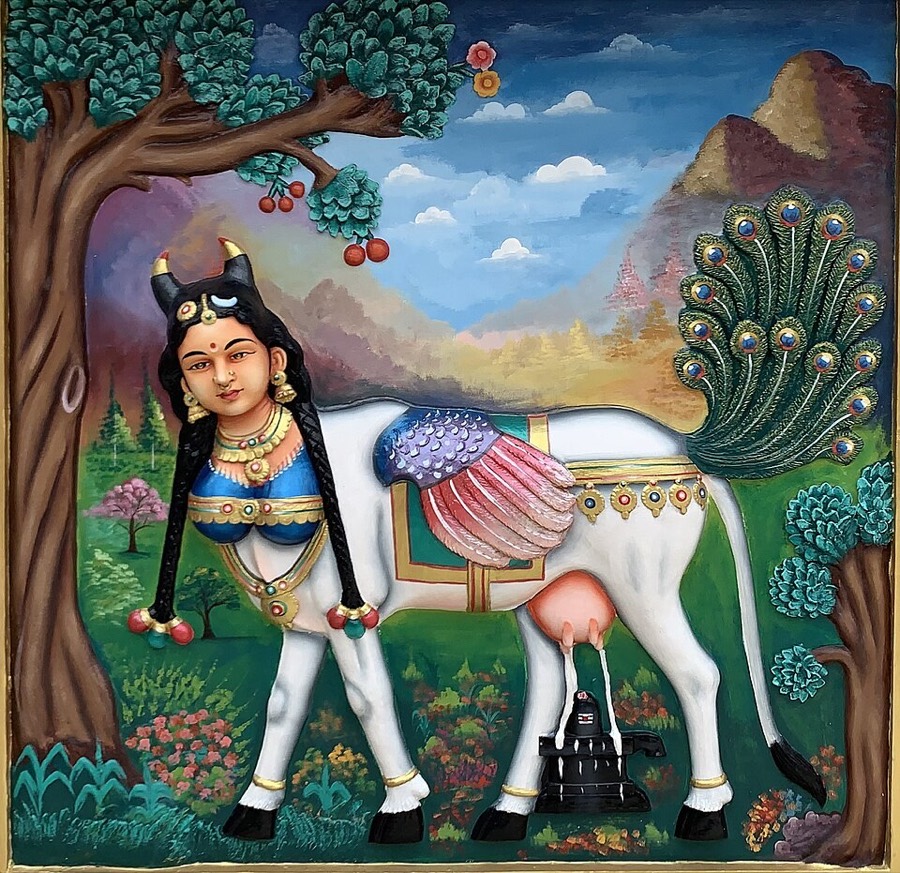
Go Mātā (Mother Cow) is the most universally venerated animal in Hindu tradition — simultaneously a theological symbol, an economic foundation, and a living presence in Indian villages. Her archetype Kāmadhenu ("wish-fulfilling cow") or Surabhi ("the fragrant one") emerged from the churning of the cosmic ocean and resides in the sage Vasiṣṭha's hermitage, capable of fulfilling every desire.
In Vedic and Brahminical religion, the cow embodies:
- Pṛthvī (Mother Earth) — the cow-as-earth metaphor is Rig-Vedic
- Aditi (primal goddess, mother of the devas) — sometimes equated with a cow
- Prosperity, fertility, peace — a family's cows defined its wealth in Vedic society
- The five auspicious substances (pañcagavya) — milk, curd, ghee, urine, and dung, used in ritual and Ayurvedic practice
In more detail
The cow's centrality to Brahminism-Vedic tradition is uniquely intense:
- Gau-dāna (cow-gift) is the supreme ritual gift in the Dharmaśāstras
- Pañcagavya enters every Vedic homa (fire ritual) and Ayurvedic preparation
- Go-loka — the supreme heaven in Vaishnava (especially Gauḍīya) theology is literally "cow-world"
- Kṛṣṇa as Gopāla (cowherd) — Vaishnava devotion is inseparable from cow-love
- Ahimsā (non-violence) as a principle substantially strengthened around cow-protection
- Brahmin occupational identity — Brahmins historically kept cows; "gau-Brahmin" is a paired phrase in blessings
Kāmadhenu in myth:
- Emerged from the Samudra Manthan (one of the fourteen treasures)
- Lived with Indra initially, later with the sage Vasiṣṭha
- Her theft attempt by King Viśvāmitra (then a kṣatriya) triggered his conversion into a Brahmin sage
- Her daughter Nandinī stars in parallel narratives
- She contains all the gods within her body — popular poster-iconography maps each deity to a body-part
The Five Sacred Products — Pañcagavya
| Substance | Sanskrit | Ritual Use |
|---|---|---|
| Milk | kṣīra | Abhiṣeka (deity-bathing), offering to ancestors |
| Curd | dadhi | Auspicious-food rites |
| Ghee | ghṛta | Homa fuel — the supreme ritual offering |
| Urine | gomūtra | Purification; Ayurvedic medicine |
| Dung | gomaya | Ritual smearing of ceremonial ground; fuel |
Regional and Sectarian Variations
- Brahminism/Vedic: Cow-gift and pañcagavya central
- Vaishnava: Go-loka cosmology; Krishna as cowherd
- Shaiva: Nandi (bull) is primary; cow secondary
- Jain: Non-violence extends beyond cow to all life; cow nonetheless venerated
- Gauḍīya Vaishnavism (Bengal): ISKCON's international cow-protection programs continue the tradition globally
- Folk practice: Go-pūjā on Gopāṣṭami (Kartika), Bihu (Assam), Pongal (Tamil Nadu — Māttu Poṅkal dedicated to cattle)
Modern Context
Cow-protection (gau-rakṣā) has been politically consequential in modern India:
- Gandhi made the protection of cows central to his vision of Hindu civilization, drawing from Vaishnava and Jain principles
- Indian Constitution Article 48 directs states to organize agriculture on modern lines and "take steps for preserving and improving breeds, and prohibiting the slaughter, of cows and calves"
- Gau-śālās (cow-shelters) — thousands across India provide refuge to unproductive cattle
- Go-seva is practiced in ISKCON and many Hindu organizations internationally
Relationships
- Vasiṣṭha — sage-keeper of Kāmadhenu
- Viśvāmitra — kṣatriya-turned-Brahmin whose attempt to seize her changed his life
- Kṛṣṇa — Gopāla, cowherd par excellence
- Pṛthvī-Aditi — Earth-mother / primal goddess as cow
- Nandinī — daughter-cow
Key Facts
- Role: Divine mother figure; source of pañcagavya; wish-fulfilling archetype
- Sanskrit: Go Mātā / Kāmadhenu / Surabhi
- Species: Zebu cattle (Bos indicus) — indigenous humped breeds (Gir, Tharparkar, Sahiwal, Red Sindhi, Kankrej, etc.)
- Origin myth: Samudra Manthan (churning of the ocean)
- Tradition center: Brahminism/Vedic and Vaishnava
- Festival: Gopāṣṭami (Kartika); Māttu Poṅkal (Tamil Nadu); Govardhan Pūjā (Diwali period)
Sources & provenance
📜 2 Primary🎓 1 Scholarly📖 1 Tertiary
- 📜Primary sourceOtherRig Veda 6.28 — hymn to the cow
- 📜Primary sourceOtherAtharva Veda 4.21 — Gau Sūkta
- 🎓Scholarly sourceBookKenneth R. Valpey. Sacred Cows and Sacred Places: Origins of India's Cow Veneration (2019)
- 📖