




Sacred Facts · At a Glance
- Element
- air
Primary Scriptures
0 sourcesNo primary scriptures are catalogued for this entry yet. If you know of scriptural references we have missed, please contribute them.
Mahavira Jayanti: Birth of the Last Tirthankara
[BEGINNER]
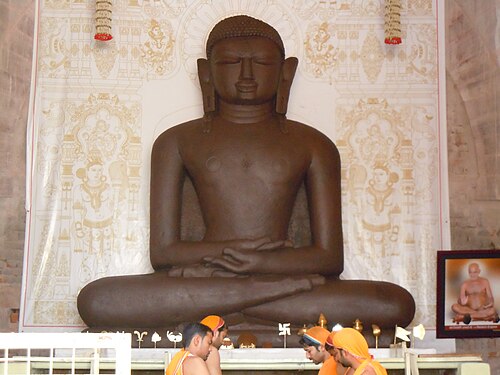
On the thirteenth bright day of Chaitra (March–April), Jain temples bathe their idols in milk and saffron: Mahavira Jayanti (Janma Kalyanaka) celebrates the birth — traditionally 599 BCE, at Kundagrama near Vaishali — of Vardhamana Mahavira, the 24th and last Tirthankara of our age, who gave Jainism its final form: absolute non-violence (ahimsa), truth, non-stealing, chastity, non-possession.
The day opens with abhisheka (ceremonial bathing of Mahavira's image), alms and animal-welfare charity (daan), and fasting with scripture study. Its glory is the rath yatra: the Jina's idol riding a flower-heaped chariot through streets lined with white-clad devotees chanting hymns, monks preaching the five vows at every halt. A gazetted national holiday, it closes slaughterhouses and opens temple kitchens across the country.
[INTERMEDIATE]
The Jayanti doubles as Jainism's public face: processions display the community's disciplines (white muhpatti mouth-cloths, brooms for sweeping insects aside), lectures retell Mahavira's renunciation — prince at 30, twelve years of austerity, omniscience (kevala) at 42, liberation at 72 — and charities peak (food, medicine, bird hospitals, gaushalas). Digambara–Shvetambara customs differ in image-worship but unite in the chariot street. The 2026 observance (March 31, the 2624th anniversary by traditional count) showed the festival's scale: capital-city processions with thousands walking.
[SCHOLAR]
Historians place Mahavira (c. 540s–468 BCE by modern scholarship; 599–527 BCE by tradition) as the elder contemporary of the Buddha — and the Jayanti's traditional 599 BCE date is recorded here as tradition, not archaeology. The festival's modern form (municipal processions, blood-donation camps, interfaith greetings) illustrates how a renunciant religion stages public joy without abandoning restraint.
Sources & provenance
- 📜
- 🎓Scholarly source