



Sacred Facts · At a Glance
- Sacred Colours
- whiteblue
- Sacred Offerings
- tradition-specific
Primary Scriptures
3 sources- Torahscripture
- Talmudrabbinic literature
- Cochin Jewish oral traditionsoral
Cochin Jews
One of India's oldest Jewish communities, and nearly gone from it
The Jewish community of Cochin (Kōḻi) is one of the oldest Jewish settlements anywhere in the Indian subcontinent, and one of the two or three oldest outside the Land of Israel itself. The community's own tradition, recorded in the Cochin Jewish Chronicle and in community-published accounts, traces settlement to the first century CE, in connection with the destruction of the Second Temple. Scholarship has long treated that as a community memory rather than a documented event, and it should be presented that way: a founding tradition of great antiquity, not a datable fact. Jewish presence on the Malabar coast is also attested in later periods by coastal trade records, and the community's fortunes tracked the spice trade, the arrival of the Portuguese in the sixteenth century, and the pepper and cardamom economy.
The community was internally divided, and the divisions matter. Malabari Jews were those whose families had been long settled locally; Paradesi ("those who came from abroad") Jews were Sephardi families who arrived from Iberia in the sixteenth and seventeenth centuries; Meshuchrarim were manumitted or descended from manumitted people. Earlier popular usage sorted the community as "Black," "White" and "Brown" Jews, and while that tripartite vocabulary is still heard, it is a colonial-era taxonomy and this entry uses the terms the community itself uses. Caste and community position inside Kerala mattered a great deal to social relations, and Malabari Jews attended school alongside caste Hindu and Syrian Christian children rather than in separate institutions.
The Paradesi Synagogue, Mattancherry
The Paradesi Synagogue at Jew Town, Mattancherry, was built in 1568 by Samuel Castiel, David Belila and Joseph Levi (attributions and the date are traditional and locally well established). It is often described as the oldest active synagogue in the Commonwealth, and that description is broadly accepted though the precise wording depends on how "active" is defined across the twentieth and twenty-first centuries. The compound also holds the Cochin Paradesi cemetery, with its surviving middoth (tombstones) in Hebrew script, and the Shabbat synagogue, itself a seventh or later century foundation reused for the weekly Sabbath and festival services when the Paradesi synagogue could not accommodate the community.
The synagogue is a functioning place of worship with a Torah scroll, a bimah, and Hebrew-inscribed memorials to the community's prominent members, alongside copper-plate records of the synagogue's own administration — documents in Hebrew, Malayalam and Dutch that are among the most valuable primary sources for Malabar's Jewish history. The community is small enough that services depend on visiting scholars and on lay leadership; a regular visiting rabbi from Israel has been a feature of recent decades.
Emigration, and what remains
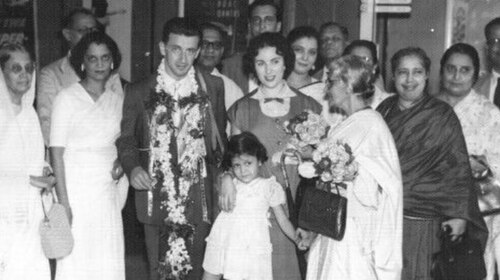
The community's twentieth-century history is defined by aliyah to Israel after the foundation of the state in 1948, sustained through the 1950s and 1960s. The great majority of Cochin Jews now live in Israel, many in the towns of Beit Shemesh and Netivot, and a smaller diaspora is in North America, Europe and Australia. A handful of members remain in Kerala. Population figures for the current community are given in single digits to low tens depending on the year and on who is counted, and no figure in this file should be treated as a count.
The community's cultural artefacts — the Hebrew and Judeo-Malayalam books, the Cochin Jewish clocks, the spice-route genealogy, and the synagogue's own plate and copper records — are now held in Israel, Europe and in the Kerala heritage institutions. The Cochin Synagogue at Jew Town functions as a heritage site under visitor management while remaining a synagogue; the distinction matters and should be preserved in description.
Sources and what is still unverified
- Cochin Jews: Their History, Doctrine and Practice (published Jerusalem) and the community's own historical compilations.
- Joseph R. F. Del Giorgio, The Jewish Community of Cochin and his editions of the community's copper-plate records and synagogue inscriptions — the strongest documentary work.
- Israel Joseph, The Cochin Jews and Kerala State and Ernakulam district gazetteers.
- Walter J. Fischel, The Jews of India, for the comparative South Asian Jewish context.
Still to be checked by a named guardian: the seventh-century date ascribed to the
Shabbat synagogue, the 1568 foundation date, the "oldest in the Commonwealth" claim, and
all current population figures — each of these needs a named source rather than a
paraphrase. A previous version of this file carried a foreign_traveler_quotes block
attributing invented passages to Ibn Battuta on Malabar's Jewish communities. Ibn
Battuta did not describe them; the block has been deleted and must not be reinstated.
Wisdom Graph: Divine Associations
- Offerings
- tradition-specific
- Sacred colours
- whiteblue
🪔 Worship Procedures
- Daily rites
- • Morning prayers• Evening prayers
- Puja sequence
- Synagogue maintenance
🛕 Principal Temples
- Paradesi Synagogue1568 CE📍 Mattancherry, Kochi, Ernakulam, Kerala, IndiaFestivals: Shabbat · Rosh Hashanah · Yom KippurOldest active synagogue in the Commonwealth; Cochin Jewish heritage site
🎊 Festivals
- ShabbatWeekly · 1 day (Friday evening–Saturday evening)
- Rosh Hashanah
Sources & provenance
- 🎓Scholarly sourceBookJoseph R. F. Del Giorgio. The Jewish Community of Cochin and its copper-plate recordsThe strongest documentary work on the community
- 🎓Scholarly sourceBook