Sacred Facts · At a Glance
- Gender
- male
- Vahana
- Chariot drawn by horses; also borne upon the shoulders of Hanumān or Garuḍa
- Weapon
- Koḍaṇḍa (the celestial longbow) · Brahmāstra · Rāma-bāṇa (the infallible arrow that never misses its target)
- Sacred Number(s)
- 7 · 14 · 108
- Sacred Colours
- dark cloud-blue (megha-śyāma)pitambara yellow (Sita's silks)saffron
- Sacred Flowers
- lotus (blue and red) · tulsi flower · jasmine · parijata
- Sacred Trees
- aśoka (Saraca asoca, of the Ashoka-vatika in Lanka) · kadamba · peepal · jambu
- Sacred Offerings
- tulsi leaves and manjaris · panchamrit · panakam (jaggery-ginger-cardamom nectar) · kosambari (split pulse salad) · camphor arati
- Sacred Animals
- vanara (monkey warriors) · bear (Jambavan) · eagle/vulture (Jatayu & Sampati) · squirrel (blessed with the three dorsal stripes)
- Sacred Birds
- Jaṭāyu (heroic vulture who sacrificed life defending Sita) · Sampātī
- Sacred Plants
- tulsi (holy basil) · darbha / kusha grass
Primary Scriptures
6 sources- Vālmīki Rāmāyaṇa (Bāla Kāṇḍa to Uttara Kāṇḍa)epicComposed c. 5th–4th c. BCEThe original Sanskrit epic (Adi Kavya) consisting of 24,000 shlokas in 7 kandas, beginning with Sage Narada describing the ideal man to Valmiki
- RāmcaritmānasbhaktiGoswāmī TulsīdāsComposed 1574 CEAwadhi devotional masterpiece composed at Varanasi and Ayodhya, transforming the epic into the supreme text of North Indian Bhakti
- Kamba Rāmāyaṇam (Rāmāvatāram)epicKavichakravarti KambarComposed 12th c. CEMonumental Tamil literary epic presented at the Srirangam Ranganathaswamy temple, celebrated for unequaled poetic cadence
- Adhyātma RāmāyaṇapuranaBrahmāṇḍa Purāṇa, Uttara KhaṇḍaComposed c. 14th c. CEExpounds Advaita Vedanta philosophy through the dialogues of Rama and Sita, introducing the Maya Sita concept
- RaghuvaṃśakavyaKālidāsaComposed c. 5th c. CEClassical Sanskrit mahakavya detailing the lineage of the Raghu dynasty culminating in Rama's noble sovereignty
- Āditya Hṛdaya StotrastotraVālmīki Rāmāyaṇa, Yuddha Kāṇḍa 107The hymn to the Sun God taught by Sage Agastya to Rama on the battlefield of Lanka before the slaying of Ravana
Rama
The Maryada Purushottama — Seventh Avatar of Vishnu and Sovereign of Ayodhya
Overview
Sri Rama (राम) — meaning "He in whom the yogis delight" (ramante yogino yasmin) — is the seventh incarnation (avatāra) of Lord Vishnu in Sanatana Dharma. Known as Maryāda Puruṣottama (the Supreme Person who strictly adheres to the limits of righteousness), Rama embodies the living realization of Dharma in every human relationship: the dutiful son, the loyal brother, the devoted husband, the compassionate master, and the just monarch whose reign (Rāmarājya) remains the universal civilizational benchmark of righteous governance.
As recorded in Maharishi Valmiki's Sanskrit Rāmāyaṇa (the Ādikāvya or First Epic), Rama's life was not a pursuit of imperial ease, but a continuous trial of personal sacrifice for the preservation of cosmic and societal order.
Century-by-Century Archaeological & Epigraphical Evolution
5th c. BCE        5th c. CE        8th c. CE        9th–10th c.     10th–12th c.    15th c. CE      2024 CE
    │                │                │                 │                │               │              │
    ▼                ▼                ▼                 ▼                ▼               ▼              ▼
Valmiki          Nachna &         Pattadakal        Prambanan        Imperial        Hazara Rama    Ayodhya
Ramayana         Deogarh Gupta    & Ellora          Java Friezes     Chola           Temple         Mandir
Adi Kavya        Stone Panels     Rock Panels       in Andesite      Bronzes         Hampi Reliefs  Prana Pratishtha
1. The Epic Formulation (c. 5th–4th c. BCE)
- Maharishi Valmiki begins the Ramayana with the great inquiry to Sage Narada (Bala Kanda 1.1):
को न्वस्मिन् साम्प्रतं लोके गुणवान् कश्च वीर्यवान् ।
धर्मज्ञश्च कृतज्ञश्च सत्यवाक्यो दृढव्रतः ॥
"Who in this present world is truly endowed with noble virtues, valour, profound understanding of dharma, gratitude, truthfulness, and steadfastness in vows?"
Narada answers without hesitation: Ikṣvākuvaṃśaprabhavo rāmo nāma janaiḥ śrutaḥ — Rama, born in the lineage of Ikshvaku.
2. Classical Imperial Gupta Stone Reliefs (c. 5th c. CE)
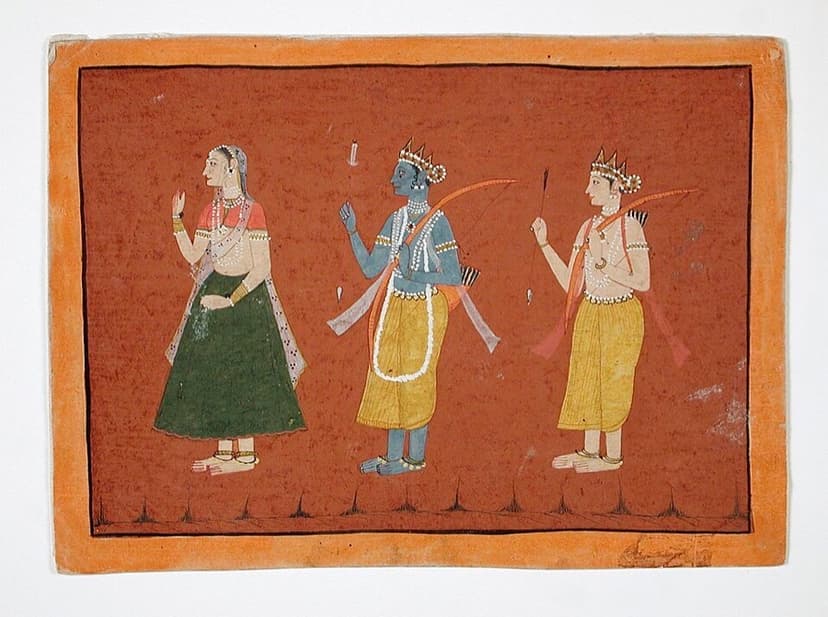
- Nachna Kuthara (Panna, Madhya Pradesh): The 5th-century Gupta temple site preserves stone lintels and plaques with some of the oldest sculptural representations of the Ramayana in India, depicting Rama, Sita, and Lakshmana in forest attire walking in serene procession.
- Deogarh Dashavatara Temple (Lalitpur, Uttar Pradesh, c. 500 CE): The carved plinth of this early panchayatana temple features masterly sandstone high-reliefs:
- Lakshmana disfiguring the demoness Surpanakha as Rama observes with calm authority.
- The redemption of Ahalya (Ahalya-uddhara) when Rama's lotus foot touches the petrified stone.
- Rama and Lakshmana meeting Sugriva under the flowering trees of Kishkindha.
3. Early Medieval Deccan & Southern Rock-Cut Friezes (c. 7th–8th c. CE)
- Pattadakal Virupaksha Temple (Karnataka, c. 740 CE): Western Chalukya queen Lokamahadevi commissioned this masterwork where stone pillars narrate the entire Ramayana in sequential friezes, detailing the construction of the Setu bridge with boulders borne by vanaras.
- Ellora Cave 16 Kailasanatha (Maharashtra, c. 760–780 CE): Rashtrakuta artisans carved an astonishing eight-tiered continuous stone narrative panel on the southern plinth of the monolithic temple, depicting the entire epic from King Dasharatha's Putrakameshti yajna to the vanquishing of Ravana.
4. Trans-Asian & Maritime Dissemination (c. 9th–10th c. CE)
- Prambanan Temple Complex (Central Java, Indonesia, 9th c. CE): On the inner balustrades of the colossal Shiva and Brahma temples, 42 monumental stone panels sculpt the Kakawin Ramayana in volcanic andesite stone, demonstrating the profound integration of Rama's story into Javanese classical culture.
- Angkor Wat & Banteay Srei (Cambodia, 10th–12th c. CE): Khmer sculptors carved breathtaking Ramayana bas-reliefs, including the duel between Rama and Ravana and the meeting with Vibhishana.
5. Imperial Chola Lost-Wax Bronzes (c. 10th–12th c. CE)
- The pinnacle of metal casting (madhuchchishtavidhana) was achieved under Chola royal patronage. Masterpieces preserved at the Vaduvur Kothandaramaswamy, Thillaisthanam, and Madhurantakam temples depict:
- Kodandarama: Standing gracefully in tribhanga (three-curved stance), holding the celestial bow in his left hand and an arrow in his right, radiating noble serenity (dhīrodātta).
- Sita Devi: Standing to Rama's right in gentle lolipada stance holding a blue lotus (nilotpala).
- Lakshmana: Standing to the left, alert and fiercely protective.
- Hanuman: Standing before Rama with hands folded in anjali mudra and right hand cupping his mouth in profound reverence.
6. Vijayanagara Granite Splendor: Hazara Rama Temple (15th c. CE)
- Built by Emperor Deva Raya II within the royal enclosure of Hampi, every square meter of the Hazara Rama Temple ("Temple of a Thousand Ramas") is enveloped in granite bas-reliefs depicting the complete Ramayana, serving as the daily moral classroom for the rulers of the empire.
The Canon of Canonical Texts
| Text | Author / Origin | Century | Language | Distinctive Theological Contribution |
|---|---|---|---|---|
| Vālmīki Rāmāyaṇa | Maharishi Valmiki | c. 5th–4th c. BCE | Sanskrit | Foundational Adi Kavya; presents Rama as the ideal mortal who upholds dharma through sheer moral discipline. |
| Rāmcaritmānas | Goswami Tulsidas | 1574 CE | Awadhi | The supreme text of northern Bhakti; celebrates Rama as Supreme Brahman (Paratpara) manifest in loving accessibility. |
| Kamba Rāmāyaṇam | Kavichakravarti Kambar | 12th c. CE | Tamil | Composed at Tiruvennainallur and launched at Srirangam; celebrated for incomparable poetic majesty and devotion (Bhakti). |
| Adhyātma Rāmāyaṇa | Brahmanda Purana | c. 14th c. CE | Sanskrit | Philosophical synthesis of Rama Bhakti with Advaita Vedanta; introduces the Chhaya Sita (Shadow Sita) theology. |
| Raghuvaṃśa | Kalidasa | c. 5th c. CE | Sanskrit | Classical courtly Mahakavya honoring the unbroken solar lineage of truth, courage, and benevolence. |
Core Philosophical Tenets: Maryada & Ramarajya
                     [ DHARMA (Righteous Duty) ]
                                  ▲
                                  │
      [ PITṚ-VĀKYA-PĀLANA ] ──────┼────── [ SATYA (Truthfulness) ]
      Obedience to paternal vow    │       Never retreating from word
                                  │
                                  ▼
                     [ RĀMARĀJYA (The Just State) ]
            Peace, abundance, protection of the weak,
                   freedom from hunger and fear
- Maryāda Puruṣottama (The Bound Exemplar): Unlike avatars who openly display divine omniscience, Rama accepted human limitations. He wept for Sita, endured hunger in exile, and bled in battle—demonstrating that virtue is not the privilege of gods, but the attainable duty of mortals.
- Pitṛ-vākya-pālana (Sacred filial duty): When Kaikeyi demanded his 14-year exile and Bharata's coronation, Rama departed without anger or sorrow, declaring that fulfilling his father's pledged word outweighed all imperial diadems.
- Eka-patnī-vrata (Singular marital devotion): In an era of royal polygamy, Rama remained exclusively devoted to Sita. Even during the Ashvamedha sacrifice after their tragic separation, Rama placed a golden murti of Sita beside his sacrificial seat rather than remarry.
- Rāmarājya (The Golden Age of Justice): As described in the Yuddha Kanda (131), during Rama's rule:
न पर्यदेवन् विधवा न च व्यालकृतं भयम् ।
न व्याधिजं भयं वाऽपि रामे राज्यं प्रशासति ॥
"No widow mourned; no danger arose from ferocious beasts; no fear from disease afflicted the people, while Rama governed the kingdom."
Sacred Geography: The Pilgrimage Trail of Exile
The geography of the Ramayana forms an unbroken cultural spine connecting the Indian subcontinent:
- Ayodhya (Uttar Pradesh): Birthplace on the banks of the sacred Sarayu.
- Janakpur (Mithila, Nepal): Royal court of King Janaka where Rama broke Shiva's Pinaka bow to wed Sita.
- Chitrakoot (Madhya Pradesh / UP border): Pristine forest along the Mandakini river where Bharata met Rama to plead for his return, receiving Rama's wooden sandals (charan paduka).
- Panchavati / Nashik (Maharashtra): Forest dwelling on the Godavari where the golden deer was pursued and Sita was abducted by Ravana.
- Kishkindha / Hampi (Karnataka): Ancient vanara realm on the Tungabhadra river where Rama forged an eternal pact with Sugriva and met Hanuman at Rishyamukha hill.
- Rameswaram (Tamil Nadu): The southern shore from which Nila and Nala engineered the floating stone bridge (Rama Setu) across the Palk Strait to Lanka.
Canonical Daily Practice & Recitation
Household Devotion
- Chanting of the Tāraka Mantra: $$\text{Śrī Rāma Jaya Rāma Jaya Jaya Rāma}$$
- Daily Recitation of the Sundara Kanda: Reading chapter 5 of the Ramcharitmanas or Valmiki Ramayana, reciting Hanuman's leap across the ocean and discovery of Sita in the Ashoka grove to overcome family adversity and mental distress.
- Rama Navami Observance: Fasting until midday on Chaitra Shukla Navami, followed by the recitation of the divine birth shlokas (Bhayau Pragat Kripala Dinadayala) and offering of cooling panakam and sweet tulsi naivedya.
Wisdom Graph: Divine Associations
- Vāhana
- Uchchaihshravas
- Sacred animals
- vanara (monkey warriors)bear (Jambavan)eagle/vulture (Jatayu & Sampati)squirrel (blessed with the three dorsal stripes)
- Sacred birds
- Jaṭāyu (heroic vulture who sacrificed life defending Sita)Sampātī
- Sacred flowers
- lotus (blue and red)tulsi flowerjasmineparijata
- Sacred plants
- tulsi (holy basil)darbha / kusha grass
- Sacred trees
- aśoka (Saraca asoca, of the Ashoka-vatika in Lanka)kadambapeepaljambu
- Offerings
- tulsi leaves and manjarispanchamritpanakam (jaggery-ginger-cardamom nectar)kosambari (split pulse salad)camphor arati
- Weapons / emblems
- Koḍaṇḍa (the celestial longbow)BrahmāstraRāma-bāṇa (the infallible arrow that never misses its target)
- Sacred colours
- dark cloud-blue (megha-śyāma)pitambara yellow (Sita's silks)saffron
- Sacred numbers
- 714108
Principal Temples
- Ayodhya Ram Mandir2024 CE (Prana Pratishtha Jan 22, 2024)📍 Ayodhya, Ayodhya, Uttar Pradesh, IndiaThe historic birthplace of Sri Rama, rebuilt in traditional Nagara Gurjara-Chalukya stone architecture without iron or steel
- Ramanathaswamy Temple12th c. CE (Pandya / Setupati)📍 Rameswaram, Ramanathapuram, Tamil Nadu, IndiaOne of the four Char Dhams; where Rama consecrated the Ramalingam linga of sand to worship Shiva after the battle of Lanka; features the world's longest pillared corridor
- Hazara Rama Temple15th c. CE (Vijayanagara, King Deva Raya II)📍 Hampi, Bellary, Karnataka, IndiaRoyal chapel of the Vijayanagara emperors, famous for extensive outer wall granite bas-reliefs narrating the complete Valmiki Ramayana
- Ram Raja Temple16th c. CE (Bundela dynasty, Queen Ganeshkunwar)📍 Orchha, Niwari, Madhya Pradesh, IndiaOnly temple in India where Sri Rama is worshipped as an active reigning king (Raja) with a ceremonial police guard-of-honor and gun salutes
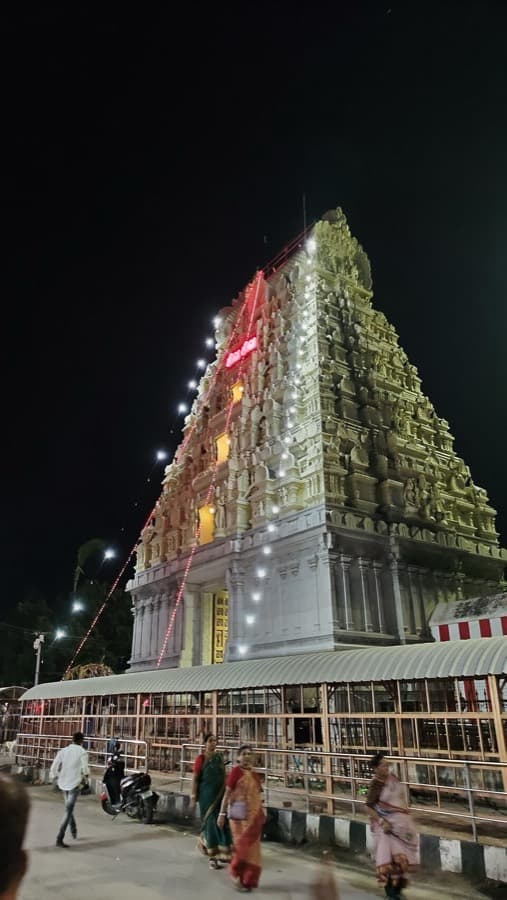
- Bhadrachalam Sita Ramachandraswamy17th c. CE (Kancharla Gopanna / Bhakta Ramadasu)📍 Bhadrachalam, Bhadradri Kothagudem, Telangana, IndiaProminent Godavari-river shrine where Rama is depicted with four arms holding the bow, arrow, shankha, and chakra (Vaikuntha Rama)
- Vaduvur Kothandaramaswamy Temple10th–12th c. CE (Imperial Chola)📍 Vaduvur, Tiruvarur, Tamil Nadu, IndiaHouses one of the most sublime Chola bronze murtis of Kodandarama, depicting the prince with an enchanting smile and majestic poise
- Triprayar Sri Rama Temple10th c. CE (Chera architecture)📍 Triprayar, Thrissur, Kerala, IndiaPrincipal shrine of the sacred Nalambalam pilgrimage (visiting temples of Rama, Bharata, Lakshmana, and Shatrughna in a single day)
- Kalaram Mandir1782 CE (Peshwa Sardar Rangarao Odhekar)📍 Panchavati, Nashik, Nashik, Maharashtra, IndiaBuilt entirely of black stone on the banks of the Godavari where Rama, Sita, and Lakshmana spent their exile at Dandakaranya
- Kanak Bhawan1891 CE (Queen Vrishbhanu Kunwari of Tikamgarh)📍 Ayodhya, Ayodhya, Uttar Pradesh, IndiaPalatial shrine traditionally gifted by Queen Kaikeyi to Sita upon her arrival in Ayodhya, housing crowned gold-bedecked murtis of Sita and Rama
Festivals
- Rāma NavamīCaitra Śukla Navamī (Mar–Apr)Celebration of Sri Rama's birth at noon; reading of the Balakanda, temple processions, and distribution of panakam prasada
- Vijayadaśamī (Daśahrā)Āśvina Śukla Daśamī (Sep–Oct)Commemorates the triumph of Rama over Ravana; concluded with Ramlila drama enactments and effigy burnings across northern India
- Dīpāvalī (Diwali)Kārttika Amāvāsyā (Oct–Nov)Celebrates Sri Rama's triumphant return to Ayodhya with Sita and Lakshmana after 14 years of exile, celebrated with illumination of millions of earthen lamps (diyas)
- Sītā KalyāṇamMārgaśīrṣa Śukla Pañcamī (Vivaha Panchami)Sacred celestial wedding of Sri Rama and Devi Sita celebrated with Vedic ritual across South India and Nepal
Primary Scriptural Sources
- Vālmīki Rāmāyaṇa (Bāla Kāṇḍa to Uttara Kāṇḍa)epicc. 5th–4th c. BCEThe original Sanskrit epic (Adi Kavya) consisting of 24,000 shlokas in 7 kandas, beginning with Sage Narada describing the ideal man to Valmiki
- Rāmcaritmānasbhakti1574 CEGoswāmī TulsīdāsAwadhi devotional masterpiece composed at Varanasi and Ayodhya, transforming the epic into the supreme text of North Indian Bhakti
- Kamba Rāmāyaṇam (Rāmāvatāram)epic12th c. CEKavichakravarti KambarMonumental Tamil literary epic presented at the Srirangam Ranganathaswamy temple, celebrated for unequaled poetic cadence
- Adhyātma Rāmāyaṇapuranac. 14th c. CEBrahmāṇḍa Purāṇa, Uttara KhaṇḍaExpounds Advaita Vedanta philosophy through the dialogues of Rama and Sita, introducing the Maya Sita concept
- Raghuvaṃśakavyac. 5th c. CEKālidāsaClassical Sanskrit mahakavya detailing the lineage of the Raghu dynasty culminating in Rama's noble sovereignty
- Āditya Hṛdaya StotrastotraVālmīki Rāmāyaṇa, Yuddha Kāṇḍa 107The hymn to the Sun God taught by Sage Agastya to Rama on the battlefield of Lanka before the slaying of Ravana
Sources & provenance
- 📖Supporting referenceOtherValmiki Ramayana
- 📖Supporting referenceOtherRamcharitmanas
- 📖Supporting referenceOtherKamba Ramavataram
- 📖Supporting referenceOtherAdhyatma Ramayana
- 📖Supporting referenceOtherRaghuvamsha