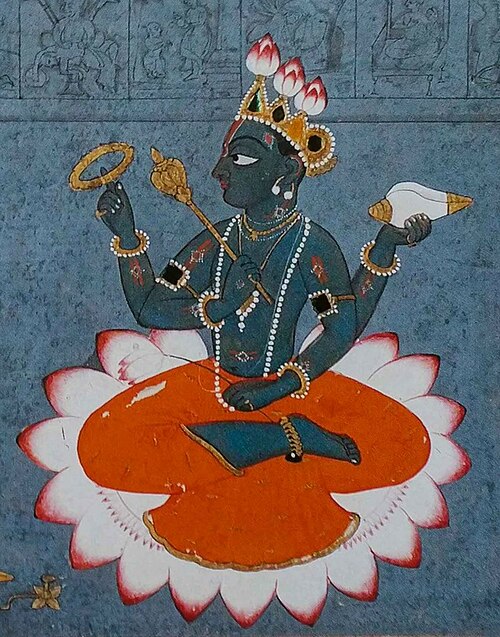
Nārada Bhakti Sūtras & Śāṇḍilya Bhakti Sūtras (नारद एवं शाण्डिल्य भक्तिसूत्र)
"Athāto bhaktiṁ vyākhyāsyāmaḥ | Sā tv asmin parama-prema-rūpā | Amṛta-svarūpā ca"
— "Now, therefore, we shall expound Bhakti. It is of the nature of supreme love toward the Divine, and its intrinsic nature is immortal nectar." (Nārada Bhakti Sūtras 1–3)
Overview
Just as the Brahma Sūtras of Bādarāyaṇa systematized Jñāna-kāṇḍa and the Mīmāṁsā Sūtras of Jaimini systematized Karma-kāṇḍa, the Nārada Bhakti Sūtras (84 aphorisms) and the Śāṇḍilya Bhakti Sūtras (100 aphorisms in three chapters) provide the classical Sanskrit sūtra foundation for Bhakti (devotional love) as an independent, self-validating means of liberation (svayaṁ-phalarūpatā).
Together with the Bhagavad Gītā and the Bhāgavata Purāṇa, these two treatises form the philosophical triad of the Bhakti movement across Vaiṣṇava, Smārta, and Sant lineages.
The Nārada Bhakti Sūtras (84 Aphorisms)
Attributed to the celestial sage Devarṣi Nārada (interlocutor of Vyāsa in Bhāgavata Purāṇa 1.5–6 and teacher of Prahlāda and Dhruva), the 84 sūtras eschew dry scholastic polemics in favor of direct experiential psychology:
- Definition of Parā Bhakti (Sūtras 1–14):
Nārada defines Supreme Devotion (Parā Bhakti) as "supreme love directed toward Him" (parama-prema-rūpā, Sūtra 2) and "immortal nectar" (amṛta-svarūpā, Sūtra 3), upon attaining which a human being becomes fulfilled (siddha), immortal (amṛta), and completely contented (tṛpta, Sūtra 4). It is free of selfish desire (anirodhatvāt), because its nature is total renunciation (nirodha) of mundane and even ritualistic clinging (Sūtras 7–8).
- Comparison of Scholarly Views & The Exemplars (Sūtras 15–24):
Nārada cites Vyāsa ("delight in worship"), Garga ("delight in sacred narratives"), and Śāṇḍilya ("delight in the Self free of obstacle"), before offering his own synthesis: surrendering all actions to the Divine and feeling intense anguish upon forgetting Him even for a moment (tad-arpitākhilācāratā tad-vismaraṇe parama-vyākulateti, Sūtra 19) — exactly as found in the Gopīs of Vraja (Sūtra 21), whose love remained anchored in awareness of Kṛṣṇa's divinity (tad-aiśvarya-smṛti, Sūtra 22–23).
- Bhakti as Its Own Fruit (Sūtras 25–33):
Higher than action (karma), dry intellect (jñāna), and meditative technique (yoga), Bhakti is its own fruit (svayaṁ phalarūpeti, Sūtra 30). Just as a king's sovereignty does not depend on his subjects' praise, Parā Bhakti needs no external proof (svayaṁ-pramāṇa, Sūtra 59).
- Sādhana-Bhakti & the Power of Mahātman Grace (Sūtras 34–50):
How is such devotion cultivated? By turning away from sense-objects, continuous hearing and singing of the Lord's qualities (avyāvṛtta-bhajanāt), and above all through the grace of great souls (mahātma-kṛpā) or a tiny spark of the Lord's own compassion (bhagavat-kṛpā-leśāt, Sūtra 38).
- Ineffability & the Eleven Modes of Single Devotion (Sūtras 51–84):
Like the taste of sugar experienced by one who cannot speak (mūkāsvādanavat, Sūtra 52), pure love exceeds verbal definition, yet in Sūtra 82 Nārada maps its eleven living expressions (ekadhāpi ekādaśadhā bhavati):
| # |
Sanskrit Term |
Experiential Mode |
Classical Exemplar |
| 1 |
Guṇa-māhātmyāsakti |
Attachment to glorifying Divine qualities |
Nārada, Śuka, Vyāsa |
| 2 |
Rūpāsakti |
Attachment to Divine beauty and form |
The Gopīs of Vṛndāvana, Alvars |
| 3 |
Pūjāsakti |
Attachment to liturgical worship |
Pṛthu, Ambariṣa |
| 4 |
Smaraṇāsakti |
Attachment to unceasing remembrance |
Prahlāda |
| 5 |
Dāsyāsakti |
Attachment as a devoted servant |
Hanumān, Vidura |
| 6 |
Sakhyāsakti |
Attachment as an intimate friend |
Arjuna, Uddhava, Sudāmā |
| 7 |
Vātsalyāsakti |
Parental tenderness toward the Divine |
Yaśodā, Nanda, Kausalyā |
| 8 |
Kāntāsakti |
Beloved/bridal absorption |
Rādhā, Rukmiṇī, Mīrābāī |
| 9 |
Ātma-nivedanāsakti |
Total self-offering of body, mind, and soul |
Bali Cakravartin, Vibhīṣaṇa |
| 10 |
Tan-mayatāsakti |
Complete inner absorption and identity |
Śukadeva, Nammāḻvār |
| 11 |
Parama-virahāsakti |
Ecstatic agony of separation from the Beloved |
Gopīs in the Bhramara-gīta |
The Śāṇḍilya Bhakti Sūtras (Śata-sūtrī)
Opening with "Athāto bhakti-jijñāsā" ("Now, therefore, the inquiry into Bhakti," echoing Brahma Sūtras 1.1.1), Sage Śāṇḍilya defines supreme devotion as "intense, supreme attachment to the Lord" (sā parānuraktir īśvare, 1.1.2). Commented upon by Svapneśvara and Bhavadeva (and in the Gauḍīya tradition by Baladeva Vidyābhūṣaṇa), the 100 sūtras provide rigorous philosophical arguments demonstrating that jñāna (knowledge) serves as an auxiliary purification of the mind toward Parā Bhakti, where the individual soul's upādhis dissolve in luminous love.