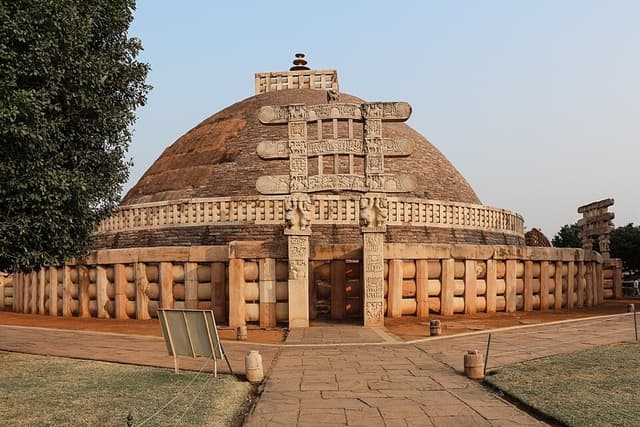
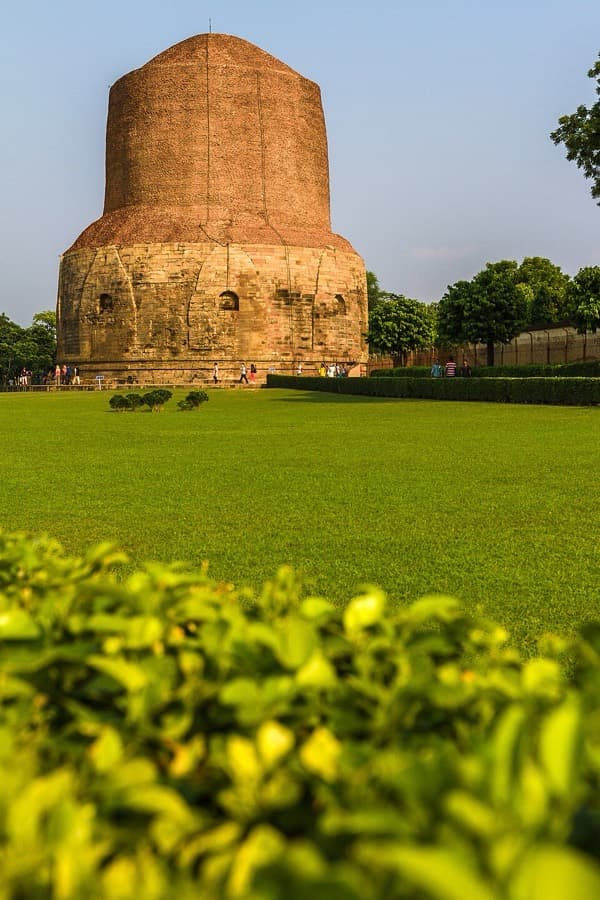
Nalanda — The World's First Great University
📷 Odantapuribs · [CC BY-SA 4.0](https://creativecommons.org/licenses/by-sa/4.0) · source
NalandaBihar
5th c. CE (Gupta founding); peak 7th–9th c. (Pala); destroyed 1193
air
A Temple Record

Nalanda — The World's First Great University

Nālandā Mahāvihāra — Where Ten Thousand Monks Studied

Buddhist
Enter the Record
↓
I.Overview

A Sacred Site

Nalanda was the world's first great residential university — a monastic university that at its peak housed 10,000 students and 2,000 teachers from across Asia. Founded in the 5th century CE under the Gupta dynasty and destroyed in 1193 by Bakhtiyar Khalji, Nalanda's 800-year history is the longest continuous tradition of higher learning in human civilisation.

II.Architecture

The Built Form

Buddhist (Gupta/local)

Construction Material

brick

Nalanda was the world's first great residential university — a monastic university that at its peak housed 10,000 students and 2,000 teachers from across Asia

III.Timeline

Sacred Timeline

  1. Kumara Gupta I's founding (5th c. CE)

    The Gupta emperor established Nalanda as a monastic university; his successors and the Pala kings expanded it continuously over 700 years — the longest-patronised educational institution in history

  2. Xuanzang's residence (630–643 CE)

    The Chinese pilgrim studied logic under Śīlabhadra and collected 657 Buddhist texts; his account is the primary source for Nalanda's organisation — dormitories, lecture halls, a nine-storey library, and a rigorous oral entrance examination (*dvāra-paṇḍita* screening) that 80% of applicants failed

  3. Bakhtiyar Khalji's destruction (1193 CE)

    The Turkish general sacked Nalanda and burned its library; the fire reportedly burned for three months — the destruction of the most important repository of Buddhist knowledge in the world

  4. Modern Nalanda University (2014–present)

    A new Nalanda University was inaugurated in 2014 near the original site — an attempt to revive the ancient tradition of international Buddhist education

IV.Elements

Sacred Elements

The colours, creatures, and offerings that mark this site.

Sacred Flowers

lotus

Sacred Creatures

lion-throne (siṃhāsana — not a mount)deer (dhammacakra — teaching symbol)

Sacred Trees

Bodhi tree (planted in the main courtyard)mango (Xuanzang describes mango groves around the vihara)

Sacred Offerings

incenselotus flowersbutter lampspradakṣiṇa of the stupa ruins

Divine Mount

lion-throne (siṃhāsana — seat of authority, not a mount)
V.Patrons

Royal Patrons

  1. Kumara Gupta I (founder, 5th c.)

  2. Harsha (patron, 7th c.)

  3. Dharmapala Pala (expanded, 8th c.)

  4. Devapala Pala (expanded, 9th c.)

VI.Texts

Sacred Texts

  1. Nalanda scholastic tradition

    Type: curriculum

    Nalanda taught the five major sciences (pañca-vidyā): language, logic, medicine, mathematics, and philosophy — plus the Buddhist scriptures (Tripitaka) and the Mahayana commentaries

VII.Trade

Trade Routes

  1. Uttarapatha knowledge corridor — Nalanda sat on the great northern route linking Magadha to Taxila; students from China, Korea, Japan, Tibet, Sumatra, and Persia travelled this route to study

  2. Silk Road Buddhist network — Xuanzang walked the entire Silk Road from Chang'an (China) to Nalanda; the university was the eastern terminus of an intellectual Silk Road that transmitted Buddhism, mathematics, astronomy, and medicine across Asia

  3. Pala maritime trade — the Pala dynasty (8th–12th c.) controlled Bengal's maritime ports; the same ships that carried Bengali textiles to Sumatra also carried Nalanda's scholarly tradition — the Shailendra dynasty of Java built Borobudur using Nalanda-trained architects

  4. Tibetan Buddhist transmission — Atisha (11th c.) studied at Nalanda/Vikramshila before going to Tibet; the entire Tibetan Buddhist curriculum is derived from Nalanda's scholastic tradition

VIII.Festivals

Festivals & Celebrations

  1. Vesak / Buddha Purnima (May)

X.Sacred Story

A Temple Record

An editorial reading of the site, woven from its architectural, historical, and scriptural data.

In Nalanda, Bihar, Nalanda — The World's First Great University — a 5th c. ce (gupta founding); peak 7th–9th c. (pala); destroyed 1193 site — nalanda was the world's first great residential university — a monastic university that at its peak housed 10,000 students and 2,000 teachers from across Asia. Founded in the 5th century CE under the Gupta dynasty and destroyed in 1193 by Bakhtiyar Khalji, Nalanda's 800-year history is the longest continuous tradition of higher learning in human civilisation.

§Historical Arc

The site is associated with the patronage of Kumara Gupta I (founder, 5th c.), Harsha (patron, 7th c.), Dharmapala Pala (expanded, 8th c.) and Devapala Pala (expanded, 9th c.). The earliest event recorded here is kumara gupta i's founding (5th c. ce). Through the centuries, the temple witnessed modern nalanda university (2014–present). The Gupta emperor established Nalanda as a monastic university; his successors and the Pala kings expanded it continuously over 700 years — the longest-patronised educational institution in history.

§Reading the Built Form

Built in the Buddhist (Gupta/local) tradition. Nalanda was the world's first great residential university — a monastic university that at its peak housed 10,000 students and 2,000 teachers from across Asia

Kumara Gupta I's founding (5th c. CE)
§A Visitor's Approach

01Walk the pradakshina path. Note the earliest event recorded here — kumara gupta i's founding (5th c. ce).

02Return during Vesak / Buddha Purnima (May), when the temple wears its festival form.

03The tradition here is buddhist. Sit. Listen. The darshan is its own teaching.

§Practical Notes
2 மேற்கோள் ஆதாரங்கள்
1 இணைக்கப்பட்ட திருக்கதைகள்
Historical Period5c CE
5th c. CE (Gupta founding); peak 7th–9th c. (Pala); destroyed 1193
3000 BCE5th century CEPresent

Sacred Facts · At a Glance

Vahana
lion-throne (siṃhāsana — seat of authority, not a mount)
Element
air
Sacred Flowers
lotus
Sacred Trees
Bodhi tree (planted in the main courtyard) · mango (Xuanzang describes mango groves around the vihara)
Sacred Offerings
incense · lotus flowers · butter lamps · pradakṣiṇa of the stupa ruins
Sacred Animals
lion-throne (siṃhāsana — not a mount) · deer (dhammacakra — teaching symbol)

Primary Scriptures

1 source
  • Nalanda scholastic traditioncurriculum
    Nalanda taught the five major sciences (pañca-vidyā): language, logic, medicine, mathematics, and philosophy — plus the Buddhist scriptures (Tripitaka) and the Mahayana commentaries

Nalanda — The World's First Great University

Ten Thousand Monks Studied Here

Nalanda — the Mahāvihāra (Great Monastery) — was the world's first great residential university. At its peak in the 7th–9th centuries, it housed 10,000 students and 2,000 teachers from across Asia: India, China, Korea, Japan, Tibet, Sri Lanka, Sumatra, and Persia. The admission test was so rigorous that Xuanzang reported only 20% of applicants passed.

The university occupied a 14-hectare complex of monasteries, temples, lecture halls, and a nine-storey library (the Dharmaganja — "Treasury of the Dharma") containing hundreds of thousands of manuscripts on palm-leaf and paper. The library was so large that it had three wings: the Ratnadhi (Ocean of Jewels), the Ratnasagara (Sea of Jewels), and the Ratnaranjaka (Jewel-delighting).

The Xuanzang Account

Xuanzang (Hiuen Tsang) — the greatest Chinese pilgrim — studied at Nalanda for five years (630–643 CE) under the abbot Śīlabhadra. His account is the primary source for Nalanda:

  • 8 great halls, 300 cells
  • Water brought from a tank via ceramic pipes
  • Free board and lodging (funded by royal endowments of 200 villages)
  • Daily debates in the courtyard — the loser had to convert to the winner's school

Xuanzang carried 657 Buddhist texts back to China, where he spent the rest of his life translating them. Without his journey, Chinese Buddhism would be unrecognisable.

The Destruction (1193 CE)

In 1193, the Turkish general Bakhtiyar Khalji — campaigning in Bihar — attacked Nalanda. He mistook the fortified vihara for a fort and sacked it. The library was burned; the fire reportedly lasted three months. Monks were killed; the survivors fled. Nalanda never recovered.

The destruction of Nalanda is contested by some historians (who argue it was already in decline), but the account of the Tibetan pilgrim Dharmasvamin (1234 CE), who found the ruins still smouldering and a single surviving monk teaching 70 students in the rubble, is one of the most poignant documents in Buddhist history.

❀

Wisdom Graph: Divine Associations

Vāhana
lion-throne (siṃhāsana — seat of authority, not a mount)
Sacred animals
lion-throne (siṃhāsana — not a mount)deer (dhammacakra — teaching symbol)
Sacred flowers
lotus
Sacred trees
Bodhi tree (planted in the main courtyard)mango (Xuanzang describes mango groves around the vihara)
Offerings
incenselotus flowersbutter lampspradakṣiṇa of the stupa ruins

Primary Scriptural Sources

  • Nalanda scholastic traditioncurriculum
    Nalanda taught the five major sciences (pañca-vidyā): language, logic, medicine, mathematics, and philosophy — plus the Buddhist scriptures (Tripitaka) and the Mahayana commentaries

Sources & provenance

📜 2 Primary
  • 📜
    Primary sourceBook
    H.D. Sankalia. The University of Nalanda (1972)
  • 📜
    Primary sourceWikipedia
    Nalanda
    View source →