


Sacred Facts · At a Glance
- Element
- fire
Primary Scriptures
0 sourcesNo primary scriptures are catalogued for this entry yet. If you know of scriptural references we have missed, please contribute them.
Yahadut (Judaism in India)
Section 1: Overview
[BEGINNER]
Jews have lived in India for roughly two millennia — arriving, by their own traditions, centuries before the common era — and India is one of the very few lands in the world with no history of antisemitic persecution. Three distinct communities grew here, each with its own origin story, customs, and synagogues:
The Bene Israel ("Children of Israel") of the Konkan coast (Maharashtra) are the largest group. Their tradition tells of ancestors shipwrecked near Navgaon, south of Mumbai, in the 2nd century BCE, who kept the Sabbath, circumcision, and the Shema prayer while losing much else — working as oil-pressers (hence their Marathi name, Shanwar Teli, "Saturday oil-pressers"), never pressing on the Sabbath. Around 1000 CE, tradition says, a Cochin Jew named David Rahabi rediscovered them and renewed their learning; in the 1790s Samuel Ezekiel Divekar built Bombay's Sha'ar HaRahamim ("Gate of Mercy") synagogue. They speak Marathi.
The Cochin Jews of Kerala divide into the Malabari Jews (Yehudan Mappila), settled around Kodungallur/Cranganore as spice traders in the early centuries CE, and the Paradesi ("foreign") Jews — Sephardic refugees from Iberian persecution who arrived in the 1500s–1600s. A 10th-century copper-plate grant (preserved at the Paradesi Synagogue) records privileges given to the Jewish leader Joseph Rabban — hard evidence of an organised community a thousand years ago. Their crown jewel is the Paradesi Synagogue of Mattancherry (1568), the oldest active synagogue in the Commonwealth. See Paradesi Synagogue.
The Baghdadi Jews came in the late 1700s–1800s from Iraq and Syria with British trade — the Sassoon family of Bombay (David Sassoon, arrived 1832) built synagogues including Magen David at Byculla and Knesset Eliyahoo (1884) at Kala Ghoda, still active. Kolkata's community built Neve Shalom and Beth El. See Knesset Eliyahoo Synagogue.
After 1948 most Indian Jews made aliyah to Israel; small, proud communities remain in Mumbai, Thane, Pune, Kochi, and Kolkata.
[INTERMEDIATE]
What scholars say about origins
Historians treat the shipwreck and 1000 BCE arrival stories as community traditions rather than documented history — the Bene Israel may descend from ancient settlers, medieval converts, or (most likely) a mixture. What is documented: the Joseph Rabban copper plates (≈1000 CE); Geniza letters mentioning India-trade Jews; the 1344 Kochangadi synagogue stone (now at the Paradesi Synagogue); Portuguese records of destroying a Cranganore synagogue in the 1500s; and continuous synagogue life from at least the 1300s.
The Malida — India's own Jewish rite
The Bene Israel's signature practice is the malida: a thanksgiving offering of sweetened rice piled like Mount Sinai, ringed with fruit and nuts, offered with prayers to Eliyahu HaNavi (Prophet Elijah) — protector of the community, who Bene Israel tradition says ascended to heaven from Khandala in the Western Ghats. Celebrated at weddings, births, new homes, recoveries, and on Tu Bishvat (marking the legendary rescue of 14 shipwreck survivors), it blends Temple-offering memory with Indian festive custom. See Malida of the Bene Israel.
Section 2: Core Teachings & Practices
[BEGINNER]
Indian Jewish communities share Judaism's foundations:
One God: the God of Abraham, Isaac, and Jacob — creator, lawgiver at Mount Sinai, present through history. (See Moses.)
The Torah: the Five Books of Moses — Genesis, Exodus, Leviticus, Numbers, Deuteronomy — the core of scripture, read in Hebrew in synagogue; the wider Hebrew Bible (Tanakh) and rabbinic tradition (Talmud) complete the canon. (See The Torah.)
Shabbat: Friday sunset to Saturday nightfall — rest, family, prayer, study. Bene Israel kept it so strictly as oil-pressers that it named them.
Kashrut: dietary laws — no pork or shellfish, no meat with milk, ritual slaughter. Indian Jewish kitchens adapted these to local ingredients over centuries.
Festivals: Rosh Hashanah (New Year), Yom Kippur (Day of Atonement), Sukkot (Booths), Pesach/Passover (Exodus from Egypt), Shavuot (Giving of the Torah), Hanukkah (Festival of Lights), Purim (deliverance in Persia) — plus the Indian malida observance.
Practices you can explore today:
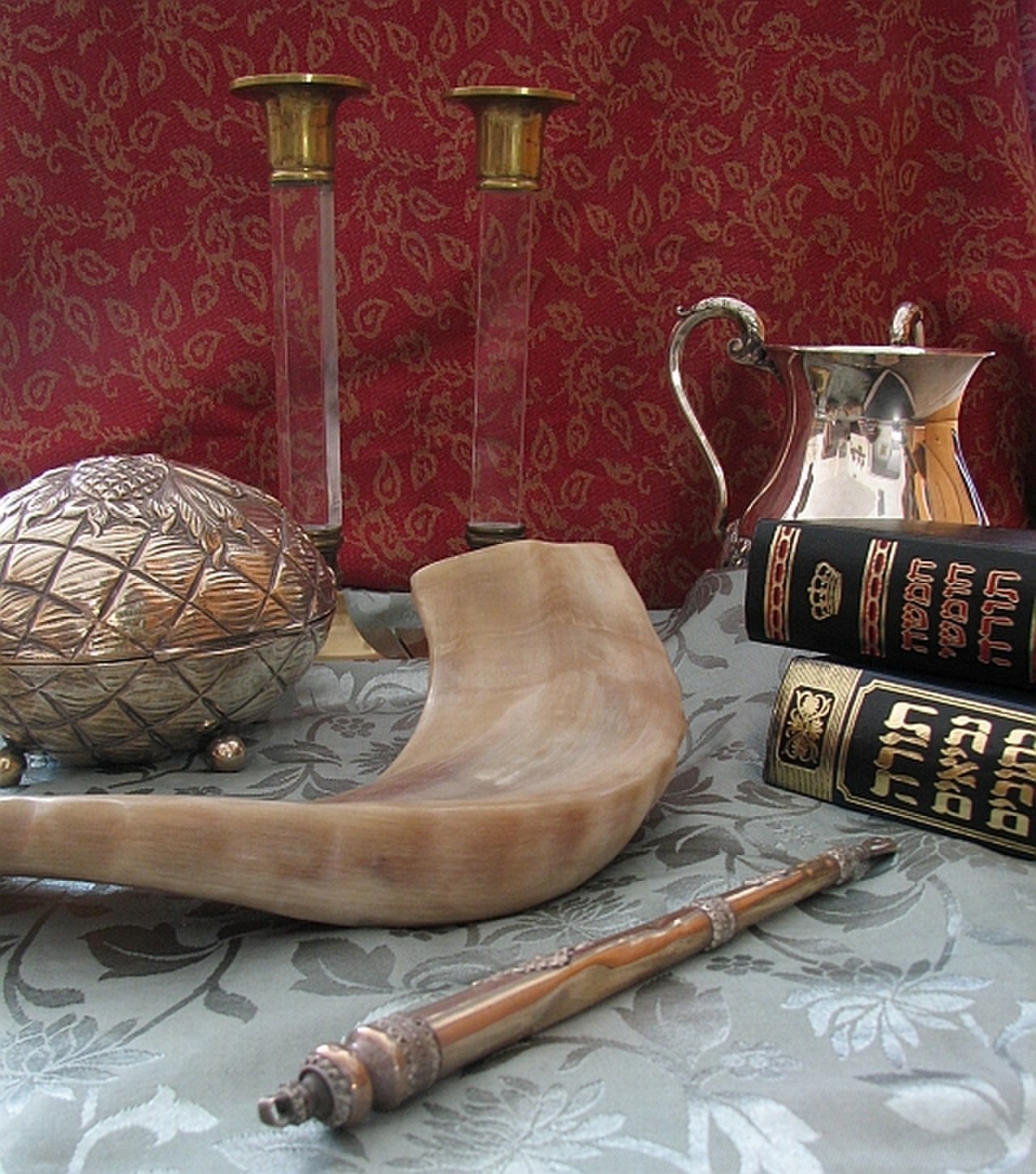
- Light Shabbat candles: on Friday evening, many Jewish homes light two candles and welcome rest. The practice honours a weekly island of peace — visitors are welcome to learn, not to appropriate.
- One mitzvah: Judaism teaches the world is repaired through small commanded good deeds. Do one act of kindness today for a stranger.
- Visit a heritage synagogue: the Paradesi Synagogue (Kochi) and Knesset Eliyahoo (Mumbai) welcome respectful visitors at posted hours; modest dress, quiet voices, no photography where signed.
Section 3: Living Tradition Today
[BEGINNER]
- Mumbai/Thane/Pune: the Bene Israel heartland — active synagogues, Marathi-Jewish liturgy, community kitchens. A few thousand remain; most of the 60,000+ community lives in Israel today.
- Kochi: only a few dozen Jews remain in Kerala, but the Paradesi Synagogue holds services when a minyan (10 adults) can gather, and Jew Town thrives as heritage.
- Kolkata: the Baghdadi community numbers perhaps two dozen; its grand synagogues are maintained as monuments and open for visitors and High Holy Day services.
- Global family: Indian Jews in Israel (the Hodi'im), the UK, the US, and Australia keep malida, Marathi hymns, and Judeo-Malayalam songs alive.
A record without pogroms: through two thousand years — Hindu kings granting copper plates, a Muslim-ruled Deccan, Portuguese persecution (the one violent exception, aimed at all non-Catholics), British rule, and independent India — Jews in India were never ghettoised or expelled. Indian Jews often describe their story as proof that pluralism can hold.
DivineLens presents perspectives from within this tradition, curated for authenticity. For personal spiritual direction, advanced study, or questions about tradition-specific practice, we recommend finding a qualified teacher in Judaism. Our Advisory Council reviews all content for theological accuracy.
Through Outsiders' Eyes
No medieval traveler left a Jewish-India travelogue — the community was small, quiet, and well-sheltered. What survives is colonial paperwork, read carefully.
The Portuguese (1500s) — the exception that proves the shelter: under Portuguese pressure the Cranganore synagogue was destroyed, and Malabari Jews fled to Kochi under the Raja's protection. Inquisition-era Goa listed "Judaizers" among its targets; Cochin's Jews survived because a Hindu king's copper-plate promise outweighed an empire's edict.
The Dutch (1660s onward) — after taking Kochi, Dutch authorities tolerated and taxed all faiths; the community rebuilt (the present Paradesi Synagogue rose in this breathing space), traded openly, and kept the Malayalam copper plates as title-deeds. Dutch factory records — commercial, not curious — incidentally preserve synagogue life: minyans, spice contracts, and the Sephardic newcomers' Spanish.
Known Limitations
- Origin narratives are community traditions; scholarship is summarised, not settled.
- Baghdadi/Kolkata synagogue history and the Bene Israel prayer-book tradition each deserve their own entries.
- Population figures are approximate and decline yearly through emigration.
Recommended reviewers: A scholar of Indian Jewish history and a practicing member of the Bene Israel or Cochin community.
Sources & provenance
- 📜Primary sourceBookNathan Katz. Who Are the Jews of India? (2000)
- 📜Primary sourceWikipedia