
Historical Period17c CE
Prehistoric (Tīrthaṅkara tradition 84,000 aeons ago); 11th–17th c. CE (temple construction); 16th–19th c. (colonial documentation); 20th–21st c.
3000 BCE17th century CEPresent
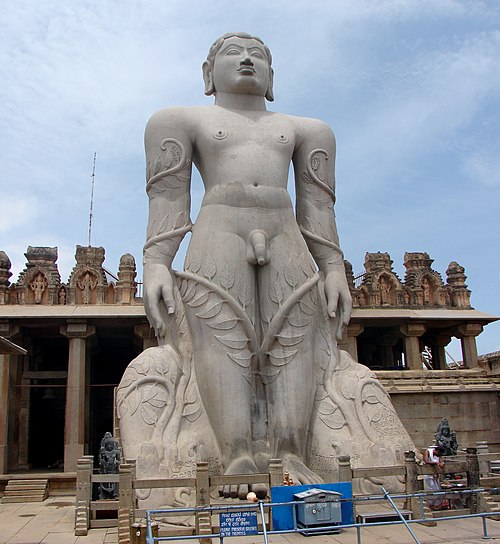
Ādinātha / Ṛṣabhadeva — the first Tīrthaṅkara, supreme tīrtha of Palitana
This entry honours the self-representation of Jain tradition. India's sacred landscape includes hundreds of traditions beyond the Brahminical-Vedic canon — Jain, Buddhist, Sikh, Sufi Muslim, Zoroastrian, tribal Gondi/Bhil/Khasi, and many more. Each has its own cosmology, theology, ethical system, and sacred geography. Each deserves first-person recognition, not assimilation.
Ādinātha (Ṛṣabhadeva) — first of the 24 Jain Tīrthaṅkaras, the founder-prophet who established human civilization (agriculture, polity, marriage, script). The temple-city atop Mount Shatrunjaya (Palitana Hill) contains 863 Jain temples in 9 clusters — the largest concentration of temples on any single hill in the world. Pilgrims climb 3,950 steps before dawn; the summit affords darśana of the 2,000-year-old marble image of Ādinātha. The hill is considered the supreme tīrtha of Śvetāmbara Jainism — said to have been visited by all 24 Tīrthaṅkaras except Neminātha, and by countless sages and emperors across eons. Jain custom: on attaining mokṣa from this hill, no rebirth is possible.
Worship in the Jain tradition follows its own ritual grammar — this is not a variant of Brahminical-Hindu worship. Key elements:
India is home to:
Catalogging only the pan-Indic Brahminical pantheon would miss most of India.
This entry draws on: the tradition's own textual and oral sources, scholarly ethnographies (Kosambi, Radhakrishnan, P. V. Kane for classical; Sontheimer, Kinsley, Caldwell, Fuchs, Dubey for vernacular), district gazetteers, and the lived community of practitioners.

.jpg/500px-Indra%2C_Chief_of_the_Gods_LACMA_M.69.13.4_(1_of_5).jpg)


