

.jpg/500px-Indra%2C_Chief_of_the_Gods_LACMA_M.69.13.4_(1_of_5).jpg)



Sacred Facts · At a Glance
- Gender
- male
- Sacred Colours
- tradition-specific
- Sacred Offerings
- tradition-specific
Primary Scriptures
1 source- Jain primary textsscriptural/oral
Gommaṭeśvara / Bāhubali at Shravanabelagola
The naked king on the hill
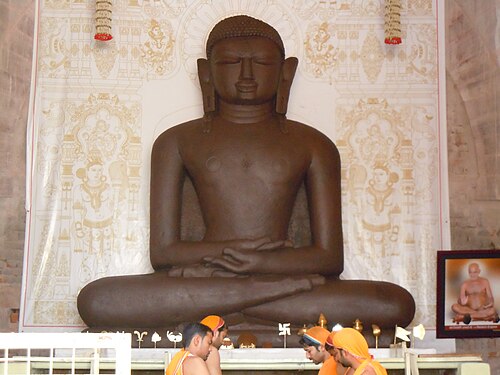
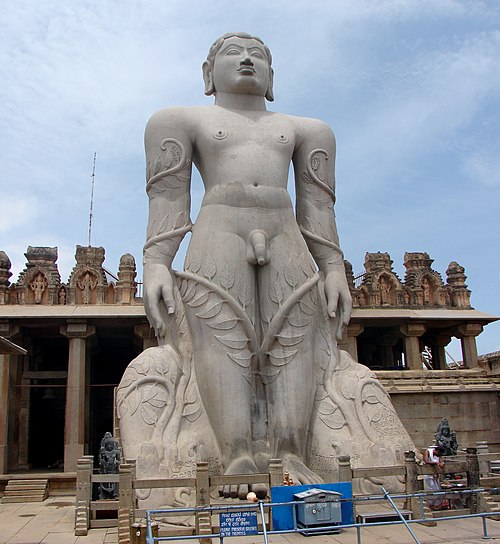
The image that gives Shravanabelagola its name is a standing figure of Bāhubali in the skyward posture of conquest, arms extended, vines climbing the legs, carved from a single granite outcrop on the Vindhyagiri hill in Hassan district, Karnataka. In the Digambara tradition Bāhubali is the elder brother of Arishtanemi, prince of Pāṭaliputra, who after a lifetime of self-discipline understood that all power was empty, and who is revered not as a warrior but as the perfected ascetic who conquered himself first. The Digambara story is told in the Bāhubali-Gommaṭeśvara-Purāṇa, a later Jain text rather than an early canonical one; the Mahāvāṇḍa itself gives the Arishtanemi story without the Gommaṭeśvara cult attached to it. That distinction is worth keeping visible.
The Digambara term for the image is Gommaṭeśvara, and Digambara Jains still make the pilgrimage and perform the mahāmastakabhiṣeka, the rite of consecration, on the summit, which falls roughly once in twelve years. The stone is naturally fissured at the joints, so the carving is effectively in two parts, and its height — about eighteen metres — was only regularly measured in modern times. Dating is contested. The inscription of the Ganga king Marasimha II referring to the consecration is the usual anchor for a late tenth-century date; others argue for a later or earlier image. Inscriptions at the site associate the manastambha (the stone pillar pavilion) and the Pārśvanātha basadi with the tenth century, and the neighbouring Chandragiri hill carries an earlier, smaller Bāhubali image that some pilgrims treat as the older shrine.
What a pilgrim does there
The sequence is: bathe in one of the tanks below the hill, climb the covered stone steps, circle the image, and make the offering appropriate to the vow. The Jain sequence of progress — ratnatraya, right faith, right knowledge, right conduct — is taught through the bhakti Bāhubali image rather than being added to it. Jain festivals here, and the annual ceremony on the summit, are administered by the Jain monastic institutions under the Digambara hierarchy; Śvetāmbara Jains hold different sites and a different interpretation of Bāhubali's posture and standing, and the two traditions should not be merged.
Sources and what is still unverified
Coomaraswamy's writing on Jainism is the general frame; the Hassan gazetteer and the epigraphic record of the site are the primary local sources.
A named guardian should check: the inscription bearing on the image's date; which of the two Bāhubali images at Shravanabelagola older pilgrims hold to be the older; and the exact observance and interval of the mahāmastakabhiṣeka.
Wisdom Graph: Divine Associations
- Offerings
- tradition-specific
- Sacred colours
- tradition-specific
🪔 Worship Procedures
- Daily rites
- • tradition-specific
🛕 Principal Temples
- Main shrine of Bāhubali GommaṭeśvaraVaries📍 Shravanabelagola, Hassan, Karnataka, IndiaFestivals: Annual festivalBāhubali — see main
🎊 Festivals
- Annual Bāhubali Gommaṭeśvara festivalSeasonally · 1–10 days
📜 Primary Scriptural Sources
- Jain primary textsscriptural/oral
Sources & provenance
- 🎓Scholarly sourceBookA. K. Coomaraswamy. The Jains
- 🎓Scholarly sourceBook