Sacred Facts · At a Glance
- Gender
- male
- Vahana
- Garuḍa (the celestial eagle-king, embodiment of the three Vedas / Veda-mūrti)
- Weapon
- Sudarśana Cakra (the revolving thousand-spoked solar disc of cosmic mind) · Pāñcajanya (the celestial conch of cosmic sound / Omkara) · Kaumodakī (the mace of intellect / Buddhi) · Śārṅga (the bow of cosmic ego) · Nandaka (the sword of discrimination / Vidya)
- Sacred Number(s)
- 10 · 108 · 1000
- Sacred Colours
- dark cloud-blue (megha-śyāma)radiant pitambara yellowgold
- Sacred Flowers
- lotus (padma / nilotpala) · tulasī blossoms · champaka · pārijāta · kadamba
- Sacred Trees
- aśvattha (peepal, Ficus religiosa — 'Aśvatthaḥ sarvavṛkṣāṇāṃ' in Gita) · kadamba · vaṭa (banyan)
- Sacred Offerings
- fresh tulasī leaves and garlands · pañcāmṛta · kṣīra / pāyasam · butter and rock sugar · yellow pitambara silks
- Sacred Animals
- Garuḍa (eagle) · Ananta-Śeṣa (thousand-headed serpent) · cow (Go-Mātā) · horse (Hayagrīva)
- Sacred Birds
- Garuḍa
- Sacred Plants
- tulasī (Ocimum sanctum — without which no food offering is accepted by Vishnu) · darbha / kuśa grass
Primary Scriptures
6 sources- Ṛgveda Saṃhitā (1.154 — Viṣṇu Sūkta)vedaComposed c. 1500–1200 BCEHymn of Dirghatamas: 'viṣṇor nu kaṃ vīryāṇi pravocaṃ yaḥ pārthivāni vimame rajāṃsi yo askabhāyad uttaraṃ sadhasthaṃ vicakramāṇas tredhorugāyaḥ'
- Mahānārāyaṇa Upaniṣad (Nārāyaṇa Sūkta)upanishadComposed c. 800–600 BCEFoundational theological hymn proclaiming: 'Nārāyaṇaḥ paraṃ brahma tattvaṃ nārāyaṇaḥ paraḥ... yaccakiñcij jagat sarvaṃ dṛśyate śrūyate'pi vā antar bahiśca tatsarvaṃ vyāpya nārāyaṇaḥ sthitaḥ'
- Viṣṇu Sahasranāma (Mahābhārata, Anuśāsana Parvan 149)epicComposed c. 5th–2nd c. BCE1,000 holy names revealed by Bhishma Pitamaha to King Yudhishthira from his bed of arrows on Kurukshetra
- Viṣṇu PurāṇapuranaComposed c. 400–500 CEParashara's dialogue with Maitreya; expounds the sixfold majesty (Bhaga) of Vishnu, cosmic cycles, and the avatars
- Bhāgavata Purāṇa (Śrīmad Bhāgavatam)puranaComposed c. 800–1000 CEThe 'Amala Purana' consisting of 18,000 verses in 12 cantos, celebrating Vishnu's divine descents culminating in the Krishna avatar
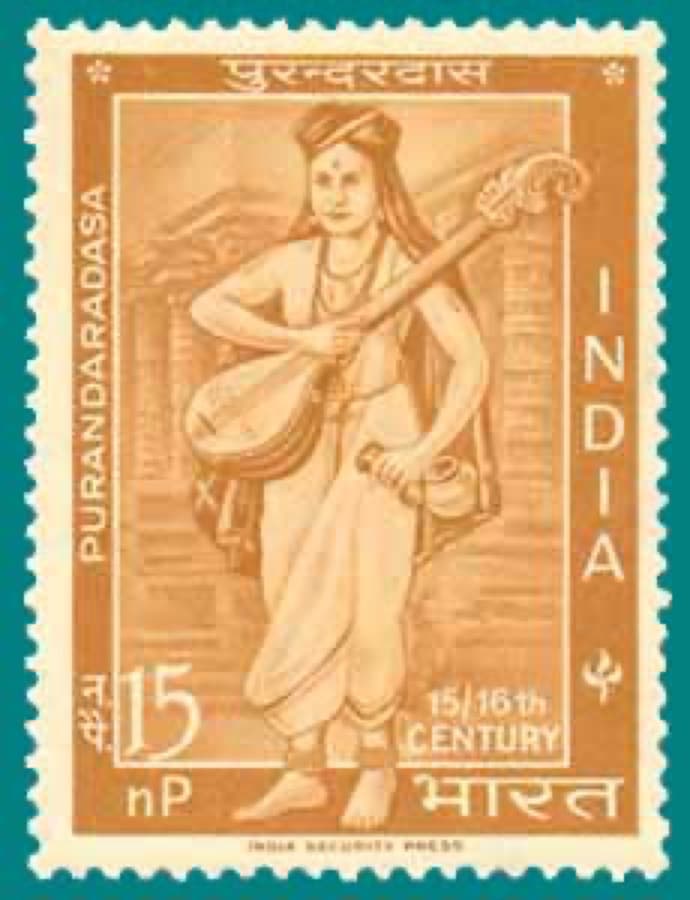
- Nālāyira Divya Prabandhambhakti12 ĀḻvārsComposed 6th–9th c. CE4,000 sacred Tamil devotional verses canonical to Sri Vaishnavism, sung across the 108 Divya Desam temples
Vishnu
The Supreme Preserver — All-Pervading Lord of Vaikuntha and Master of Avatars
Overview
Lord Vishnu (विष्णु) — derived from the Sanskrit root viṣ meaning "to pervade" (veveṣṭi vyāpnoti carācaram) — is the Supreme Preserver in the Hindu Trimurti. Revered as Nārāyaṇa, Hari, Vāsudeva, and Jagannātha, Vishnu is the all-encompassing cosmic reality who sustains the universal order (Ṛta and Dharma).
Whenever cosmic equilibrium is threatened by the unbridled forces of chaos and tyranny, Vishnu manifests through his divine descents (Avatāras) to protect the virtuous, subdue the wicked, and re-establish righteousness:
$$\text{Om Namo Nārāyaṇāya} \quad \Big| \quad \text{Om Namo Bhagavate Vāsudevāya}$$
Century-by-Century Archaeological & Epigraphical Evolution
1500 BCE         113 BCE           c. 500 CE        578 CE           750 CE           10th–12th c.    1113 CE
   │                │                 │                │                │                 │               │
   ▼                ▼                 ▼                ▼                ▼                 ▼               ▼
Rigveda          Heliodorus        Deogarh          Badami           Kanchipuram      Chola Lost-Wax  Angkor Wat
1.154            Garuda Pillar     Sheshashayi      Cave 3           Vaikuntha        Bronzes &       Colossus
Three Strides    Vidisha           Gupta Stone      Chalukya         Perumal 3 Tiers  Alvar Hymns     Cambodia
1. Vedic Revelation: The Three Strides (c. 1500–1000 BCE)
- Ṛgveda Saṃhitā (1.154): The sage Dirghatamas proclaims the heroic deeds of Vishnu:
विष्णोर्नु कं वीर्याणि प्र वोचं यः पार्थिवानि विममे रजांसि ।
यो अस्कभायदुत्तरं सधस्थं विचक्रमाणस्त्रेधोरुगायः ॥
"Now will I proclaim the heroic powers of Vishnu, who measured out the terrestrial realms, who supported the high celestial dwelling, striding threefold, the wide-striding Lord!" - The highest realm of Vishnu (Paramam Padam) is celebrated as an eternal fountain of sweet nectar where liberated souls rejoice in divine communion.
2. Hellenistic Epigraphy: The Heliodorus Pillar (c. 113 BCE)
- At Besnagar (Vidisha, Madhya Pradesh), Greek ambassador Heliodorus erected a polished sandstone column surmounted by Garuda, proclaiming himself a Bhāgavata dedicated to Devadeva Vāsudeva, proving that worship of Vishnu-Krishna had converted Hellenistic royalty over a century before the Common Era.
3. Imperial Gupta Masterpiece: Deogarh Dashavatara Temple (c. 500 CE)
- The celebrated Sheshashayi Vishnu (Anantasayana) high-relief panel at Deogarh represents the crowning achievement of classical Gupta sculpture:
- Vishnu reclines in cosmic slumber upon the coiled body of thousand-hooded Ananta-Śeṣa, floating upon the waters of the milk ocean (Kṣīrasāgara).
- Four-headed Brahmā emerges seated upon a lotus flower rising from Vishnu's navel to commence cosmic creation.
- Goddess Lakṣmī tenderly holds and massages her Lord's right foot.
- Along the bottom register, the four personified divine weapons (Āyudha-puruṣas) stand vigilant to protect the sleeping Lord from the demons Madhu and Kaitabha.
4. Deccan & Pallava Rock-Cut Monuments (c. 6th–8th c. CE)
- Badami Cave 3 (Karnataka, 578 CE): Western Chalukya artisans under King Mangalesha carved a colossal seated four-armed Vishnu upon the coiled serpent, radiating quiet majesty under the seven stone hoods of Shesha.
- Mamallapuram (Tamil Nadu, 7th c. CE): In the Mahishamardini rock-cut cave, Pallava sculptors carved the famous naturalistic panel of Vishnu reclining in Yoganidra.
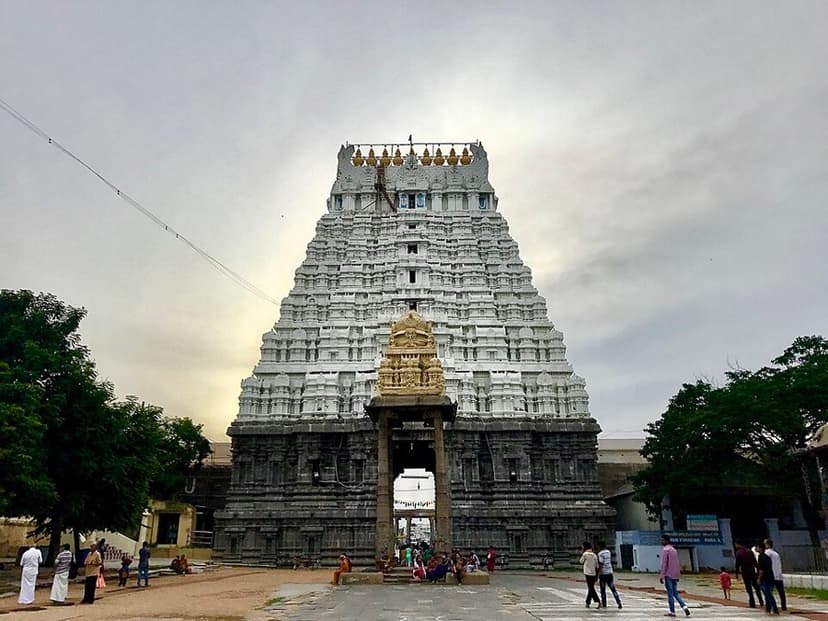
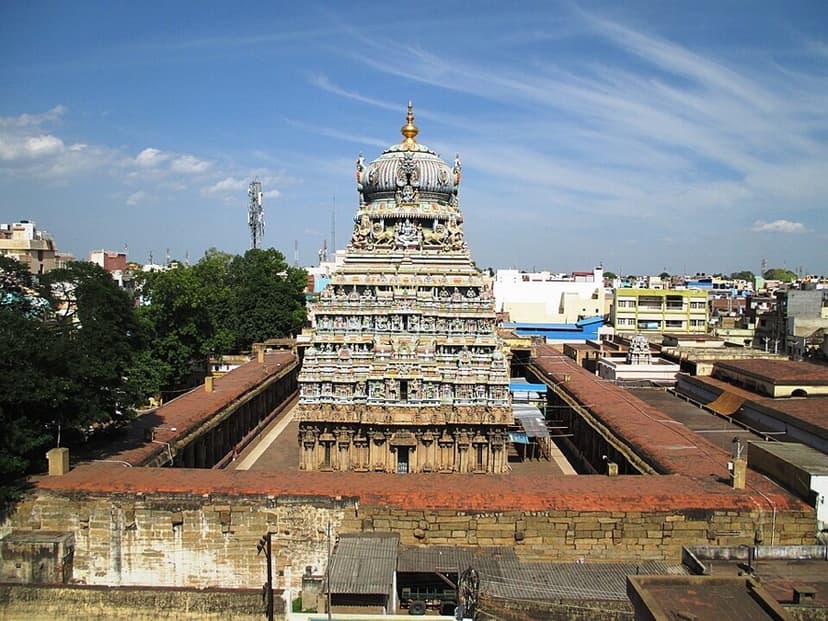
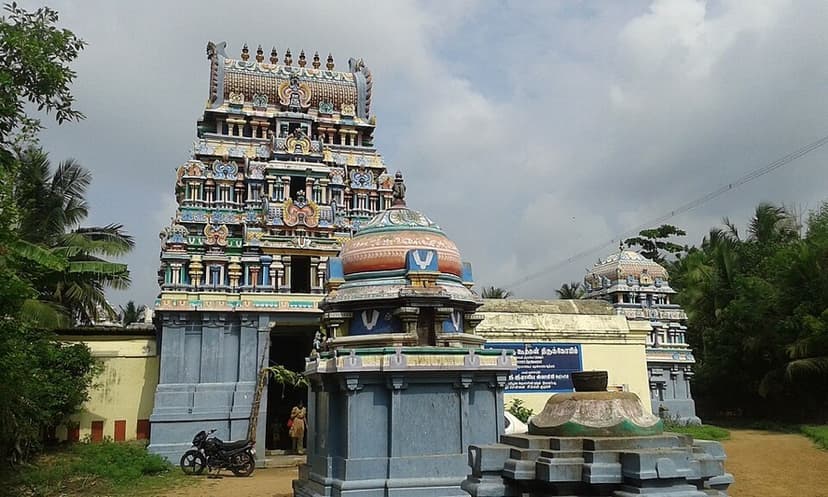
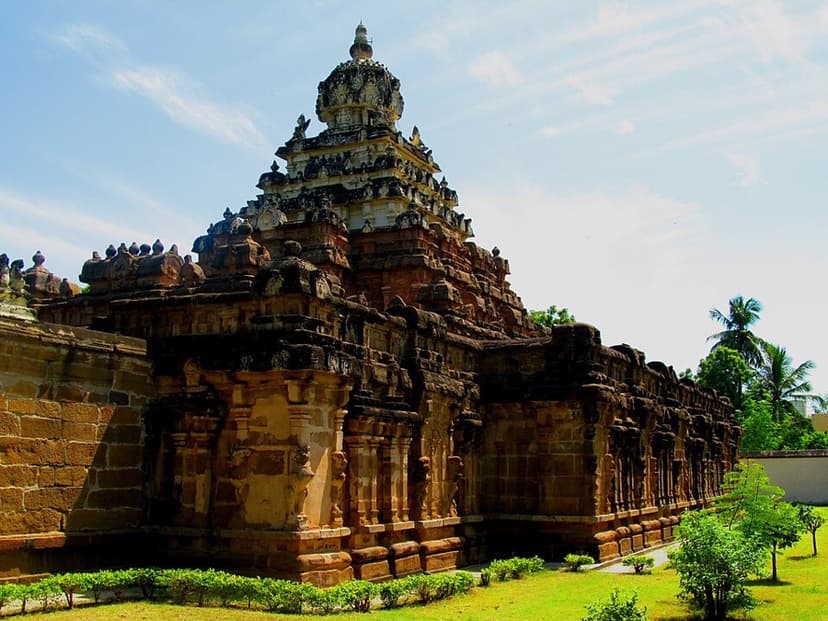
- Vaikuntha Perumal Temple at Kanchipuram (c. 750 CE): Built by Pallava King Nandivarman II, this architectural marvel features three stacked sanctums, housing Vishnu in his three canonical postures: Sthānaka (standing on the ground floor), Āsana (seated on the first floor), and Śayana (reclining on the second floor).
5. Kashmir Vaikuntha Chaturmurti & Chola Bronzes (c. 9th–12th c. CE)
- Under the Kashmiri Utpala dynasty (9th c. CE), sculptors carved the sublime Vaikunṭha Caturmūrti—a four-faced cosmic form combining:
- Center: The calm, royal human face of Vasudeva.
- Right: The lion face of Narasimha.
- Left: The boar face of Varaha.
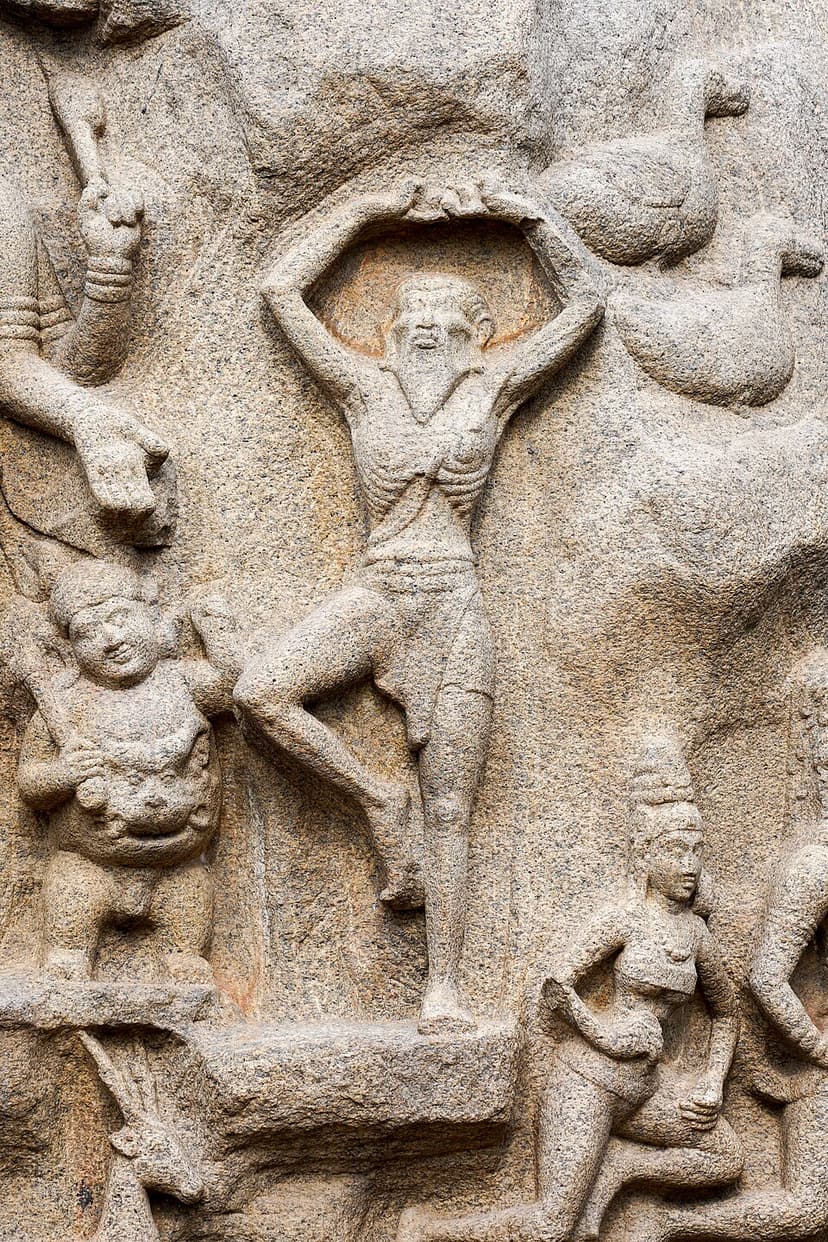
- Back: The fierce, emaciated face of Kapila.
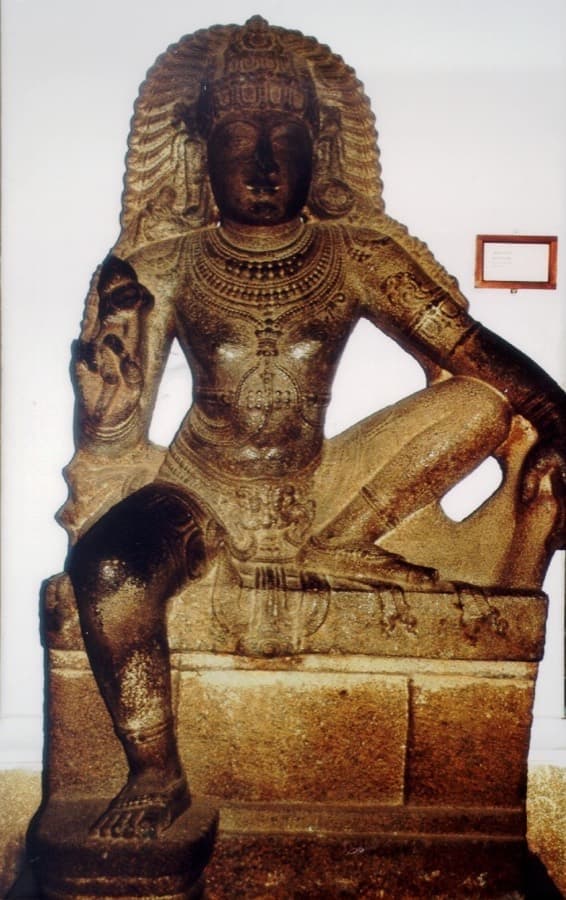
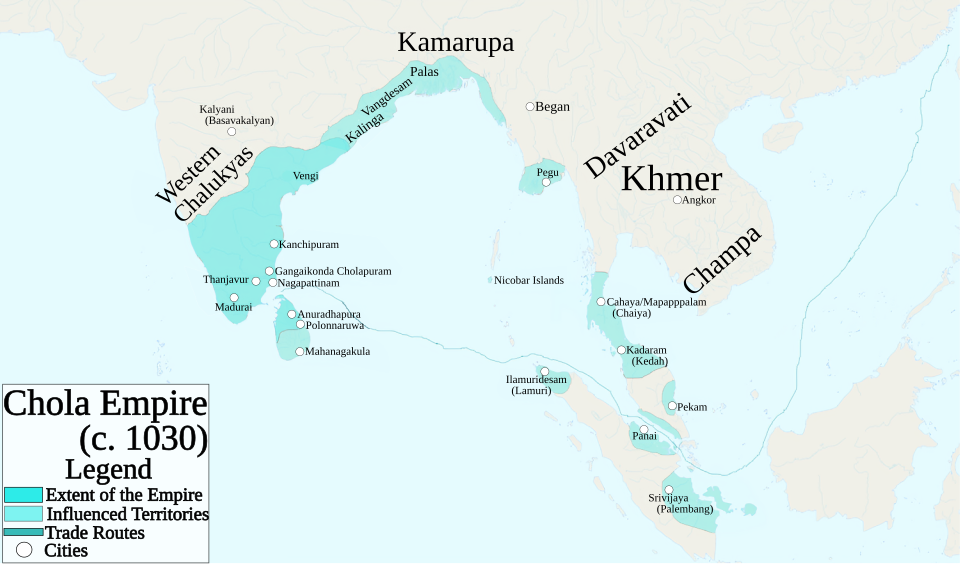
- In the Kaveri delta, Chola sthapathis cast world-famous lost-wax bronzes of Srinivasa, Varadaraja, and Vishvaksena with graceful tribhanga curves and towering kirita-mukutas.
6. Angkor Wat: The Khmer Imperial Zenith (1113–1150 CE)
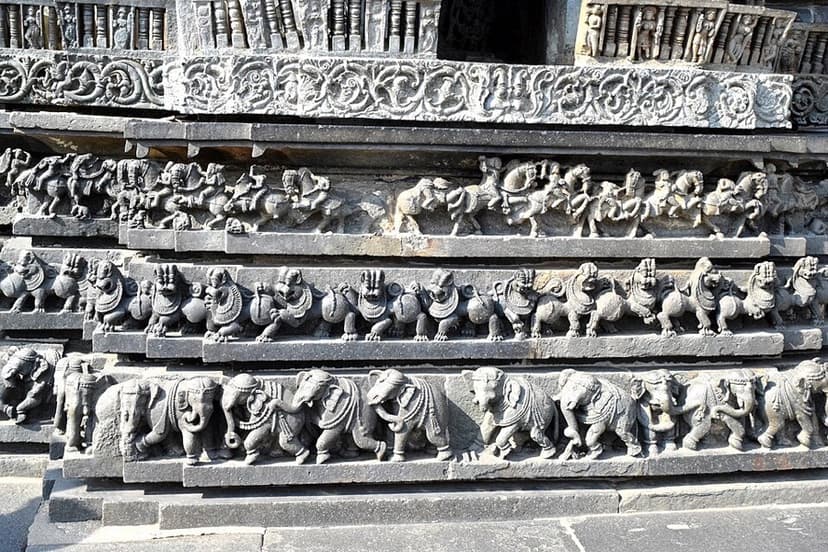
- Constructed by Emperor Suryavarman II in Siem Reap, Cambodia, Angkor Wat is the largest stone religious monument in the world. Uniquely oriented to the West (the direction of Vishnu), its 800-meter gallery carved in sandstone reliefs recounts the Mahabharata, Ramayana, and the monumental Churning of the Ocean of Milk (Samudra Manthana), where 88 devas and 92 asuras pull the serpent Vasuki coiled around Mount Mandara.
Canonical Scriptures & The Fivefold Forms (Pañca-Rūpa)
In the classical Pāñcarātra and Śrī Vaiṣṇava theology codified by Ramanujacharya, Vishnu manifests in five distinct theological modes to accommodate every level of spiritual seeker:
                          [ 1. PARA (Transcendent) ]
                        Lord of Vaikuntha with Sri Devi
                                       │
                                       ▼
                       [ 2. VYŪHA (Emanational) ]
             Vāsudeva, Saṃkarṣaṇa, Pradyumna, Aniruddha
                                       │
                                       ▼
                      [ 3. VIBHAVA (Incarnational) ]
               The Ten Avatars (Matsya, Kurma, Rama, Krishna)
                                       │
                                       ▼
                     [ 4. ANTARYĀMIN (Indwelling) ]
                    The Inner Witness in Every Heart
                                       │
                                       ▼
                        [ 5. ARCĀ (Iconic / Murti) ]
            Consecrated in Temples (Srirangam, Tirumala, Puri)
- Para (The Transcendent): The supreme, unconditioned form residing in Vaikuntha beyond the material universe, seated upon Ananta with Sri Devi and Bhu Devi.
- Vyūha (The Cosmic Emanations): The four functional manifestations governing cosmic creation, evolution, and liberation: Vāsudeva (consciousness), Saṃkarṣaṇa (life/ego), Pradyumna (intellect), and Aniruddha (mind).
- Vibhava (The Avatars): The historic and cosmic descents into the material world (Dashavatara) to re-establish dharma.
- Antaryāmin (The Inner Controller): The subtle presence of Narayana seated within the lotus of every living being's heart, guiding the soul as the silent witness.
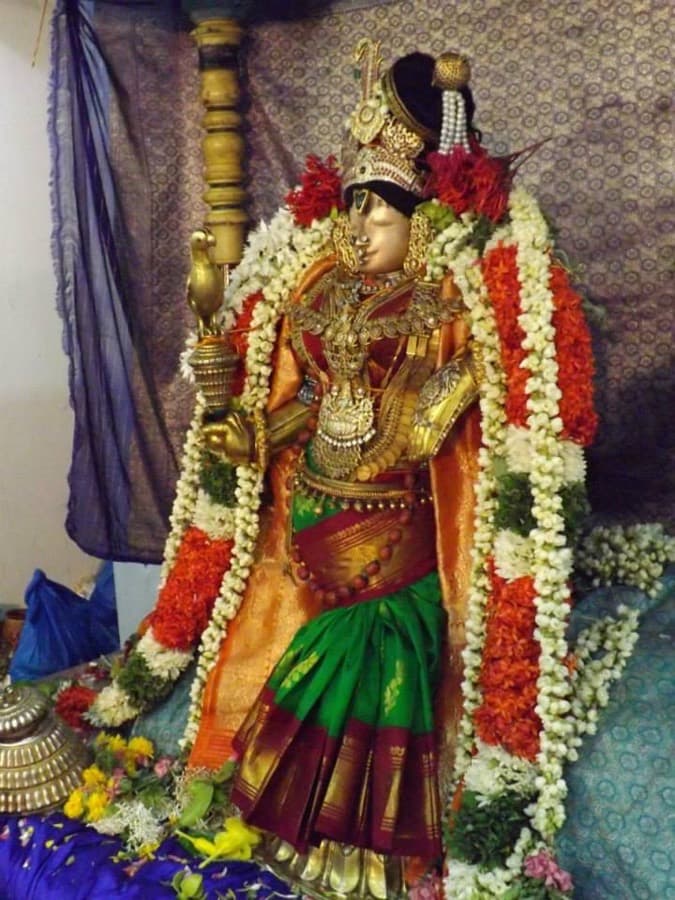
- Arcā (The Consecrated Image): The divine condescension where the infinite Godhead becomes tangibly accessible in stone, metal, or wood murtis in temples (such as Srirangam and Tirumala), responding to the loving service of mortal devotees.
Canonical Daily Practice & Devotion
Beginner Practice
- Mūla Mantra Japa: Chanting the eight-syllable or twelve-syllable mantra (108 times): $$\text{Om Namo Nārāyaṇāya} \quad \Big| \quad \text{Om Namo Bhagavate Vāsudevāya}$$
- Tulasī Offering: Offering fresh tulsi leaves and water to the Saligram or Vishnu image.
Intermediate / Scholarly Practice
- Viṣṇu Sahasranāma Stotra Recitation: Daily chanting of the 1,000 names from the Mahabharata with Shankaracharya or Parasara Bhattar commentary.
- Ekādaśī Vrata: Rigorous fasting twice monthly on the 11th lunar day to control the senses, purify karma, and cultivate single-minded absorption in Narayana.
Wisdom Graph: Divine Associations
- Vāhana
- Garuḍa
- Sacred animals
- Garuḍa (eagle)Ananta-Śeṣa (thousand-headed serpent)cow (Go-Mātā)horse (Hayagrīva)
- Sacred birds
- Garuḍa
- Sacred flowers
- lotus (padma / nilotpala)tulasī blossomschampakapārijātakadamba
- Sacred plants
- tulasī (Ocimum sanctum — without which no food offering is accepted by Vishnu)darbha / kuśa grass
- Sacred trees
- aśvattha (peepal, Ficus religiosa — 'Aśvatthaḥ sarvavṛkṣāṇāṃ' in Gita)kadambavaṭa (banyan)
- Offerings
- fresh tulasī leaves and garlandspañcāmṛtakṣīra / pāyasambutter and rock sugaryellow pitambara silks
- Weapons / emblems
- Sudarśana Cakra (the revolving thousand-spoked solar disc of cosmic mind)Pāñcajanya (the celestial conch of cosmic sound / Omkara)Kaumodakī (the mace of intellect / Buddhi)Śārṅga (the bow of cosmic ego)Nandaka (the sword of discrimination / Vidya)
- Sacred colours
- dark cloud-blue (megha-śyāma)radiant pitambara yellowgold
- Sacred numbers
- 101081000
Principal Temples
- Srirangam Ranganathaswamy Temple9th–16th c. CE (Chola / Pandya / Vijayanagara)📍 Srirangam, Tiruchirappalli, Tiruchirappalli, Tamil Nadu, IndiaThe foremost of the 108 Divya Desams; world's largest functioning Hindu temple complex (156 acres); houses Sri Ranganatha reclining upon Adi Shesha
- Tirumala Sri Venkateswara TempleAncient; epigraphy from 8th c. CE (Pallava/Chola/Vijayanagara)📍 Tirumala, Tirupati, Tirupati, Andhra Pradesh, IndiaRichest and most visited sacred shrine on earth; self-manifest standing black stone murti of Lord Srinivasa crowned with the golden Ananda Nilayam vimana
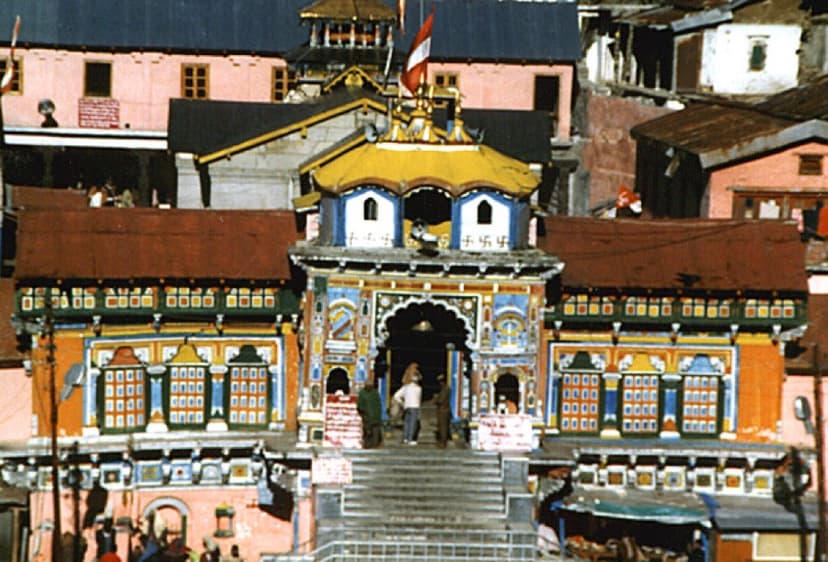
- Badrinath Temple8th c. CE (Adi Shankaracharya)📍 Badrinath, Chamoli, Uttarakhand, IndiaHimalayan Char Dham sanctuary at 3,133 meters altitude along the Alaknanda; houses a black shaligram murti of Badrinarayana seated in padmasana
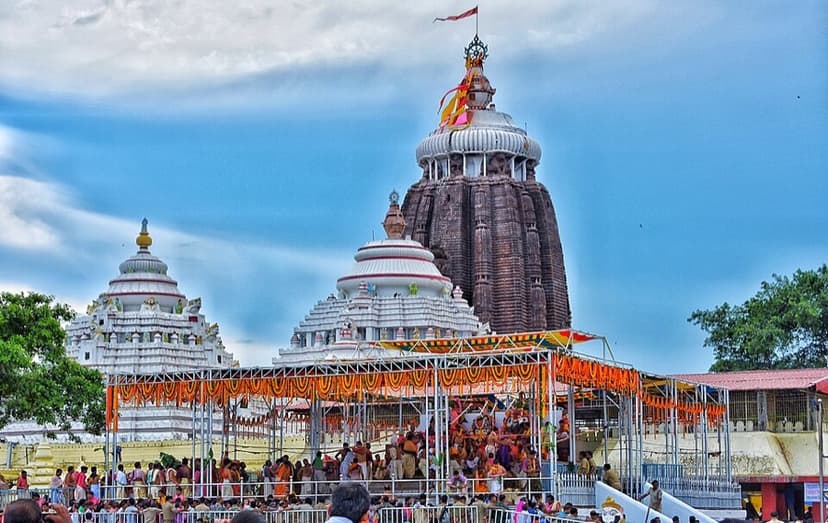
- Jagannath Temple Puri12th c. CE (King Anantavarman Chodaganga Deva)📍 Puri, Puri, Odisha, IndiaChar Dham sanctuary on the eastern sea; worships Vishnu as Jagannath (Lord of the Universe) in sacred neem wood icons; site of the annual Ratha Yatra
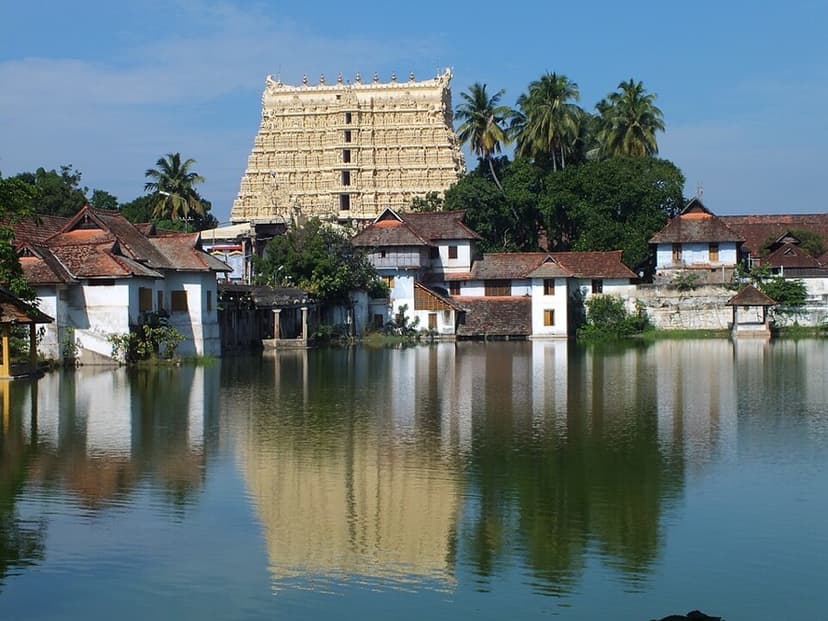
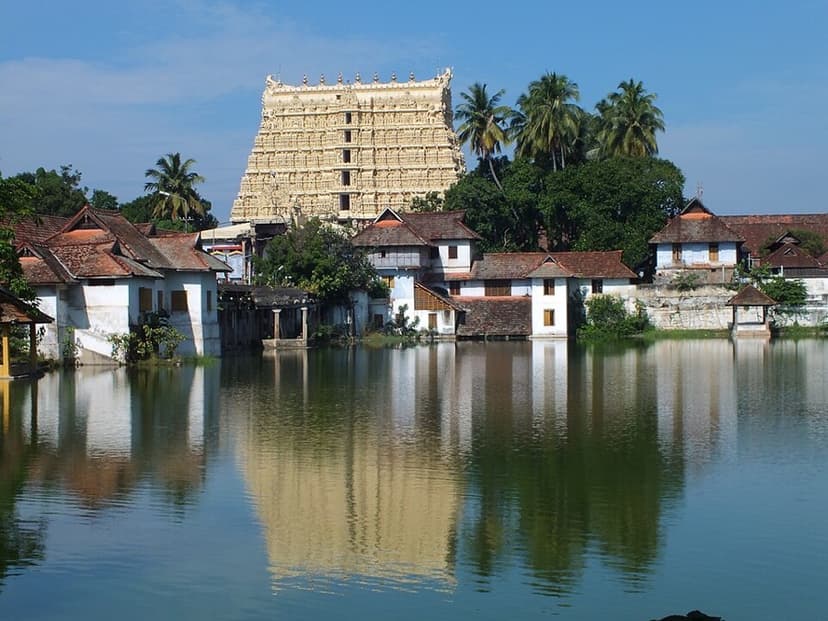
- Padmanabhaswamy TempleAncient Chera era; reconstructed 1750 CE (Marthanda Varma)📍 Thiruvananthapuram, Thiruvananthapuram, Kerala, IndiaHouses the 18-foot Anantasayana Vishnu viewed through three doors; site of the historic royal dedication of the kingdom (Trippadidanam) and ancient vault treasures
- Dwarkadhish Temple (Jagat Mandir)16th c. CE (Rebuild of ancient 2,200-year-old site)📍 Dwarka, Devbhoomi Dwarka, Gujarat, IndiaWestern Char Dham seat where Vishnu ruled as King Krishna; 72-pillared five-story limestone spire flying the 52-yard sacred flag
- Guruvayur Sri Krishna TempleAncient Chera era; epigraphy from 14th c. CE📍 Guruvayur, Thrissur, Kerala, IndiaKnown as 'Bhuloka Vaikuntha'; houses the four-armed black patalanjana-shila murti of Mahavishnu holding shankha, chakra, gada, and lotus
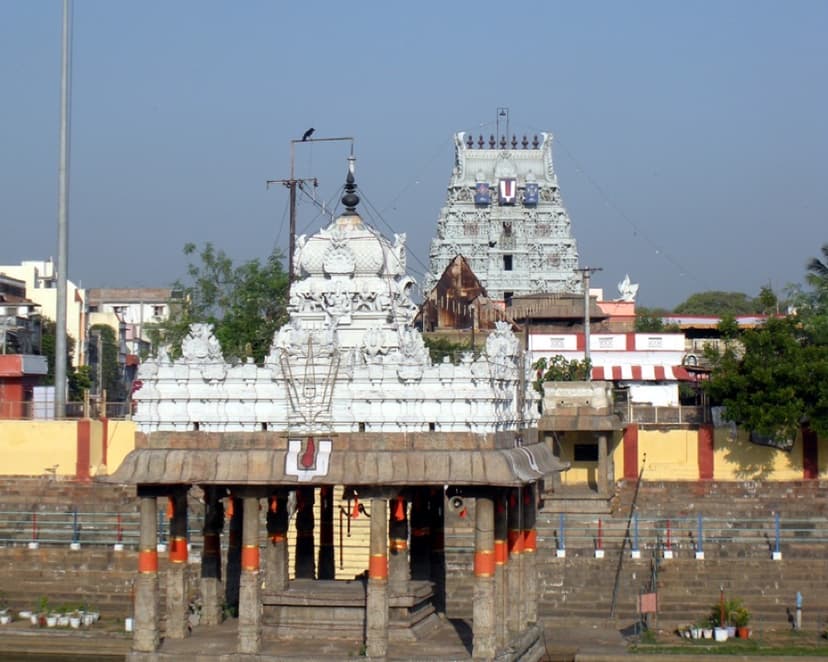
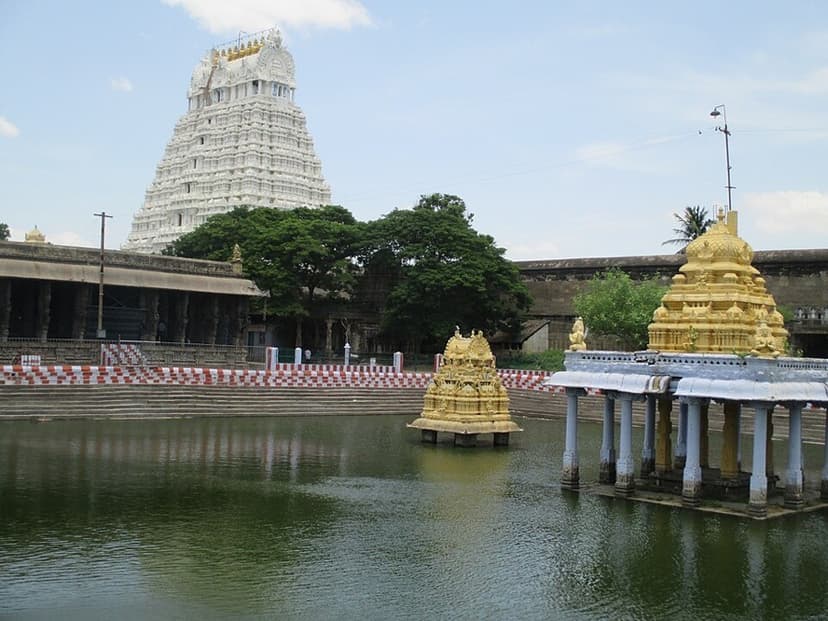
- Kanchipuram Varadaraja Perumal1053 CE (Imperial Chola)📍 Kanchipuram, Kanchipuram, Tamil Nadu, IndiaMajor Divya Desam where Ramanujacharya lived; famous for the wooden Athi Varadar murti retrieved from the sacred tank once every 40 years
- Deogarh Dashavatara Templec. 500 CE (Imperial Gupta)📍 Deogarh, Lalitpur, Uttar Pradesh, IndiaThe oldest surviving complete stone temple dedicated to Vishnu in northern India, housing the famous high-relief Sheshashayi Vishnu panel
- Angkor Wat1113–1150 CE (Khmer Emperor Suryavarman II)📍 Siem Reap, Siem Reap, CambodiaThe largest stone religious monument in human history, built as a terrestrial Mount Meru dedicated to Vishnu with 800 meters of stone reliefs
Festivals
- Vaikuṇṭha Ekādaśī (Mokṣadā Ekādaśī)Mārgaśīrṣa / Pauṣa (Dec–Jan)The supreme Vaishnava holy day; the northern gate of heaven (Paramapada Vasal / Vaikuntha Dvara) is opened in temples for devotees who observe an unbroken fast
- Ananta CaturdaśīBhādrapada Śukla CaturdaśīWorship of Vishnu as Ananta (the Infinite); devotees tie a sacred 14-knot thread on the right forearm to invoke eternal protection
- Nirjalā EkādaśīJyeṣṭha Śukla EkādaśīThe most rigorous Ekadashi observed without drinking a single drop of water for 24 hours, equal in merit to all 24 annual Ekadashis combined
- Kṛṣṇa Janmāṣṭamī & Rāma NavamīBhādrapada & CaitraPan-Indian celebrations marking the divine descents of the primary avatars
Primary Scriptural Sources
- Ṛgveda Saṃhitā (1.154 — Viṣṇu Sūkta)vedac. 1500–1200 BCEHymn of Dirghatamas: 'viṣṇor nu kaṃ vīryāṇi pravocaṃ yaḥ pārthivāni vimame rajāṃsi yo askabhāyad uttaraṃ sadhasthaṃ vicakramāṇas tredhorugāyaḥ'
- Mahānārāyaṇa Upaniṣad (Nārāyaṇa Sūkta)upanishadc. 800–600 BCEFoundational theological hymn proclaiming: 'Nārāyaṇaḥ paraṃ brahma tattvaṃ nārāyaṇaḥ paraḥ... yaccakiñcij jagat sarvaṃ dṛśyate śrūyate'pi vā antar bahiśca tatsarvaṃ vyāpya nārāyaṇaḥ sthitaḥ'
- Viṣṇu Sahasranāma (Mahābhārata, Anuśāsana Parvan 149)epicc. 5th–2nd c. BCE1,000 holy names revealed by Bhishma Pitamaha to King Yudhishthira from his bed of arrows on Kurukshetra
- Viṣṇu Purāṇapuranac. 400–500 CEParashara's dialogue with Maitreya; expounds the sixfold majesty (Bhaga) of Vishnu, cosmic cycles, and the avatars
- Bhāgavata Purāṇa (Śrīmad Bhāgavatam)puranac. 800–1000 CEThe 'Amala Purana' consisting of 18,000 verses in 12 cantos, celebrating Vishnu's divine descents culminating in the Krishna avatar
- Nālāyira Divya Prabandhambhakti6th–9th c. CE12 Āḻvārs4,000 sacred Tamil devotional verses canonical to Sri Vaishnavism, sung across the 108 Divya Desam temples
Sources & provenance
- 📖Supporting referenceOtherRigveda
- 📖Supporting referenceOtherShatapatha Brahmana
- 📖Supporting referenceOtherMahanarayana Upanishad
- 📖Supporting referenceOtherVishnu Sahasranama
- 📖Supporting referenceOtherVishnu Purana
- 📖Supporting referenceOtherBhagavata Purana
- 📖Supporting referenceOtherNalayira Divya Prabandham